Kerala CM writes to Siddaramaiah to resume efforts to trace missing lorry driver
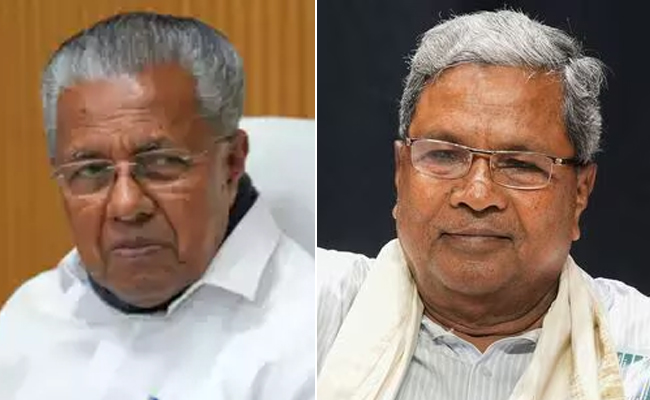
Kozhikode (PTI): Kerala Chief Minister Pinarayi Vijayan on Sunday shot off a letter to his Karnataka counterpart requesting him to resume the search operations for the lorry driver from here, who went missing following a landslide at a village there last month.
In a letter written to Karnataka CM Siddaramaiah, Vijayan said the search operations which were halted earlier were supposed to resume today, but they haven't.
"I write this to share the anxiety and sorrow of the family members of Arjun, as he is missing for quite a long time. I was given to understand that the search operations to find Arjun were to be resumed today. Information is reaching that the operations have not yet resumed," he said in his letter.
Kerala CM sought the personal intervention of Siddaramaiah for the resumption of the search operations today itself.
Earlier in the day, Vijayan visited the house of Arjun and interacted with his family members.
Later, in a Facebook post, Vijayan said the concerns of the family on finding Arjun will be conveyed to the Karnataka government.
After a brief meeting with them, Vijayan returned, assuring the family that he would be there to support them through any difficulties.
Arjun was driving a lorry loaded with timber to Kozhikode when the landslide occurred on July 16. He has been missing since then.
Multiple agencies had conducted a search mission to find him at the landslide site in Uttara Kannada district.
Let the Truth be known. If you read VB and like VB, please be a VB Supporter and Help us deliver the Truth to one and all.
Ordinance issued to increase number of Supreme Court judges from 34 to 38
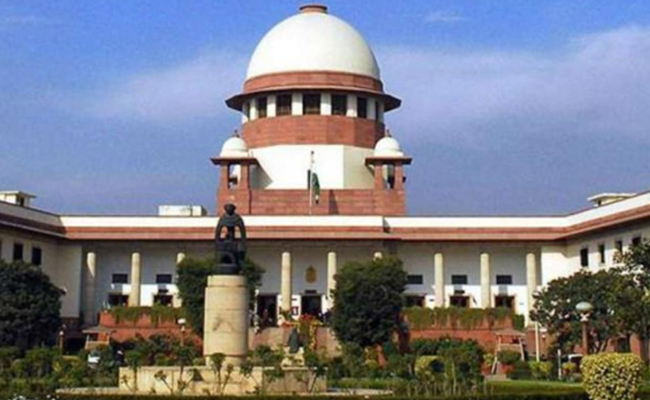
New Delhi (PTI): The government has promulgated an ordinance to increase the strength of the Supreme Court from the present 34 judges to 38, including the Chief Justice of India.
The law ministry notified the ordinance on Saturday, which amended the Supreme Court (Number of Judges) Act, 1956, to increase the sanctioned strength of the top court.
So far, the sanctioned strength of the top court was 34, including the Chief Justice of India (CJI). Now, the number of judges has been increased by four, taking the sanctioned strength to 38.
The top court will now have 37 judges, other than the CJI.
With the apex court having two vacancies at present, and the ordinance coming into force immediately, the Supreme Court Collegium will now have to recommend six names for appointment as judges in the top court.
A bill will be brought in the Monsoon Session of Parliament to convert the ordinance – an executive order – into a law passed by Parliament.
The Union Cabinet had cleared a draft bill on May 5 to increase the number of apex court judges.
The strength of the Supreme Court was last increased from 30 to 33 (excluding the CJI) in 2019.
The Supreme Court (Number of Judges) Act, as originally enacted in 1956, put the maximum number of judges (excluding the CJI) at 10.
This number was increased to 13 by the Supreme Court (Number of Judges), Amendment Act, 1960, and to 17 by another amendment to the law.
The Supreme Court (Number of Judges) Amendment Act, 1986, augmented the strength of judges from 17 to 25, excluding the CJI.
A fresh amendment in 2009 further increased the strength from 25 to 30.
Article 124(3) of the Constitution lists the qualifications required to become a Supreme Court judge.
An Indian citizen who has either served as a high court judge for at least five years, or as an advocate for 10 years, or is a distinguished jurist, can be appointed to the top court.
The strength of the Supreme Court is increased based on the recommendations of the CJI, who writes to the Union law minister. After consulting the finance ministry, the Department of Justice under the law ministry moves the Cabinet with a draft bill.