Kerala, Karnataka lead in reducing human casualties from elephant attacks: Report
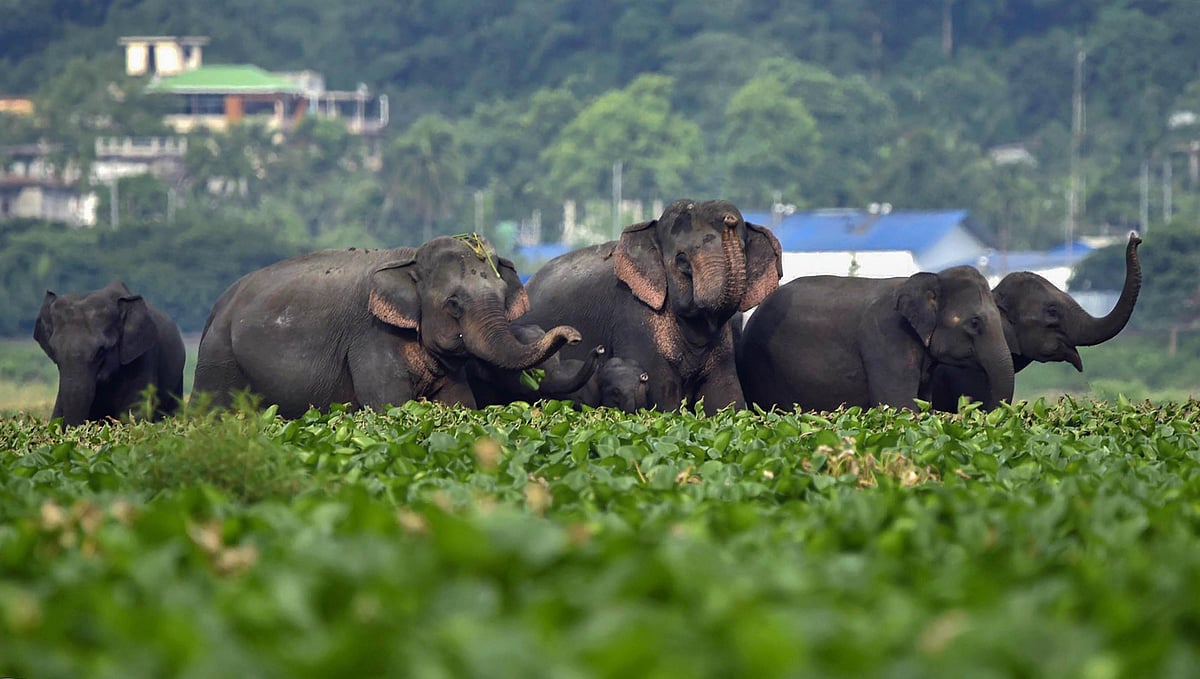
Hubballi: Karnataka and Kerala, two states that collectively house around 40% of India’s wild elephant population, have made notable efforts in preventing human casualties from elephant attacks.
Over the past five years, Karnataka recorded 160 human deaths due to elephant attacks, while Kerala lost 102 lives. Both states together host a combined total of 11,755 wild elephants out of the 29,964 wild jumbos in India as per the 2017 Elephant census, as reported by Deccan Herald on Thursday.
When standardised, every 100 elephants killed 2.6 humans in Karnataka, while in Kerala, the figure was lower at 1.78 deaths. In stark contrast, the national average stands at 9.44 human fatalities per 100 elephants.
Experts suggested that combination of habitat consolidation and the use of modern technology has contributed to the comparatively low number of human deaths in these two states.
The Ministry of Environment, Forest and Climate Change had stated that between 2019 and 2024, wild elephants killed 2,829 humans. During the same period, India lost 528 elephants due to unnatural reasons including electrocution, run over by trains, poisoning and others, the report added.
State-wise, Odisha, which has a population of 1,976 elephants, reported the highest human death toll—624 lives lost to elephant attacks. Other states with significant fatalities include Jharkhand (474 deaths from 679 elephants), West Bengal (436 deaths from 194 elephants), and Assam (383 deaths from 5,719 elephants).
Government documents, cited by DH, revealed that West Bengal has the highest mortality rate when adjusted for elephant population size. In West Bengal, every 100 elephants are responsible for 224.74 human deaths. Chhattisgarh and Maharashtra follow closely behind with rates of 122.67 and 133.33 fatalities per 100 elephants, respectively.
Raman Sukumar, the former chairman of the Karnataka Elephant Task Force, attributed the relatively lower human casualties in Karnataka and Kerala to well-managed habitats and connectivity. He noted that states like West Bengal, Odisha, Chhattisgarh, and Jharkhand are witnessing higher human fatalities due to habitat fragmentation, range expansion and dispersing of elephants to newer habitats.
Let the Truth be known. If you read VB and like VB, please be a VB Supporter and Help us deliver the Truth to one and all.
NCB seizes over 39 kgs of Alprazolam in Telangana; three arrested

Hyderabad (PTI): A gang allegedly manufacturing and trafficking Alprazolam drug in bulk quantity illegally in Siddipet district of Telangana has been busted, NCB officials said on Sunday.
Three people, including a Chemist freelancer, have been arrested in this regard, they added.
As much as 39.470 kgs of Alprazolam worth around Rs 12 crore and Rs 85.36 lakhs in cash were seized on May 15, the Hyderabad Zonal Unit of the Narcotics Control Bureau (NCB) said in a release.
On the basis of specific information, NCB officials intercepted two four-wheelers and two persons when they were exchanging Alprazolam illegally without any valid license.
The search resulted in the recovery of 39.470 kgs of Alprazolam and Rs 85,36,200 in cash, found to be proceeds of Alprazolam sales, it said.
On the basis of a disclosure made by one of the accused about the supplier of the Alprazolam, NCB officials apprehended another person from Hyderabad.
On interrogation, it was revealed that the person who supplied the drug had studied MSc Chemistry. He is working as a chemist freelancer, and he disclosed that he manufactured the seized Alprazolam clandestinely in his laboratory at Prashantnagar here, the NCB said.
All three persons "confessed to their involvement in manufacturing and trafficking of Alprazolam illegally" and were arrested under the relevant sections of the NDPS Act 1985.
Preliminary investigation suggested that they transacted around 150 kgs of Alprazolam over the last five years.
All three accused were produced before the magistrate and sent to judicial custody. Further investigation is ongoing, the release added.