Kolar: SC/ST students in Malur residential school made to clean septic tank
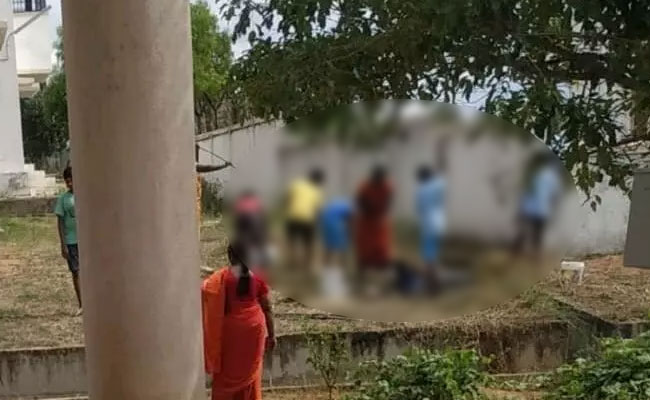
Kolar: In a shocking incident at Morarji Desai Residential School in Yaluvahalli, Malur taluk, students, all belonging to Scheduled Caste and Scheduled Tribe communities, were allegedly forced to clean a septic tank. The incident came to light through a viral video shot by a teacher on a mobile phone.
According to reports, five to six students in Classes 7 to 9 were made to enter and clean the septic tank, with the principal and a teacher present. In the video, the students can be seen sharing their distress, describing the harsh conditions they endure at the school. They allege being subjected to punishment, including kneeling outside the hostel at night, and physical abuse, as captured by CCTV footage.
"We are undergoing a lot of torture here and only wish to escape from here. At nights, we are made to switch the lights off and carry our bags outside the hostel, where we have to kneel down before facing the torture at their hands. Our appeals against such punishment, even if we say we are tired, are ignored." The children can be seen saying.
The school, hosting 250 students from Class 6 to Class 10, with residential staff, has faced severe criticism for the alleged violation of the Abolition of Manual Scavenging Act 1993, which prohibits employing Dalit children for such hazardous tasks.
Nagarathna, District Child Welfare Officer, conducted an immediate visit upon learning of the incident. She submitted a report recommending strict action against the responsible parties to the Joint Director of the Social Welfare Department.
R Srinivas, Joint Director of the Social Welfare Department, confirmed an inspection and instructed the school's principal and teacher not to involve children in such tasks. He has written to higher authorities to take stringent action against the implicated school staff members accused of both the septic tank incident and nighttime torture.
Public outrage has intensified, demanding justice for the students and accountability for the alleged violations.
Let the Truth be known. If you read VB and like VB, please be a VB Supporter and Help us deliver the Truth to one and all.
TVK doesn't have the support of majority voters, says Udhayanidhi
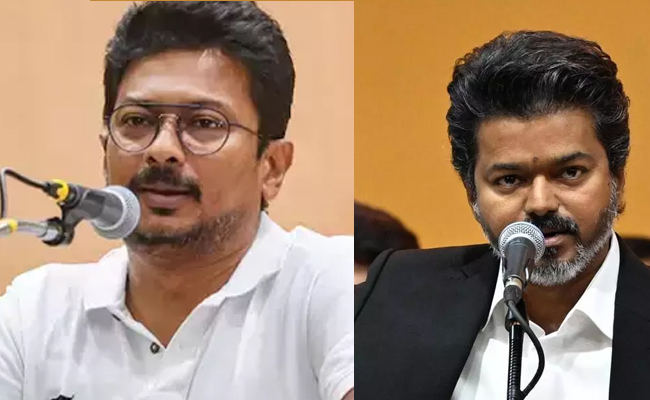
Chennai (PTI): Tamil Nadu Leader of Opposition Udhayanidhi Stalin on Wednesday said the TVK government did not enjoy the support of majority voters and criticised it for going ahead with the backing of a section of legislators of the AIADMK, which the ruling party had slammed for corruption earlier.
In his speech during the proceedings of the TVK government's floor test, he also urged the government to continue the welfare schemes that were launched by the previous DMK dispensation.
The DMK walked out and abstained from voting during the confidence vote, which the C Joseph Vijay-led government won by a comfortable margin of 144.
With regard to the TVK government formation, Udhayanidhi said "first, the majority of people did not vote for TVK."
He said that in the recently concluded Assembly elections, around 4.93 crore people cast their votes.
"Do you know how many voted for the ruling party. Just 1.72 crore", he said, adding, "the remaining approximately 3.21 crore people voted against your party and you must understand this".
He claimed nearly 65 per cent of the voters had "rejected" the Vijay-led TVK.
Further, he slammed the TVK for taking the support of an AMMK MLA, with his party fighting the April 23 polls as a constituent of the AIADMK-led NDA in Tamil Nadu.
"After saying they were your ideological enemy, you have secured support for this government from an MLA who contested in the BJP-led NDA alliance," Udhyananidhi said. He also recalled AMMK chief TTV Dhinakaran's remarks that TVK earlier engaged in "horse-trading even before coming to power".
Dhinakaran has sacked AMMK MLA S Kamaraj, after the latter extended support to the TVK government.
Udhayanidhi said the major party in the same BJP-led NDA alliance AIADMK has split almost into two groups. "New sofa was delivered to the home of a leader from that splinter group, followed by the visit of the chief minister there. During elections, you called them (AIADMK) a corrupt force", he said.
"What are people asking..(why) the ruling party has now aligned with that corrupt force. You promised a clean government Is this the hallmark of your clean governance? People have begun questioning", he charged.
"Even those who voted for you have, upon witnessing these events, begun regretting their big mistake today. To express the people's sentiment, DMK members will walk out without participating", in the voting, he said.
Earlier, listing out various schemes that were launched by the DMK government under the leadership of M K Stalin, the LoP said more than one crore women will be waiting to get Rs 1,000 into their bank account under "Magalir Urimai Thogai Thittam" next month.
The DMK leader said as the government schools will be re-opening on June 2, students will be waiting for food under the breakfast scheme, launched by the Stalin government.
He also urged the TVK government to continue the DMK government's free bus travel scheme for women.
Pointing out various poll promises including providing six LPG gas cylinders and monthly financial assistance for women, Udhayanidhi said that after Vijay took over as chief minister, the new government should have signed files to implement at least a few of these welfare schemes.
He claimed that when DMK came to power in 2021, the then chief minister Stalin's first signature was to implement the free bus travel scheme for women.
"Financial assistance of Rs 4,000 was also extended to the people during the second wave of Coronavirus", he said.