Kolar woman's rare, unique blood group named 'CRIB'

Kolar: A 38-year-old woman from Srinivaspur taluk in Kolar district has been identified as having one of the rarest and most unique blood groups in the world.
According to report published by Deccan Herald on Friday, the woman was admitted to R.L. Jalappa Narayana Heart Centre on the outskirts of Kolar for a cardiac condition last year. Prior to her surgery, Dr Murali Babu sent her blood samples for routine testing to Jalappa Hospital.
However, the hospital's blood bank specialists encountered difficulty in determining her blood type due to its rare nature. Consequently, the sample was forwarded to the TTK Blood Centre in Bengaluru for more advanced analysis. The case was then referred to the International Blood Group Reference Laboratory in England for further examination.
Blood samples from around 20 of the woman's family members were also collected and tested to assist with the research and confirmation process.
After extensive testing, it was confirmed that the woman possesses a globally rare and scientifically significant blood group. This blood group has been officially named ‘CRIB,’ derived from the Cromer (CR) system under which it falls. The name CRIB also honours its discovery in India (I), specifically Bengaluru (B), added the report.
Let the Truth be known. If you read VB and like VB, please be a VB Supporter and Help us deliver the Truth to one and all.
Congress using hijab issue to pacify minority anger, alleges Karnataka LoP R Ashoka
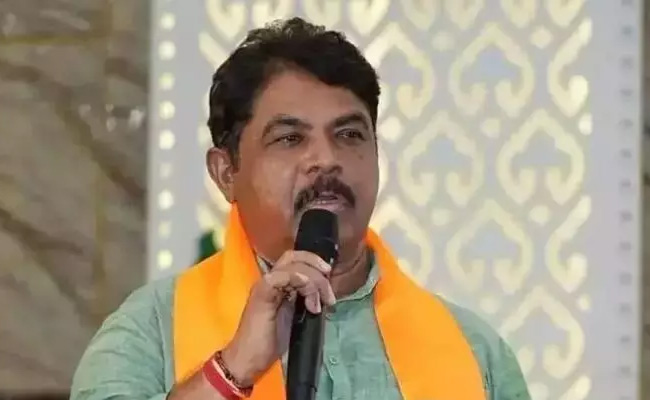
Bengaluru: Leader of Opposition in the Assembly R. Ashoka has accused the Congress government of using the hijab issue to placate what he described as discontent among minority voters after the Davanagere by-election.
In a post on X on Wednesday, Ashoka alleged that the state government, instead of addressing issues such as price rise, corruption, farmers’ distress and law and order, was attempting to retain its minority vote base by reviving the hijab issue.
Referring to the 2022 dress code introduced by the BJP government, which prohibited hijab in schools and colleges, Ashoka said the Karnataka High Court had upheld the policy and emphasised the importance of discipline in educational institutions.
He questioned the Congress government’s move to revisit the issue and asked whether setting aside the court-backed policy to benefit one community could be described as secularism.
Ashoka further alleged that while the government was willing to permit hijab, it continued to prohibit saffron shawls.
He accused the government of dividing students on religious lines rather than treating schools and colleges as spaces of equality.
Drawing a comparison with Mamata Banerjee’s government in West Bengal, Ashoka claimed that excessive appeasement politics had harmed the state and warned that the Congress in Karnataka could face a similar political response.
He said voters in Karnataka would teach the Congress a lesson for what he termed “vote-bank politics” and for compromising constitutional and judicial principles.