KSRTC MD Akram Pasha receives SKOCH National Award for transparent recruitment initiative

Bengaluru : The Karnataka State Road Transport Corporation (KSRTC) has been conferred the prestigious SKOCH National Award 2025 for its initiative on “Transparent Recruitment and Training Programme.”
The award was presented at a ceremony held at Silver Oak Hall, India Habitat Centre, on March 28.
According to a release from the state-run corporation, the award recognises its efforts in ensuring transparency and uniformity across its recruitment process, from application submission to final selection and unit allocation, by minimising human intervention.
“The corporation has implemented a technology-driven recruitment system featuring automated driving tests, online examinations, digital document verification, webcasting, and auto-generated scorecards,” KSRTC added.
It also stated that KSRTC has successfully recruited 2,000 drivers and conductors, 300 technical staff, and 441 candidates under compassionate grounds.
In addition, over the past six months, more than 12,000 employees have undergone structured training programmes, contributing to improved organisational performance and capacity building.
The SKOCH Group, a Delhi-based independent think tank established in 1997, has been presenting the SKOCH Awards since 2003, recognising excellence in governance, finance, technology adoption, transparency, and institutional development based on measurable impact.
The award was received by Akram Pasha, Managing Director of KSRTC, from Sameer Kochhar, Chairman of SKOCH Group, and Gursharan Dhanjal, Vice Chairman, at the ceremony.
Let the Truth be known. If you read VB and like VB, please be a VB Supporter and Help us deliver the Truth to one and all.
Gujarat builds 870 MW battery power backup network to stabilise renewable energy grid
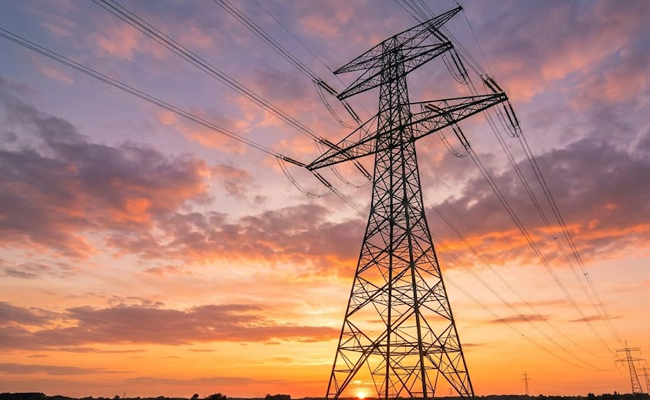
Gandhinagar (PTI): Gujarat has initiated battery storage systems at five locations in the state, with a total capacity of 870 MW, to maintain the stability of the renewable power grid, officials said on Saturday.
Battery Energy Storage Systems (BESS) are essential for storing electricity generated from solar and other renewable sources. They help manage additional load and maintain grid stability.
“Gujarat has initiated battery storage systems at five locations with a total capacity of 870 MW,” an official release stated.
The state has also registered 13 projects across Ahmedabad, Gandhinagar, Banaskantha, Patan and Kutch districts to set up additional battery storage systems, it said.
Modhera in Gujarat, India’s first solar village, has launched the country’s first BESS integrated with a solar power plant, it said.
"Under the leadership of Chief Minister Bhupendra Patel, the state has continued to advance in this direction and has strengthened its position among the leading states driving battery storage systems in India,” the release said.
Recently, a battery storage system was commissioned at Charal in the Sanand taluka of Ahmedabad, it said.
Four systems are operational at Modhera in Mehsana and Lakhpat in Kutch. The state government has also included advanced energy storage systems as a key component in the Gujarat Integrated Renewable Energy Policy, 2025, the release said.
Accordingly, standalone battery storage projects, works linked with new renewable energy installations, and those integrated with existing renewable energy systems are being approved, it said.
Once the Standard Operating Procedure is approved, registrations for battery storage will open for commercial and industrial users, it said, adding that the move will allow them to set up battery storage alongside their solar or wind projects.
The state government is developing battery storage systems across Gujarat, with companies being invited in through a competitive bidding process.
GETCO (Gujarat Energy Transmission Corporation) and power distribution companies strategically identify locations for battery storage systems based on grid capacity and operational requirements, the release said.
Power generation from solar and other renewable sources fluctuates throughout the day. Excess energy generated during peak hours can be stored and supplied later during periods of high demand, especially in the evening when solar output declines. Battery storage systems help reduce stress on the grid and improve grid stability, it added.