K'taka HC allows D K Shivakumar to file memo seeking withdrawal of his appeal in DA case
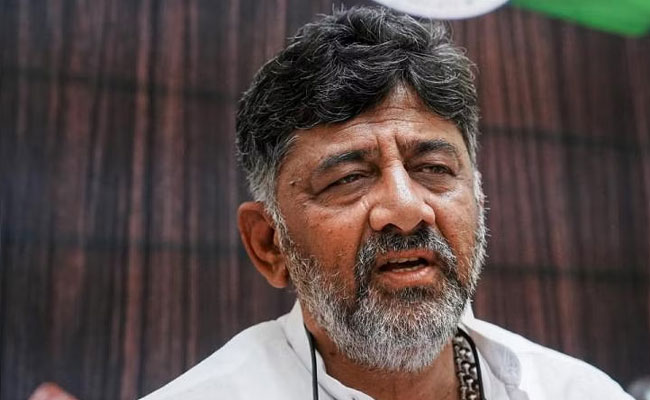
Bengaluru (PTI): The High Court of Karnataka on Wednesday allowed Deputy Chief Minister D K Shivakumar to withdraw his appeal against a single judge order over the issue of sanction to the CBI to prosecute him in assets case.
The court allowed the deputy CM to file a memo seeking to withdraw the appeal filed by him challenging the earlier order.
The single judge bench had refused to quash the sanction granted by the previous government to the CBI to prosecute him.
Senior advocate Abhishek Singhvi who appeared on video conference arguing for Shivakumar said that since the sanction that is under challenge has been withdrawn by the incumbent government, the issue has become infructuous and therefore he has instructions to withdraw it.
"The practical issue is very simple. The Writ is filed challenging a sanction. Today, the sanction under challenge is withdrawn. Somebody will challenge, some will not (the sanction) but that is not of concern today. It (Appeal) is infructuous. It is liable to be allowed to be withdrawn," he argued.
Karnataka cabinet headed by Chief Minister Siddaramaiah on November 23 held that the previous BJP government's move to give consent to the CBI to investigate the disproportionate assets case against Shivakumar, also the State Congress president, was not in accordance with law and decided to withdraw the sanction.
Another senior counsel Kapil Sibal who appeared for the state argued that "at the moment we have withdrawn consent. If the CBI thinks they have jurisdiction they can continue. As far as I am concerned, Section 6 of the Statute is very clear. If they want to challenge it they are welcome to. But the statute does not give them power. If they think they have the power they are welcome to challenge it (Statute). As far as I am concerned, they have no jurisdiction."
The counsel for the CBI argued that "whether they can overcome the order of the single judge is the question."
"Whether such an order (withdrawing consent) could be passed after an FIR is filed and investigation is going on."
The CBI counsel also submitted that as per a Supreme Court order, withdrawing consent to the CBI is "Prospective in nature and investigation already underway have to be completed."
The Bench of Chief Justice Prasanna B Varale and Justice Krishna S Dixit however said that "But it has to be challenged. If the order of the government is unsustainable, somebody can challenge it."
The HC said that it cannot expand the scope of the appeal to decide on whether the withdrawal of the sanction is good or bad in law. "It is not in our domain to ask the CBI why this order is not challenged," the court said.
The counsels were given one hour to file a memo to withdraw the appeal. The HC is on a recess and is expected to give its order on the memo later in the day.
A single judge bench had earlier dismissed Shivakumar's petition challenging the sanction of September 25, 2019 granted by the government to prosecute him. Shivakumar then challenged it before the division bench which had stayed the single judge order.
The CBI had filed an application for vacation of this stay. The agency also approached the Supreme Court which directed the HC to hear the application filed by the CBI seeking vacation of stay preferably within two weeks.
Based on the Income Tax Department's search operations in Shivakumar's home and offices in 2017, the Enforcement Directorate started its own probe against him.
Based on the ED investigation, the CBI sought sanction from the State Government to file FIR against him, for which the sanction was given the sanction on September 25, 2019. The CBI had filed an FIR against Shivakumar on October 3, 2020.
Let the Truth be known. If you read VB and like VB, please be a VB Supporter and Help us deliver the Truth to one and all.
Jharkhand: 3 arrested for 'raping' 2 women in Gumla

Gumla (PTI): Three persons were arrested on Monday for allegedly raping two women at a village in Jharkhand’s Gumla district, police said.
All the three accused have been remanded to judicial custody, Gumla Sadar Police Station officer-in-charge, Mahendra Karmali, told PTI.
According to police, one of the women had been called to Gumla Sadar by her boyfriend on Sunday for an outing.
“She arrived at the spot accompanied by a female. The woman’s boyfriend then called a friend, and they took the two women to a secluded place in Sisai police station area in the evening, forcibly made them consume alcohol before raping them,” the officer said.
The accused later called another man to the spot, who also allegedly raped the women, he said.
“The women later reached the Sadar Police Station and lodged a complaint on Sunday night. Police conducted raids and nabbed the three accused on Monday,” he added.
Further investigation is underway.