K'taka's Rs 214 cr water projects fail: Over 30 schemes defunct due to poor planning, maintenance

Bengaluru: At least 32 multi-village water supply schemes across Karnataka, intended to serve over five lakh people, have become dysfunctional, even after Rs 214 crore of taxpayer money was spent.
The failure has been attributed to poor planning, lack of upkeep, open defecation near water sources, and inadequate post-project support, according to a government study cited by Deccan Herald on Thursday.
The study analysed projects implemented between 2000 and 2016 across 13 districts: Bagalkot, Ballari, Belagavi, Bidar, Davangere, Dharwad, Gadag, Kalaburagi, Mysuru, Raichur, Tumakuru, Vijayanagar, and Yadgir.
The defunct schemes are part of a broader set of 437 multi-village drinking water projects implemented across the state at a total cost of Rs 8,456 crore. Of these, 45 schemes, including the 32 examined in the study, have failed to deliver water to the intended beneficiaries.
Despite some schemes being based on "perennial" water sources, including major rivers like Ghataprabha, Malaprabha, Bhima, Krishna, Manjira, Tungabhadra, and Kabini, the projects failed due to factors such as infrastructure damage during road works, mechanical farming activities, floods, and theft of critical assets. Reasons for the failure of other schemes whose water sources were non-perennial are largely similar.
The study also identified institutional failures. In several cases, schemes were abruptly handed over to gram panchayats without the necessary funds for operation and maintenance (O&M). Technical design flaws, inadequate financial planning, and lack of community engagement further contributed to the breakdown of services.
“These reasons bring home the message that it is not sufficient to have a perennial source but a host of other measures are required for the successful operation and maintenance of rural water supply schemes,” the study said.
It also criticised the Rural Drinking Water and Sanitation Department (RDWSD) for focusing narrowly on infrastructure, while neglecting social, institutional, financial, and governance aspects.
Open defecation along riverbanks has led to widespread public distrust in water quality, the report found. Additionally, there is competition between farmer groups drawing water for irrigation and RDWSD efforts to secure supply for domestic use—particularly in river-based schemes.
The study warned that the state government must learn from these failures, especially as it spending another Rs 18,897 crore on 89 new multi-village water supply schemes.
Let the Truth be known. If you read VB and like VB, please be a VB Supporter and Help us deliver the Truth to one and all.
Congress using hijab issue to pacify minority anger, alleges Karnataka LoP R Ashoka
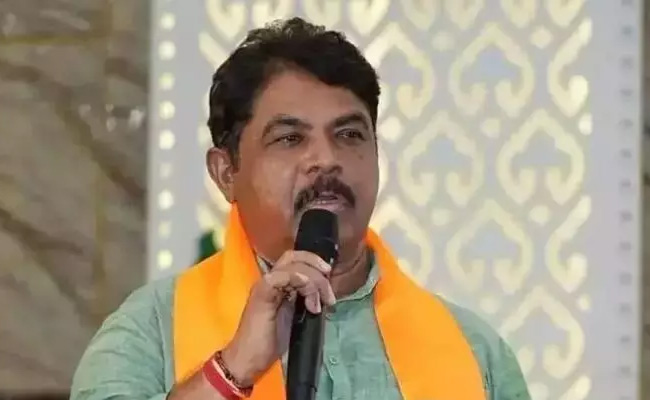
Bengaluru: Leader of Opposition in the Assembly R. Ashoka has accused the Congress government of using the hijab issue to placate what he described as discontent among minority voters after the Davanagere by-election.
In a post on X on Wednesday, Ashoka alleged that the state government, instead of addressing issues such as price rise, corruption, farmers’ distress and law and order, was attempting to retain its minority vote base by reviving the hijab issue.
Referring to the 2022 dress code introduced by the BJP government, which prohibited hijab in schools and colleges, Ashoka said the Karnataka High Court had upheld the policy and emphasised the importance of discipline in educational institutions.
He questioned the Congress government’s move to revisit the issue and asked whether setting aside the court-backed policy to benefit one community could be described as secularism.
Ashoka further alleged that while the government was willing to permit hijab, it continued to prohibit saffron shawls.
He accused the government of dividing students on religious lines rather than treating schools and colleges as spaces of equality.
Drawing a comparison with Mamata Banerjee’s government in West Bengal, Ashoka claimed that excessive appeasement politics had harmed the state and warned that the Congress in Karnataka could face a similar political response.
He said voters in Karnataka would teach the Congress a lesson for what he termed “vote-bank politics” and for compromising constitutional and judicial principles.