Madiga leader taken into custody by Mysuru police during protest rally as precautionary measure
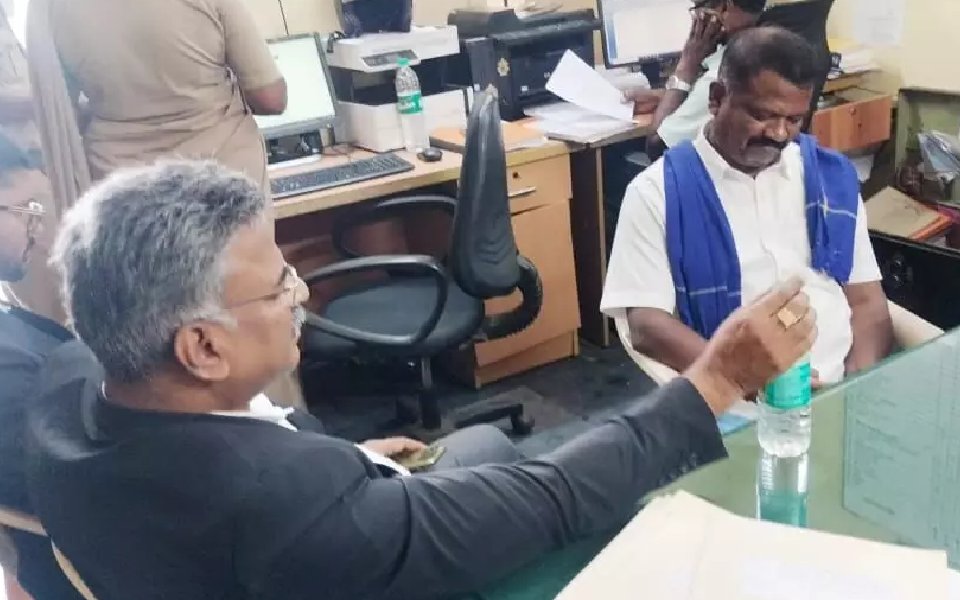
Mysuru: Leader of the Madiga Struggle Committee BR Bhaskar Prasad, who was taking out a rally from Chamundi Hills in the district till Freedom Park in Bengaluru demanding a stay on the hike in the salary of government SC employees and implementation of internal reservation, was taken into custody in the city by the police as precautionary measure.
Dissatisfied that the pay to government employees belonging to SC communities has been increased although the state government had assured not to hike the pay until the internal reservation is implemented, Prasad started a rally in a semi-nude state from Mysuru to Bengaluru on Monday.
The Madiga Struggle Committee is also learned to have planned to stage a protest under his leadership outside the Mysuru Deputy Commissioner’s office on Monday.
In addition, members of the Holeya Community Constitution Protection Committee and other organizations, who had been angered that Prasad spoke in a derogatory manner about Chief Minister Siddaramaiah and Social Welfare Minister Dr. HC Mahadevappa recently, came forth to stage a protest outside the DC’s office on Monday, demanding that Prasad be arrested.
As the situation started growing tense, also showing signs of the possibility of a clash erupting between the two groups, the police intervened and took into custody the members of the Madiga community who planned a protest.
In addition, the police denied permission to the other organizations to protest against Prasad.
Let the Truth be known. If you read VB and like VB, please be a VB Supporter and Help us deliver the Truth to one and all.
Ordinance issued to increase number of Supreme Court judges from 34 to 38
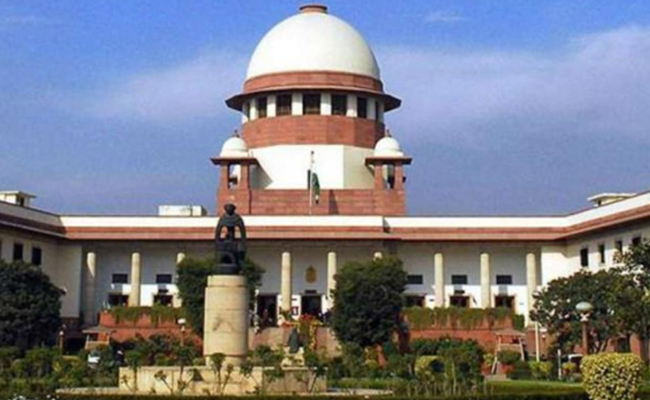
New Delhi (PTI): The government has promulgated an ordinance to increase the strength of the Supreme Court from the present 34 judges to 38, including the Chief Justice of India.
The law ministry notified the ordinance on Saturday, which amended the Supreme Court (Number of Judges) Act, 1956, to increase the sanctioned strength of the top court.
So far, the sanctioned strength of the top court was 34, including the Chief Justice of India (CJI). Now, the number of judges has been increased by four, taking the sanctioned strength to 38.
The top court will now have 37 judges, other than the CJI.
With the apex court having two vacancies at present, and the ordinance coming into force immediately, the Supreme Court Collegium will now have to recommend six names for appointment as judges in the top court.
A bill will be brought in the Monsoon Session of Parliament to convert the ordinance – an executive order – into a law passed by Parliament.
The Union Cabinet had cleared a draft bill on May 5 to increase the number of apex court judges.
The strength of the Supreme Court was last increased from 30 to 33 (excluding the CJI) in 2019.
The Supreme Court (Number of Judges) Act, as originally enacted in 1956, put the maximum number of judges (excluding the CJI) at 10.
This number was increased to 13 by the Supreme Court (Number of Judges), Amendment Act, 1960, and to 17 by another amendment to the law.
The Supreme Court (Number of Judges) Amendment Act, 1986, augmented the strength of judges from 17 to 25, excluding the CJI.
A fresh amendment in 2009 further increased the strength from 25 to 30.
Article 124(3) of the Constitution lists the qualifications required to become a Supreme Court judge.
An Indian citizen who has either served as a high court judge for at least five years, or as an advocate for 10 years, or is a distinguished jurist, can be appointed to the top court.
The strength of the Supreme Court is increased based on the recommendations of the CJI, who writes to the Union law minister. After consulting the finance ministry, the Department of Justice under the law ministry moves the Cabinet with a draft bill.