Prof. Mahesh Chandra Guru questions Mohan Bhagvat's credibility to comment on Dalit-Muslims alliance
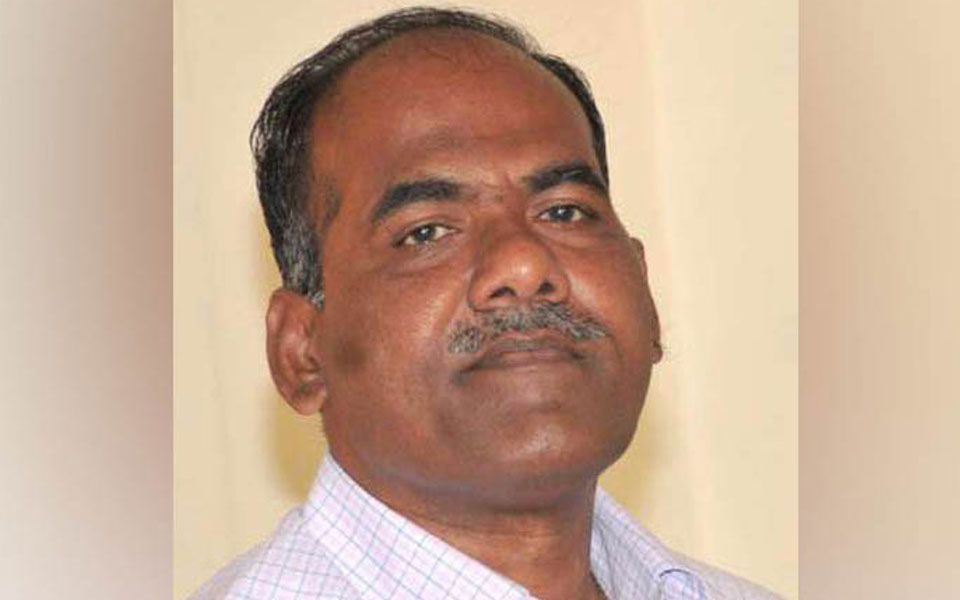
Mysuru: “Who is Mohan Bhagvat to speak about Dalits and Muslims when he does not have any knowledge of history?” progressive thinker Prof. Mahesh Chandra Guru questioned the RSS chief’s recent statement that Ambedkar had no respect for Muslims, urging Dalits not to mix and unite with Muslims.
“If Ambedkar hadn’t had respect for Muslims, he would not have given reservation to minorities. Mohan Bhagvat has no knowledge of history. His statement was ridiculous. No one should believe his statement” Mahesh told Varthabharati pointing Bhagvat’s statement on dalits and Muslims at Dharma Samsath.
“He does not have the moral right to comment on Dalits and Muslims. What does he know about Dalits and Muslims. He for sure know the fact that his organization and ideology will have no place in the country if these two communities unite. So he is giving such statements and neither Dalits nor Muslims shall get carried away from such statements”, he said.
Taking a dig at Bhagvat, Prof Guru said that Ambedkar had given three calls during All India Scheduled Caste Federation inauguration in 1952. One is all Dalits should join Buddhism, second the Dalits and Muslims of the country should come together to rule this country and the last one is ‘Dalits, Muslims and backward classes should get political power’. Bhagvat should first understand the history and later speak about it, he said
Bhagvat on Thursday had warned Dalits against alliance with Muslims while claiming to be quoting Dr. BR Ambedkar.
“Babasaheb Bhimrao Ambedkar was well aware of the nefarious designs of Muslims. He always warned against any kind of association (political) with the Muslims,” Bhagwat said at the two-day Dharam Sansad in UP
“Now, efforts are being made for a Dalit-Muslim alliance. Babasaheb had himself termed these jihadis untrustworthy. We need to aware people about this,” the RSS chief said.
Bhagvat’s comment came as reports of Dalits-Muslim alliance to defeat BJP in UP is gaining prominence.
Let the Truth be known. If you read VB and like VB, please be a VB Supporter and Help us deliver the Truth to one and all.
AIITA welcomes Karnataka’s ban on obscene songs in school events
Bhatkal: The Karnataka unit of the All India Ideal Teachers Association (AIITA) has welcomed the Karnataka government’s decision to strictly ban school children from dancing to obscene songs during educational and cultural programmes in government, aided, and private schools across the state.
AIITA Karnataka State President M. R. Manvi congratulated the government for taking what he termed an important step to preserve the sanctity of education.
“Such decisions to safeguard the dignity of school children and uphold the values of education are the need of the hour. This rule should not be limited to government schools alone but must be strictly implemented in all private educational institutions as well,” he said.
He further urged the government to address other concerns within school programmes.
“The government should not only prohibit obscene dances in the name of school anniversaries, but also ensure that plays and dialogues that incite religious hatred are avoided. Schools should be centres of harmony, not platforms for spreading hatred,” he added.
According to a recent circular issued by the Department of School Education and Literacy, obscene dances are adversely affecting the mental health and moral values of students.
In this regard, schools have been advised to use songs that promote nationalism, positive thinking, the greatness of Kannada culture, and value-based traditions instead of inappropriate content during programmes.
The circular also emphasises that students should be dressed in decent attire.
AIITA also backed the department’s warning that disciplinary action would be taken against head teachers if such guidelines are violated. The association has further demanded that district Deputy Directors of Public Instruction strictly monitor the implementation of these rules.