Man arrested for 'filming' women on Bengaluru metro without consent

Bengaluru, May 23 (PTI): A 27-year-old man was arrested on Friday for “clicking pictures and recording videos” of women travelling on the Bengaluru metro without their consent and later uploading them on a social media platform, police said.
The accused, Diganth, who was picked up from his house in the Tigalarpalya area, works in the accounts department of a private company, they added.
“A case was registered in this regard at Banashankari police station on May 20, and an investigation was launched. The accused is a 27-year-old man who works in the accounts department of a private firm. He is a resident of Tigalarpalya and works in Murugeshpalya,” said Lokesh B Jagalasar, Deputy Commissioner of Police (South).
“On his way to and from work, he used to videograph women without their knowledge or consent and upload the videos on an Instagram page. The person has been arrested and will face further legal action,” he added.
The photos and videos uploaded on the Instagram account identified as Bangalore Metro Clicks (@metro_chicks), which had over 6,000 followers, were later deleted, police said.
The issue came to light on May 20 when police were reviewing social media platforms for suspicious posts as part of a routine probe.
During this review, a police officer came across the Instagram account, which contained 14 unsolicited videos and pictures allegedly taken inside metro coaches and on station premises.
None of the women appeared to be aware that they were being photographed, police said.
Let the Truth be known. If you read VB and like VB, please be a VB Supporter and Help us deliver the Truth to one and all.
Ordinance issued to increase number of Supreme Court judges from 34 to 38
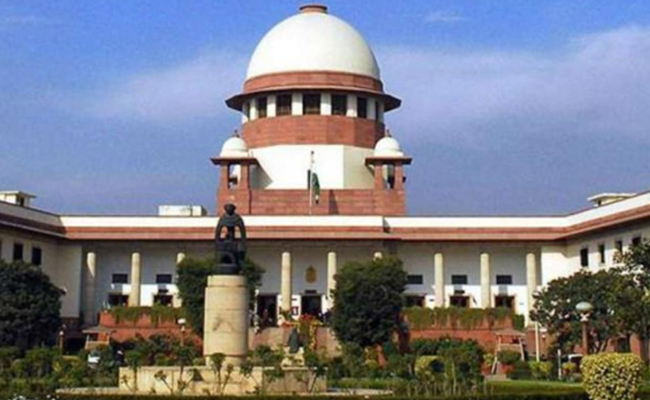
New Delhi (PTI): The government has promulgated an ordinance to increase the strength of the Supreme Court from the present 34 judges to 38, including the Chief Justice of India.
The law ministry notified the ordinance on Saturday, which amended the Supreme Court (Number of Judges) Act, 1956, to increase the sanctioned strength of the top court.
So far, the sanctioned strength of the top court was 34, including the Chief Justice of India (CJI). Now, the number of judges has been increased by four, taking the sanctioned strength to 38.
The top court will now have 37 judges, other than the CJI.
With the apex court having two vacancies at present, and the ordinance coming into force immediately, the Supreme Court Collegium will now have to recommend six names for appointment as judges in the top court.
A bill will be brought in the Monsoon Session of Parliament to convert the ordinance – an executive order – into a law passed by Parliament.
The Union Cabinet had cleared a draft bill on May 5 to increase the number of apex court judges.
The strength of the Supreme Court was last increased from 30 to 33 (excluding the CJI) in 2019.
The Supreme Court (Number of Judges) Act, as originally enacted in 1956, put the maximum number of judges (excluding the CJI) at 10.
This number was increased to 13 by the Supreme Court (Number of Judges), Amendment Act, 1960, and to 17 by another amendment to the law.
The Supreme Court (Number of Judges) Amendment Act, 1986, augmented the strength of judges from 17 to 25, excluding the CJI.
A fresh amendment in 2009 further increased the strength from 25 to 30.
Article 124(3) of the Constitution lists the qualifications required to become a Supreme Court judge.
An Indian citizen who has either served as a high court judge for at least five years, or as an advocate for 10 years, or is a distinguished jurist, can be appointed to the top court.
The strength of the Supreme Court is increased based on the recommendations of the CJI, who writes to the Union law minister. After consulting the finance ministry, the Department of Justice under the law ministry moves the Cabinet with a draft bill.