Minister MB Patil seeks industry leaders' support in Wayanad landslide relief efforts
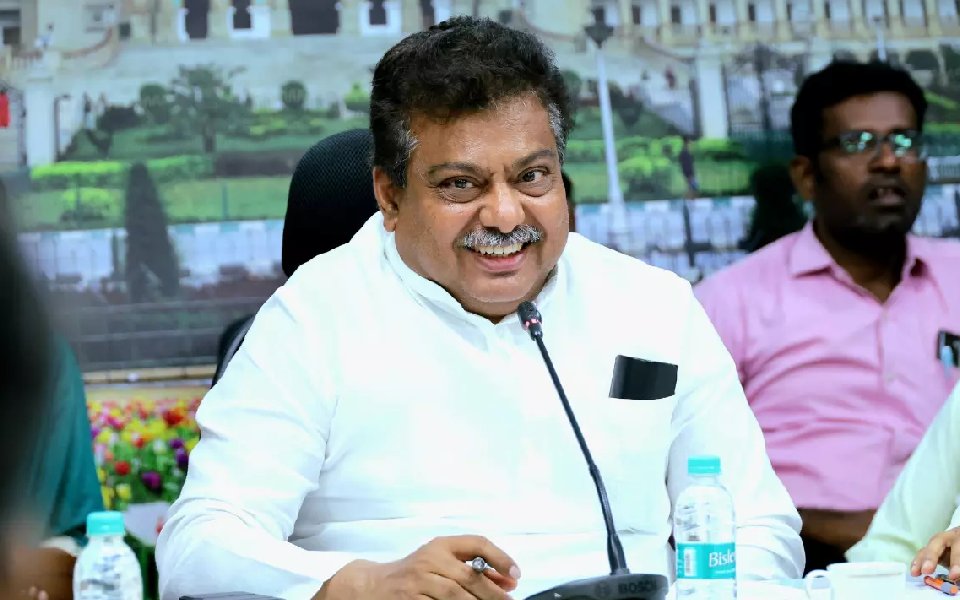
Bengaluru, Aug 10: In the wake of devastating landslides in Wayanad in neighbouring Kerala, which claimed over two hundred lives and left several people missing, Karnataka Minister MB Patil has appealed to industry leaders and corporations across Karnataka to extend their support for the relief and rehabilitation efforts.
In a letter addressed to industry leaders, Minister for Large and Medium Industries and Infrastructure Development Patil expressed his gratitude for their ongoing contributions to the industrial growth of Karnataka.
In a statement shared by the Minister's office, he highlighted the catastrophic loss resulting from the recent landslides, which have ravaged approximately 310 hectares of agricultural land, devastating the livelihoods of thousands of families in the affected regions of Mundakkai, Chooralmala, Attamala, and Meppadi. The disaster has left many without shelter, food, or basic necessities, he added.
The Minister has urged the industrial sector to come forward and contribute generously to the ongoing relief operations led by the Government of Kerala.
ALSO READ: Landslide in Sakleshpur: Six trains on Hassan-Mangaluru stalled
He emphasised the critical need for immediate rescue efforts, provision of essential supplies, and long-term rehabilitation initiatives. These include rebuilding homes, restoring agricultural lands, reconstructing schools and other essential infrastructure, providing livelihood support, and ensuring access to healthcare for those affected.
"This is a crucial time for us to come together and reaffirm our shared commitment to the welfare of our fellow citizens. By joining hands, we can help restore hope and rebuild lives in Wayanad," the Minister stated in his appeal.
He further noted that the contributions from industries would not only align with their corporate values but also make a significant impact on the lives of those affected by this unprecedented disaster.
The Minister has directed industries to coordinate with Gunjan Krishna, Commissioner for Industrial Development, for any clarifications or assistance regarding their contributions.
Patil said that in times of such humanitarian crises, the spirit of humanity must prevail above all else.
"This call to action underscores the Karnataka government's commitment to supporting its neighbouring state in overcoming the aftermath of this natural calamity," he stated.
At least 226 people died and many remain unaccounted for after landslides hit the region on July 30 in what is seen as one of the biggest natural disasters to have impacted the southern state.
Let the Truth be known. If you read VB and like VB, please be a VB Supporter and Help us deliver the Truth to one and all.
Ordinance issued to increase number of Supreme Court judges from 34 to 38
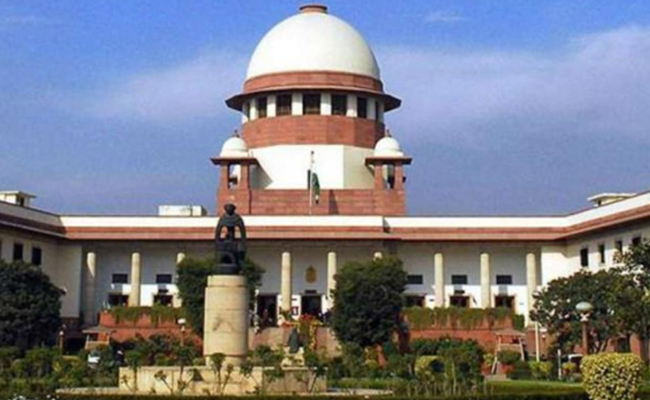
New Delhi (PTI): The government has promulgated an ordinance to increase the strength of the Supreme Court from the present 34 judges to 38, including the Chief Justice of India.
The law ministry notified the ordinance on Saturday, which amended the Supreme Court (Number of Judges) Act, 1956, to increase the sanctioned strength of the top court.
So far, the sanctioned strength of the top court was 34, including the Chief Justice of India (CJI). Now, the number of judges has been increased by four, taking the sanctioned strength to 38.
The top court will now have 37 judges, other than the CJI.
With the apex court having two vacancies at present, and the ordinance coming into force immediately, the Supreme Court Collegium will now have to recommend six names for appointment as judges in the top court.
A bill will be brought in the Monsoon Session of Parliament to convert the ordinance – an executive order – into a law passed by Parliament.
The Union Cabinet had cleared a draft bill on May 5 to increase the number of apex court judges.
The strength of the Supreme Court was last increased from 30 to 33 (excluding the CJI) in 2019.
The Supreme Court (Number of Judges) Act, as originally enacted in 1956, put the maximum number of judges (excluding the CJI) at 10.
This number was increased to 13 by the Supreme Court (Number of Judges), Amendment Act, 1960, and to 17 by another amendment to the law.
The Supreme Court (Number of Judges) Amendment Act, 1986, augmented the strength of judges from 17 to 25, excluding the CJI.
A fresh amendment in 2009 further increased the strength from 25 to 30.
Article 124(3) of the Constitution lists the qualifications required to become a Supreme Court judge.
An Indian citizen who has either served as a high court judge for at least five years, or as an advocate for 10 years, or is a distinguished jurist, can be appointed to the top court.
The strength of the Supreme Court is increased based on the recommendations of the CJI, who writes to the Union law minister. After consulting the finance ministry, the Department of Justice under the law ministry moves the Cabinet with a draft bill.