Modi has no development to show people after 10-year term: Siddaramaiah
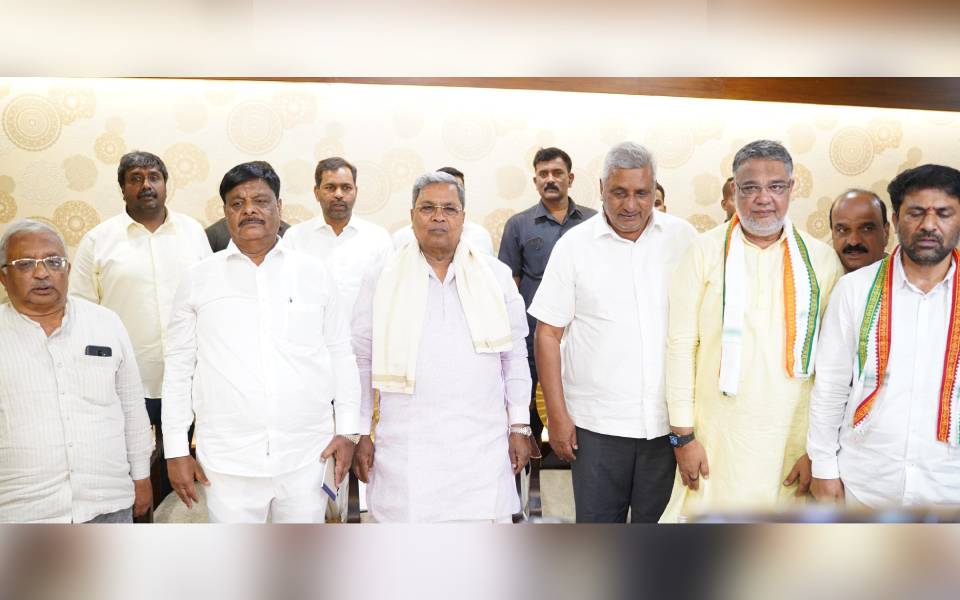
Bengaluru: Chief Minister Siddaramaiah expressed confidence in the Congress's prospects of winning seats in at least 20 constituencies, including Mysore-Kodagu and Chamarajanagar, in the upcoming Lok Sabha elections. He made these remarks while addressing a gathering of ministers, former ministers, MLAs, former MLAs, district heads, board presidents, block leaders, and other representatives from Mysore, Kodagu, and Chamarajanagar on Sunday.
Siddaramaiah assured the attendees that both Mysore and Chamarajanagar, traditionally strongholds of the Congress, would remain with the party this time. He cited previous losses by narrow margins but expressed optimism that the public's dissatisfaction with the BJP would lead to different results this time. Siddaramaiah credited Congress's relief measures for addressing the distress caused by price rises during the BJP's tenure.
The Chief Minister cited internal surveys predicting victories in 20 constituencies, including Mysore and Chamarajanagar, and emphasized the importance of unified efforts for achieving unprecedented results.
ALSO READ: LS polls: Rs 1.88 crore cash, liquor worth 87.19 lakh seized in Karnataka
Commenting on the BJP's reliance on branding Prime Minister Modi, Siddaramaiah criticized the lack of significant achievements during Modi's governance and accused the party of exploiting religious sentiments for electoral gains. He stressed the need for a society free from inequality and criticized BJP for exacerbating divisions along religious and caste lines.
Regarding the BJP-JDS alliance, Siddaramaiah questioned former Prime Minister Devegowda's decision to align with BJP despite previous statements against Modi. He advised reevaluating the party's secular credentials in light of recent developments.
“Devegowda had once said that he would leave the country if Modi was elected PM. The man who once said he wanted to be Muslim in the next birth has allied with BJP now. His son-in-law is also sent to BJP. It’s better to remove the word ‘secular’ from the party,” he added.
Siddaramaiah also highlighted the neglect shown by the Union Government towards Karnataka, citing delays in drought relief assistance and denial of essential aid despite the state's prolonged drought conditions.
The gathering was attended by several prominent leaders, including Social Welfare Minister H C Mahadevappa, Animal Husbandry Minister K Venkatesh, KPCC Working President Tanveer Sait, Committee for Implementation of Guarantee Schemes Vice-president Pushpa Amarnath, Ashraya Scheme President and Former MLA Yathindra Siddaramaiah, and Mysore Lok Sabha candidate Lakshman.
Let the Truth be known. If you read VB and like VB, please be a VB Supporter and Help us deliver the Truth to one and all.
Mamata visits Bhabanipur EVM strong room, warns against counting irregularities
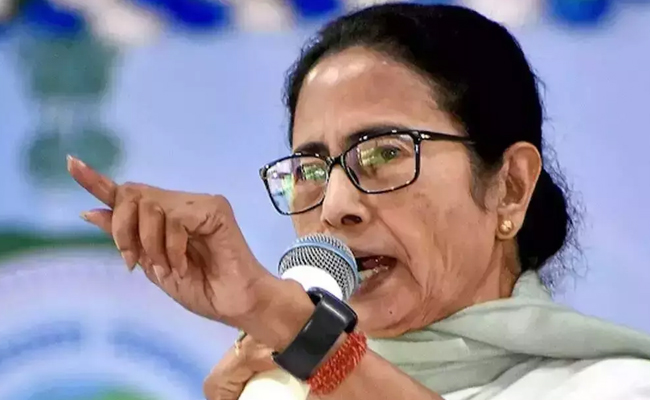
Kolkata (PTI): West Bengal Chief Minister and TMC supremo Mamata Banerjee early Friday warned against any attempt to tamper with the counting process, hours after she visited an EVM strong room in Bhabanipur, alleging possible malpractice.
Banerjee, who emerged around 12:07 am after spending nearly four hours at the counting centre for her Bhabanipur constituency housed in Sakhawat Memorial School in south Kolkata, said only one person would be allowed inside the designated counting area.
"Either the candidate or one agent can stay upstairs. I have also suggested installation of a CCTV camera for the media," she told reporters.
Stressing the need for transparency, she said, "It is essential to maintain transparency. People’s votes must be protected. I rushed here after receiving complaints. The central forces initially did not allow me to enter."
Sounding a stern note ahead of the May 4 counting, she added, "If there is any plan to tamper with the counting process, it will not be tolerated."
On Thursday evening, Banerjee had reached the Bhabanipur Assembly segment counting centre, which houses the strong room for EVMs used in the April 29 polling, citing suspicion of tampering with the machines.
She entered the premises along with her election agent and remained inside for hours, even as Kolkata Mayor and TMC candidate from the Kolkata Port segment Firhad Hakim reached the spot but could not meet her.
"I reached here upon learning that the chief minister has arrived. But I couldn’t meet her since she was already inside the premises, exercising her right as a candidate to visit strong rooms. I wasn’t allowed there. I will not be able to confirm what exactly is transpiring inside," Hakim said.
The development coincided with protests by TMC candidates Kunal Ghosh and Shashi Panja outside the Khudiram Anushilan Kendra in north Kolkata, where they staged a sit-in alleging irregularities and possible tampering of EVMs stored in strong rooms, leading to face-offs between TMC and BJP supporters.
Earlier in a video message, Banerjee had urged party leaders, workers and polling agents to maintain a 24-hour vigil on EVM strong rooms, alleging that the BJP could attempt to tamper with the machines before counting begins.
Her remarks come amid heightened political tension in the state following a fiercely contested Assembly election, with parties closely monitoring arrangements and raising concerns over transparency.