
'My last election', says Siddaramaiah, files nomination from Varuna
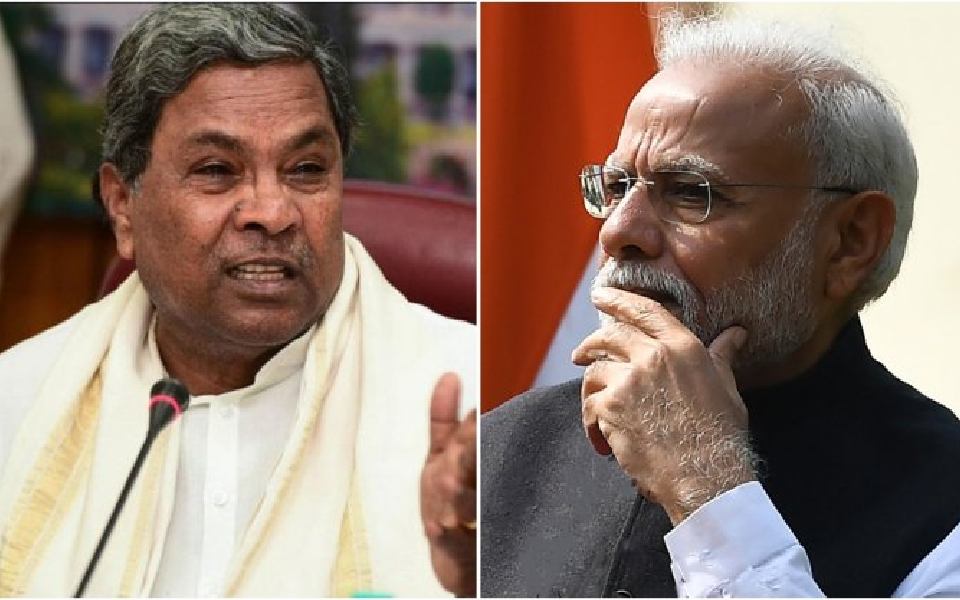
Mysuru (K'taka), Apr 19: Senior Congress leader and former Chief Minister Siddaramaiah on Wednesday filed nomination from Varuna constituency in this district, for the May 10 Karnataka Assembly polls, as he reiterated that this would be his last election and virtually laid out a "succession plan" of sorts.
The 75-year-old Leader of Opposition indicated his son and grandson to be his political successors. "This is my last election, after that there is Yathindra (son), Dhawan Rakesh (grand son)...", he said.
Siddaramaiah's younger son Dr Yathindra Siddaramaiah is the sitting Congress MLA from Varuna.
An eight time MLA, Siddaramaiah had earlier won twice from Varuna, and went on to become the Leader of Opposition after winning from here in 2008, and then became Chief Minister after 2013 Assembly polls.
The Congress legislature party leader offered prayers to his family deity Siddarameshwara at the temple in his native village of Siddaramanahundi, and also visited Sri Rama temple there, and held a massive roadshow before filing the nomination.
He also visited the famous Chamundeshwari temple on Chamundi hills in Mysuru, and addressed a public meeting ahead of filing papers.
Pointing out that he is the son of the soil, as his village Siddaramanahundi comes under Varuna segment, Siddaramaiah while addressing the public meeting said this will be his last election. After contesting this polls, he will retire from electoral politics, but not from politics.
Dhawan Rakesh is son of Siddaramaiah's late elder son Rakesh Siddaramaiah. As Siddaramaiah took Dhwan's name the crowd started cheering.
As Dhawan was waving at the crowd, Siddaramaiah said, "He should be 25 years to come to politics, still eight years to go, his education is still not complete. Only after completing education, politics. Your love and affection towards him was what you had on Rakesh, who was very popular here."
Further, urging people to ensure that he wins with a margin of over one lakh votes, he said, "I will not be able to come for campaigning here for more than two days, think you are the candidate and ensure victory."
The ruling BJP has fielded Minister V Somanna from Varuna to take on Siddaramaiah.
Stating that BJP has fielded Somanna who is a resident of Bengaluru, instead of someone born here, Siddaramaiah alleged, "BJP and JD(S) have come to an internal pact. That's the reason why JD(S) has fielded Bharathi Shankar, former MLA from T Narasipur, as its candidate, aimed at dividing Dalit votes, but I'm confident that people of Varuna will understand the conspiracy and will make me win with a big margin."
ALSO READ: BJP Yuva Morcha leader stabbed, killed after fight over personal reasons in Dharwad
"BJP and JD(S) aimed at defeating me may ensure money flow," said Siddaramaiah, a Chief Ministerial aspirant in the event of Congress coming to power. "Despite all their conspiracies and spending crores of money, people of Varuna will not fall prey to their allurements and will bless me," he said.
By filing nomination in Varuna, Siddaramaiah has returned to his home constituency after contesting from neighbouring Chamundeshwari, and Badami in Bagalkote district, in 2018 polls. He had faced a defeat in Chamundeshwari, but had won in Badami.
The last day for filing of nominations is April 20. Voting will take place on May 10 and the counting of votes will be on May 13.


Let the Truth be known. If you read VB and like VB, please be a VB Supporter and Help us deliver the Truth to one and all.
Youth Cong leader killed in Karnataka's Dharwad
_vb_08.jpeg)
Dharwad (PTI): A Youth Congress leader was allegedly killed by unidentified assailants after barging into his residence in the city, police said on Saturday. The deceased was identified as Fairoz Pathan, they said.
The incident took place at his house in the Hashminagar area on late Friday, creating panic among local residents.
Police said that four unidentified assailants barged into his house and attacked him with lethal weapons.
After committing the crime, the accused fled from the spot. The entire act has been captured on nearby CCTV cameras, providing crucial leads for the investigation, a senior police officer said.
Upon receiving information, police from the Sub-Urban Police Station rushed to the spot and conducted an inspection. The exact reason behind the murder is yet to be ascertained, he said.
Police have registered a case and launched an investigation to identify and apprehend the accused.
_vb_13.jpeg)
_vb_70.jpeg)
_vb_69.jpeg)