Night curfew imposed in Karnataka ahead of Christmas and New Year celebration; details here
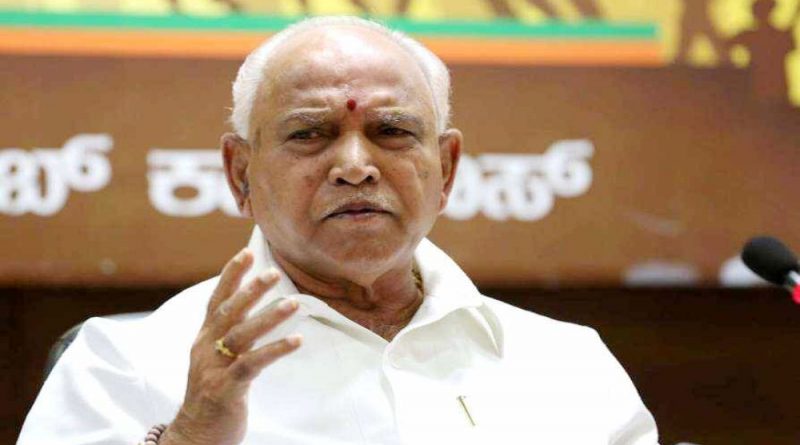
Bengaluru, Dec 23: Karnataka Chief Minister B S Yediyurappa on Wednesday said the state government has decided to impose night curfew from December 23 night till January 2 across the state aimed at containing the new COVID-19 strain.
The Chief Minister made the announcement following a meeting with Health Minister K Sudhakar, members of the state Technical Advisory Committee (TAC) for COVID-19 and senior officials.
Addressing reporters, he said, "In view of the new stain of the COVID-19 virus and as per the advice of the Government of India and Technical Advisory Committee, it is decided to impose night curfew from today till January 2, 2021 between 10 pm and 6 am."
"It will be applicable for the entire state.. I request all public to cooperate to prevent and contain the new COVID- 19 strain."
Earlier in the day Sudhakar had held a detailed discussion with the TAC members consisting of senior health experts in the state.
Neighboring Maharashtra on Monday had declared a night curfew in municipal corporation areas as a precautionary step amid growing concerns over a new coronavirus variant spreading in Britain.
Yediyurappa said those travelling to the state from foreign countries must have COVID-19 certificate and the test should have been done only 72 hours before.
All arrangements have been done at the airport to conduct tests and health staff have been deployed there and we have seen that no one enters the city without getting tested.
Responding to a question the Chief Minister said all activities will go on as usual between 6 am to 10 pm and no one should come out after 10 pm.
He said a guideline will be issued soon in this regard.
Regarding schools and colleges we have discussed and informed that it will open from January 1 for class 10 and second year PUC (class 12) students, he said, adding "within two days we will see if there are any developments and come back. As of now it will start from January 1."
Let the Truth be known. If you read VB and like VB, please be a VB Supporter and Help us deliver the Truth to one and all.
Ordinance issued to increase number of Supreme Court judges from 34 to 38
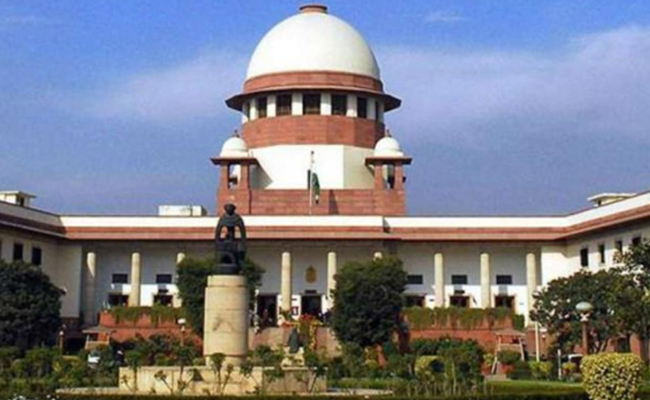
New Delhi (PTI): The government has promulgated an ordinance to increase the strength of the Supreme Court from the present 34 judges to 38, including the Chief Justice of India.
The law ministry notified the ordinance on Saturday, which amended the Supreme Court (Number of Judges) Act, 1956, to increase the sanctioned strength of the top court.
So far, the sanctioned strength of the top court was 34, including the Chief Justice of India (CJI). Now, the number of judges has been increased by four, taking the sanctioned strength to 38.
The top court will now have 37 judges, other than the CJI.
With the apex court having two vacancies at present, and the ordinance coming into force immediately, the Supreme Court Collegium will now have to recommend six names for appointment as judges in the top court.
A bill will be brought in the Monsoon Session of Parliament to convert the ordinance – an executive order – into a law passed by Parliament.
The Union Cabinet had cleared a draft bill on May 5 to increase the number of apex court judges.
The strength of the Supreme Court was last increased from 30 to 33 (excluding the CJI) in 2019.
The Supreme Court (Number of Judges) Act, as originally enacted in 1956, put the maximum number of judges (excluding the CJI) at 10.
This number was increased to 13 by the Supreme Court (Number of Judges), Amendment Act, 1960, and to 17 by another amendment to the law.
The Supreme Court (Number of Judges) Amendment Act, 1986, augmented the strength of judges from 17 to 25, excluding the CJI.
A fresh amendment in 2009 further increased the strength from 25 to 30.
Article 124(3) of the Constitution lists the qualifications required to become a Supreme Court judge.
An Indian citizen who has either served as a high court judge for at least five years, or as an advocate for 10 years, or is a distinguished jurist, can be appointed to the top court.
The strength of the Supreme Court is increased based on the recommendations of the CJI, who writes to the Union law minister. After consulting the finance ministry, the Department of Justice under the law ministry moves the Cabinet with a draft bill.