Nishikant Dubey challenges Rahul Gandhi on caste census implementation in Karnataka
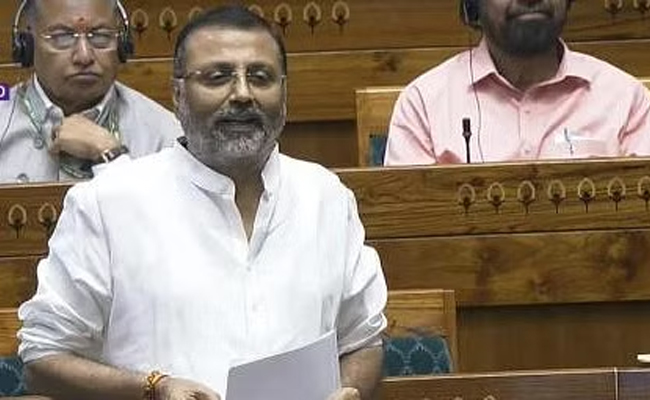
New Delhi: BJP MP Nishikant Dubey has sharply criticized Leader of Opposition Rahul Gandhi over his stance on the caste census, questioning why the Congress has not implemented it in Karnataka, where the party is in power. Speaking in the Lok Sabha, Dubey pointed out that despite Congress' claims of advocating for OBC rights, it has historically opposed OBC reservations and has never appointed an OBC Chief Minister in key states like Madhya Pradesh, Bihar, and Uttar Pradesh.
Dubey further challenged Gandhi, asking why the Congress did not conduct a caste census during its tenure in 2011 and why it has not acted on a caste-based census report in Karnataka. He also accused the Congress of attempting to extend OBC reservations to 86 Christian and 56 Muslim castes "through the back door," despite these religions not traditionally recognizing caste systems.
The BJP MP emphasized that the current Prime Minister, a member of a backward community, has done more for OBCs than the Congress, which he claimed only began talking about OBC issues after the Prime Minister set the agenda.
Finance Minister Nirmala Sitharaman and Health Minister JP Nadda also criticized Gandhi earlier this month, questioning the OBC representation in Congress-linked organizations like the Rajiv Gandhi Foundation. Sitharaman challenged Gandhi to reflect on his party's practices before criticizing the BJP's approach to OBC reservations.
Let the Truth be known. If you read VB and like VB, please be a VB Supporter and Help us deliver the Truth to one and all.
Ordinance issued to increase number of Supreme Court judges from 34 to 38
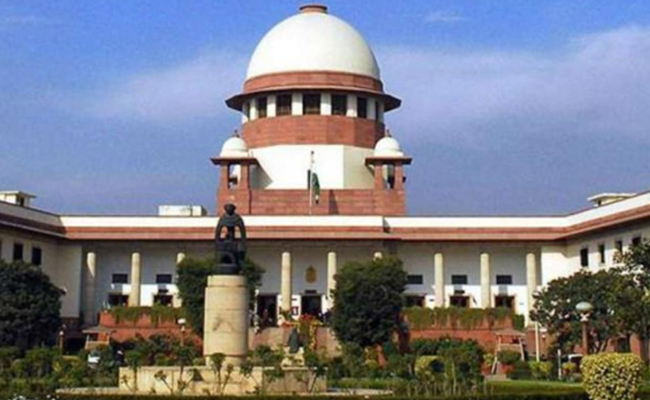
New Delhi (PTI): The government has promulgated an ordinance to increase the strength of the Supreme Court from the present 34 judges to 38, including the Chief Justice of India.
The law ministry notified the ordinance on Saturday, which amended the Supreme Court (Number of Judges) Act, 1956, to increase the sanctioned strength of the top court.
So far, the sanctioned strength of the top court was 34, including the Chief Justice of India (CJI). Now, the number of judges has been increased by four, taking the sanctioned strength to 38.
The top court will now have 37 judges, other than the CJI.
With the apex court having two vacancies at present, and the ordinance coming into force immediately, the Supreme Court Collegium will now have to recommend six names for appointment as judges in the top court.
A bill will be brought in the Monsoon Session of Parliament to convert the ordinance – an executive order – into a law passed by Parliament.
The Union Cabinet had cleared a draft bill on May 5 to increase the number of apex court judges.
The strength of the Supreme Court was last increased from 30 to 33 (excluding the CJI) in 2019.
The Supreme Court (Number of Judges) Act, as originally enacted in 1956, put the maximum number of judges (excluding the CJI) at 10.
This number was increased to 13 by the Supreme Court (Number of Judges), Amendment Act, 1960, and to 17 by another amendment to the law.
The Supreme Court (Number of Judges) Amendment Act, 1986, augmented the strength of judges from 17 to 25, excluding the CJI.
A fresh amendment in 2009 further increased the strength from 25 to 30.
Article 124(3) of the Constitution lists the qualifications required to become a Supreme Court judge.
An Indian citizen who has either served as a high court judge for at least five years, or as an advocate for 10 years, or is a distinguished jurist, can be appointed to the top court.
The strength of the Supreme Court is increased based on the recommendations of the CJI, who writes to the Union law minister. After consulting the finance ministry, the Department of Justice under the law ministry moves the Cabinet with a draft bill.