No cause for worry, but precautions must: K'taka Health Minister Dinesh Gundu Rao on Covid spike
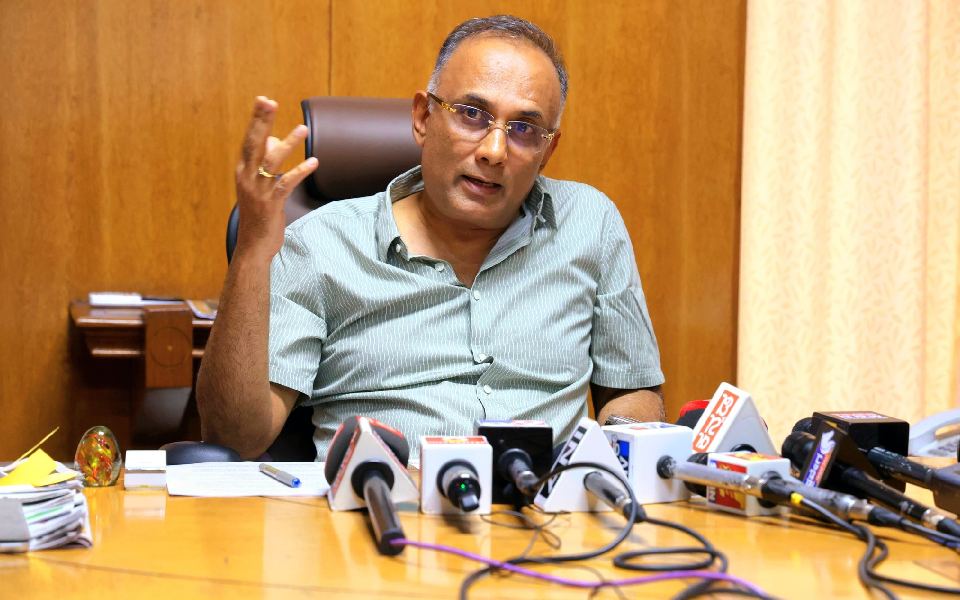
Bengaluru, May 26 (PTI): Karnataka Health Minister Dinesh Gundu Rao on Monday said there is no cause for concern, as most of the recent Covid-19 cases reported in the state involve only mild infections. However, he asserted that precautions still need to be taken.
He said there is no need to impose any restrictions at the moment, other than basic precautions for high-risk individuals. Any further measures, if necessary, will be taken based on the evolving situation, which is being closely monitored.
"There are 47 active Covid-19 cases in the state, but no one is on a ventilator or oxygen support. All are in home isolation, and no one is in critical condition," Rao said.
Speaking to reporters here, he said Chief Minister Siddaramaiah would chair a meeting later in the evening with officials from the Health and Medical Education departments, along with experts, to review the current situation and discuss future steps.
"RT-PCR kits will be supplied to all district and medical college hospitals starting today. Instructions have been given to collect the kits from the Karnataka State Medical Supplies Corporation Limited (KSMSCL) by this evening, so they will reach the facilities by today or tomorrow. Tests should be conducted only when necessary; there is no need for indiscriminate testing," he said, adding that public testing is not being launched at this point.
Observing the current symptoms in cases, Rao said the infections do not appear to be severe.
He added that similar information has been received from other states and the central government, so there is no reason to panic—but that does not mean precautions should be ignored.
"Let’s take precautions, observe the situation for a few more days, and take further action accordingly," he said.
"There are no specific guidelines from the Centre at this point, other than general advice to monitor the situation, ensure preparedness, conduct testing, and assess the Covid load factor."
Rao noted that while there may be a minor variation between earlier variants of Covid-19 and the currently prevalent strain, no serious health issues have been observed so far.
"The severity has not been found yet," he added.
Reiterating that there are no movement restrictions in place, he said elderly people, those with low immunity, women who have recently given birth, and small children should wear masks when going to crowded places.
Regarding schools, he said measures will be decided after observing the situation for three to four days.
"We will consult experts and make a decision based on their reports," he added.
Responding to a question, Rao clarified that there is no link between Covid-19 and rain.
Diseases like dengue and chikungunya are caused by rains, he claimed.
"We have already held review meetings on dengue prevention across the state, in every district. About 50 per cent of dengue cases are reported from Bengaluru," Rao said.
"We have mobilised more than 700 volunteers to help maintain cleanliness and create awareness. Sufficient precautionary measures have been taken, but public cooperation is essential. The situation is being monitored, and if cases rise, further steps will be taken," he added.
Let the Truth be known. If you read VB and like VB, please be a VB Supporter and Help us deliver the Truth to one and all.
Ordinance issued to increase number of Supreme Court judges from 34 to 38
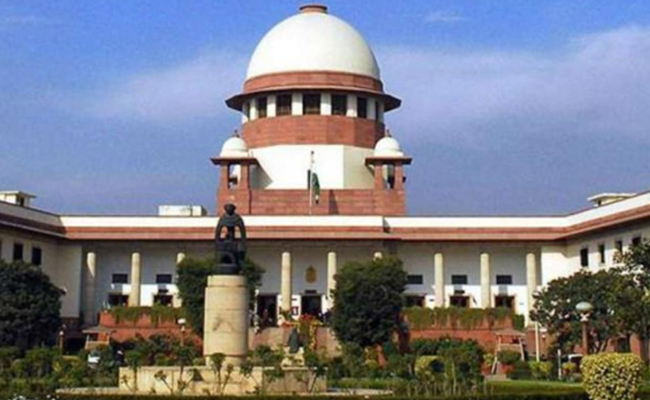
New Delhi (PTI): The government has promulgated an ordinance to increase the strength of the Supreme Court from the present 34 judges to 38, including the Chief Justice of India.
The law ministry notified the ordinance on Saturday, which amended the Supreme Court (Number of Judges) Act, 1956, to increase the sanctioned strength of the top court.
So far, the sanctioned strength of the top court was 34, including the Chief Justice of India (CJI). Now, the number of judges has been increased by four, taking the sanctioned strength to 38.
The top court will now have 37 judges, other than the CJI.
With the apex court having two vacancies at present, and the ordinance coming into force immediately, the Supreme Court Collegium will now have to recommend six names for appointment as judges in the top court.
A bill will be brought in the Monsoon Session of Parliament to convert the ordinance – an executive order – into a law passed by Parliament.
The Union Cabinet had cleared a draft bill on May 5 to increase the number of apex court judges.
The strength of the Supreme Court was last increased from 30 to 33 (excluding the CJI) in 2019.
The Supreme Court (Number of Judges) Act, as originally enacted in 1956, put the maximum number of judges (excluding the CJI) at 10.
This number was increased to 13 by the Supreme Court (Number of Judges), Amendment Act, 1960, and to 17 by another amendment to the law.
The Supreme Court (Number of Judges) Amendment Act, 1986, augmented the strength of judges from 17 to 25, excluding the CJI.
A fresh amendment in 2009 further increased the strength from 25 to 30.
Article 124(3) of the Constitution lists the qualifications required to become a Supreme Court judge.
An Indian citizen who has either served as a high court judge for at least five years, or as an advocate for 10 years, or is a distinguished jurist, can be appointed to the top court.
The strength of the Supreme Court is increased based on the recommendations of the CJI, who writes to the Union law minister. After consulting the finance ministry, the Department of Justice under the law ministry moves the Cabinet with a draft bill.