No need to impose night curfew in Karnataka for now: CM Yediyurappa
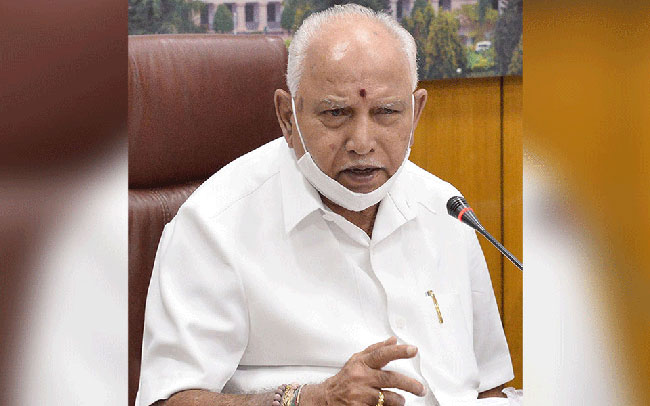
Bengaluru, Dec 22: Karnataka Chief Minister B S Yediyurappa on Tuesday said there was no need for imposing night curfew in the state for now, after neighbouring Maharashtra announced such a move amid growing concerns over a new coronavirus variant spreading in Britain.
"This (new coronavirus variant) is something that has worried the people of the state and the country, we have come to know that a person who has arrived in Chennai has been found infected. We have to be extra cautious. Whoever comes from outside they will be checked at the airports itself before allowing them," Yediyurappa said.
Speaking to reporters here, he said, all the necessary precautions have been taken and the government was watchful to control the spread of the virus in Karnataka.
"There is no need for it here, for now," he said in response to a question about Karnataka emulating Maharashtra by imposing night curfew, as he also noted that restrictions were already in place for New Year celebration in the wake of COVID-19 situation.
The Maharashtra government on Monday had declared a night curfew in municipal corporation areas as a precautionary step amid growing concerns over a new coronavirus variant spreading in Britain.
However, Karnataka Health Minister K Sudhakar said, he will discuss with the Chief Minister regarding imposing night curfew in the state and come to a decision, but ruled out the possibility of a lockdown.
"I held discussions with the Secretary, Union Health Department, who said that there was no reason to worry, but necessary precautionary measures be taken. He suggested that night curfew may be imposed after examining, as done in other states...I will meet the Chief Minister and discuss with him about the night curfew," he added.
Stating that as a precautionary measure, the state government has mandated seven-day home quarantine for travellers from the UK, Denmark and the Netherlands, the Minister on Monday had said those who have arrived in the state from these three countries in the last 14 days will be traced within the next 24 hours and subjected to RT-PCR test.
Noting that so far no one who had come in the last 14 days and had undergone RT-PCR tests had tested positive, Sudhakar on Tuesday said, in case anyone tests positive we have asked NIMHANS to study the virus through genetic sequence and provide a comprehensive report.
He said the contacts and addresses of the 138 people who had come to the state from the UK, Denmark and the Netherlands without any negative reports, have been gathered last night itself, and they will be made to undergo tests and will be monitored.
"They will have to quarantine at home and all of them will be tested."
Let the Truth be known. If you read VB and like VB, please be a VB Supporter and Help us deliver the Truth to one and all.
Ordinance issued to increase number of Supreme Court judges from 34 to 38
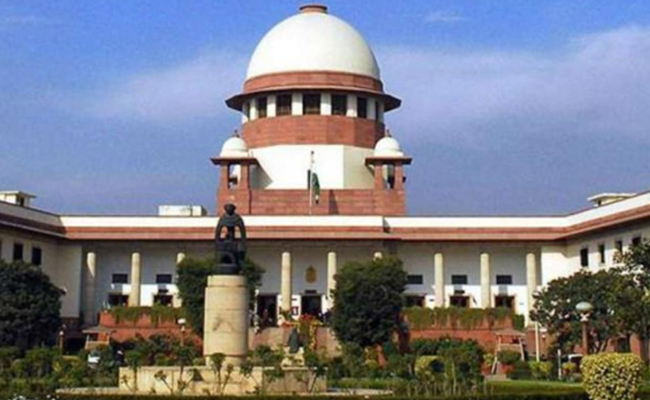
New Delhi (PTI): The government has promulgated an ordinance to increase the strength of the Supreme Court from the present 34 judges to 38, including the Chief Justice of India.
The law ministry notified the ordinance on Saturday, which amended the Supreme Court (Number of Judges) Act, 1956, to increase the sanctioned strength of the top court.
So far, the sanctioned strength of the top court was 34, including the Chief Justice of India (CJI). Now, the number of judges has been increased by four, taking the sanctioned strength to 38.
The top court will now have 37 judges, other than the CJI.
With the apex court having two vacancies at present, and the ordinance coming into force immediately, the Supreme Court Collegium will now have to recommend six names for appointment as judges in the top court.
A bill will be brought in the Monsoon Session of Parliament to convert the ordinance – an executive order – into a law passed by Parliament.
The Union Cabinet had cleared a draft bill on May 5 to increase the number of apex court judges.
The strength of the Supreme Court was last increased from 30 to 33 (excluding the CJI) in 2019.
The Supreme Court (Number of Judges) Act, as originally enacted in 1956, put the maximum number of judges (excluding the CJI) at 10.
This number was increased to 13 by the Supreme Court (Number of Judges), Amendment Act, 1960, and to 17 by another amendment to the law.
The Supreme Court (Number of Judges) Amendment Act, 1986, augmented the strength of judges from 17 to 25, excluding the CJI.
A fresh amendment in 2009 further increased the strength from 25 to 30.
Article 124(3) of the Constitution lists the qualifications required to become a Supreme Court judge.
An Indian citizen who has either served as a high court judge for at least five years, or as an advocate for 10 years, or is a distinguished jurist, can be appointed to the top court.
The strength of the Supreme Court is increased based on the recommendations of the CJI, who writes to the Union law minister. After consulting the finance ministry, the Department of Justice under the law ministry moves the Cabinet with a draft bill.