No significant impact on company, says Wistron on iPhone manufacturing plant violence in Karnataka

Bengaluru, Dec 21: Taiwanese contract manufacturer for Apple Inc., Wistron Corp. has said that the recent violence at its facility in Karnataka will not cause significant impact to the company.
Workers at the Wistron's iPhone manufacturing plant at Narsapura in Kolar district, had gone on the rampage on December 12 over the alleged delay in payment of salary and overtime wages.
"Regarding the event at our Narsapura facility in India, the investigation which includes collaboration with related government authorities is ongoing, as well as related insurance claims. The company will work with our customer in terms of correcting issues and operation recovery," the firm has informed the Taiwan Stock Exchange.
"As the Narsapura facility is a new operation and the shipment quantity is still small, the incident will not cause significant impact to Wistron," it said.
Regarding the iPhone maker Apple placing the firm on probation, it said, based on company's policies, Wistron will not have any comments on the business arrangements with customers.
Apple on Saturday said it has placed Wistron on probation and the company will not receive any new business from it before they complete corrective actions, citing its preliminary findings that indicate violations of Supplier Code of Conduct by failing to implement proper working hour management processes.
Wistron too on its part on Saturday said that it had sacked its Vice President overseeing its business in India, as it admitted that some workers were not paid correctly or on time, and offered an apology.
Wistron last week informed the Taiwan Stock Exchange that the violence at the facility at Narsapura did not cause any material damage to major manufacturing equipment and warehouses.
It put preliminary damage estimates in the range of New Taiwan Dollar 100 to 200 million, which is about Rs 52 crore, while earlier reports, quoting the complaint by company officials to the local police station, had put the estimate at about Rs 437 crore.
Let the Truth be known. If you read VB and like VB, please be a VB Supporter and Help us deliver the Truth to one and all.
Ordinance issued to increase number of Supreme Court judges from 34 to 38
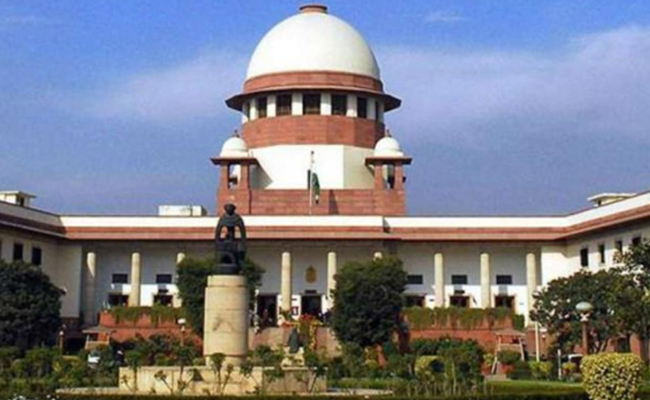
New Delhi (PTI): The government has promulgated an ordinance to increase the strength of the Supreme Court from the present 34 judges to 38, including the Chief Justice of India.
The law ministry notified the ordinance on Saturday, which amended the Supreme Court (Number of Judges) Act, 1956, to increase the sanctioned strength of the top court.
So far, the sanctioned strength of the top court was 34, including the Chief Justice of India (CJI). Now, the number of judges has been increased by four, taking the sanctioned strength to 38.
The top court will now have 37 judges, other than the CJI.
With the apex court having two vacancies at present, and the ordinance coming into force immediately, the Supreme Court Collegium will now have to recommend six names for appointment as judges in the top court.
A bill will be brought in the Monsoon Session of Parliament to convert the ordinance – an executive order – into a law passed by Parliament.
The Union Cabinet had cleared a draft bill on May 5 to increase the number of apex court judges.
The strength of the Supreme Court was last increased from 30 to 33 (excluding the CJI) in 2019.
The Supreme Court (Number of Judges) Act, as originally enacted in 1956, put the maximum number of judges (excluding the CJI) at 10.
This number was increased to 13 by the Supreme Court (Number of Judges), Amendment Act, 1960, and to 17 by another amendment to the law.
The Supreme Court (Number of Judges) Amendment Act, 1986, augmented the strength of judges from 17 to 25, excluding the CJI.
A fresh amendment in 2009 further increased the strength from 25 to 30.
Article 124(3) of the Constitution lists the qualifications required to become a Supreme Court judge.
An Indian citizen who has either served as a high court judge for at least five years, or as an advocate for 10 years, or is a distinguished jurist, can be appointed to the top court.
The strength of the Supreme Court is increased based on the recommendations of the CJI, who writes to the Union law minister. After consulting the finance ministry, the Department of Justice under the law ministry moves the Cabinet with a draft bill.