Over 3000 maternal deaths in past five years in Karnataka: CMO
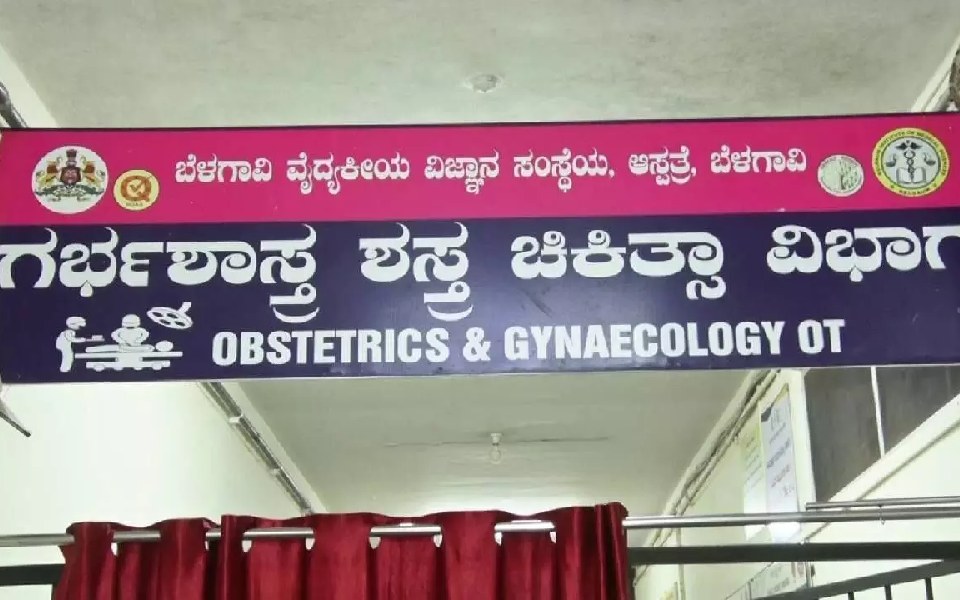
Bengaluru, Dec 9: There have been over 3,350 maternal deaths in the last five years in Karnataka, the Chief Minister's Office said on Monday. The fatalities have been on the decline during this period, according to data issued by the government.
The CMO's releasing the data comes in the wake of a controversy surrounding the recent maternal deaths in the state's Ballari district.
The total number of maternal deaths in the past five years stands at 3,364. An analysis of the data reveals the highest number of maternal deaths occurred during Covid-19 when the BJP was in power.
In 2019-2020, 662 maternal deaths were reported, with the number rising slightly to 714 the following year. However, the figures have since dropped, with 595 deaths recorded in 2021-2022, 527 in 2022-2023, and 518 in 2023-2024.
As of November 2024, the number of maternal deaths in the state stands at 348. Karnataka's Maternal Mortality Ratio (MMR) during this period stands at 64 per one lakh live births, according to the data.
On Sunday, the Karnataka government established a four-member panel to investigate the maternal deaths at Ballari Hospital and other locations across the state.
Since November, the total number of maternal deaths in Ballari has reached five.
Let the Truth be known. If you read VB and like VB, please be a VB Supporter and Help us deliver the Truth to one and all.
Allahabad HC expresses dissatisfaction over probe in 2009 custodial death case
Prayagraj (PTI): The Allahabad High Court has expressed dissatisfaction over the investigation and state's evidence in a 2009 custodial death case in Mainpuri district of Uttar Pradesh.
A bench of justices Atul Sreedharan and Siddhartha Nandan warned that if relevant videography and photographs are not placed before the court, the only option left to it will be to take assistance of CBI to recover the vital evidence.
The order was passed while hearing a PIL filed by Association for Advocacy and Legal Initiatives.
The court, in its order dated April 7, noted that crucial facts including video and photo evidence of the incident are missing.
The court observed, "In the event, by the next date of hearing, the videography and photographs relevant in this case are not placed before this court, the only other option left to this court is to take assistance of the central bureau of investigation (CBI) to recover vital evidence in this case which shall be considered on the next date of hearing."
"The chain of evidence is unclear casting doubt on the fairness of the investigation," the court added.
The court also directed the then sub-divisional magistrate (SDM) Karmendra Singh of Mainpuri to file his affidavit strictly in terms of the order dated February 9, failing which, it said, it shall consider to take appropriate action against him.
The court asked Singh to give a precise answer on the fate of the videography recording which was done in his presence.
The court fixed May 5 as the next date of hearing in the matter.