Pandemonium mars Karnataka Council proceedings; house adjourned sine die
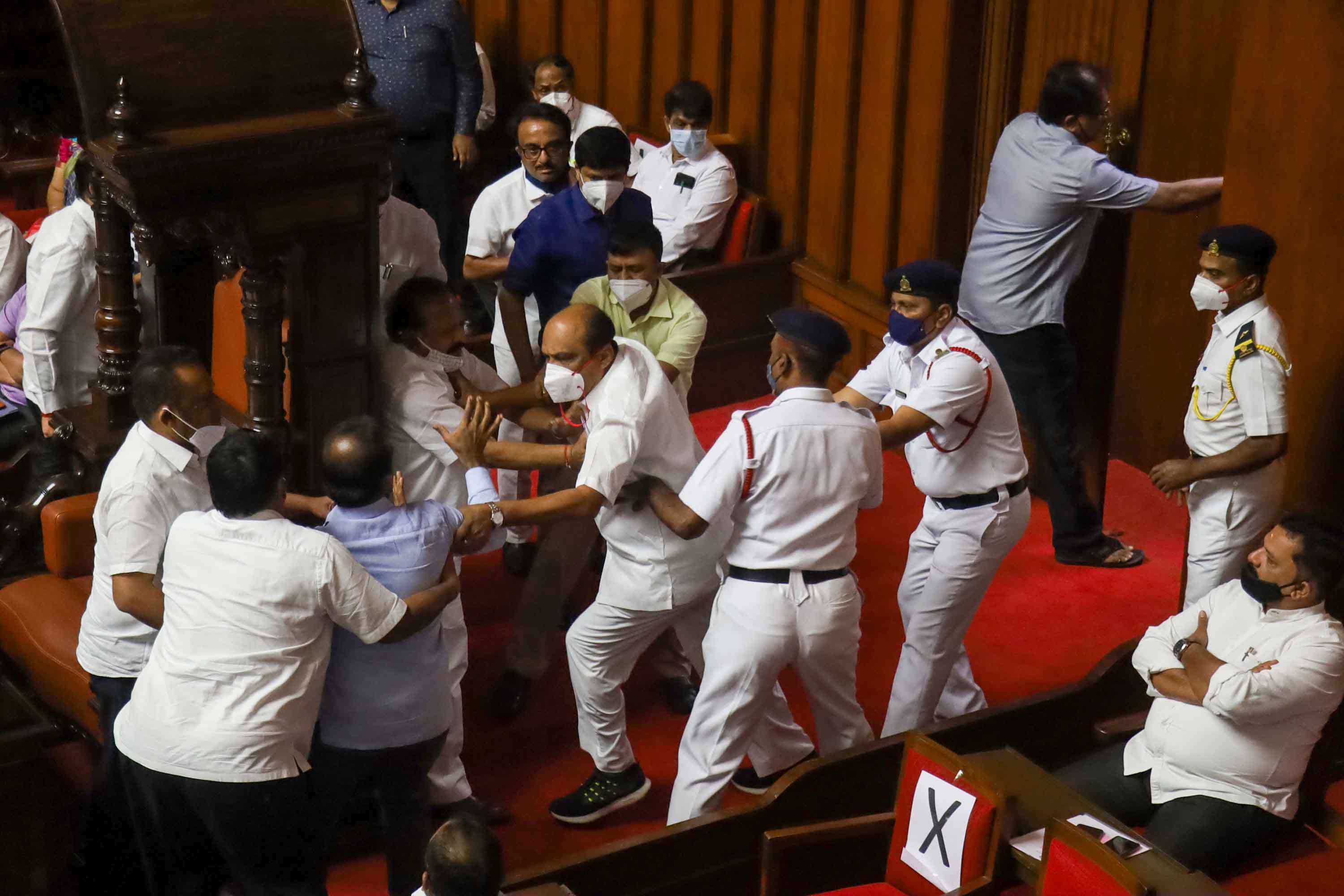
Bengaluru, Dec 15: Pandemonium broke out at the Karnataka Legislative Council on Tuesday, as Deputy Chairman S L Dharme Gowda was literally pulled down from the Chairman's seat and the House was adjourned sine die without taking up any business.
After it was adjourned sine die originally on December 10, the council was convened for a day by the government, accusing the Chairman K Pratapachandra Shetty of "abruptly" adjourning the session, for today.
Though the no-confidence motion against Shetty moved by the BJP members did not find mention in today's agenda, as the Chairman had rejected it citing procedural lapses, the ruling party members have been insisting that it should be taken up.
As the House met for the day, Gowda occupied the Chairman's seat, which angered the Congress MLCs who rushed to the chair demanding that he vacate it, following which BJP and JD(S) members came to Shetty's protection.
Separately, few Congress members were seen forcefully opening the door through which the Chairman enters the house, accusing the ruling side of shutting it with an intention not to allow Shetty to enter the House.
Congress members accused the government of trying to start the proceedings even before the Chairman could come, with the help of Gowda with an intention to take up the no- confidence motion against Shetty, which has been rejected by him.
Some Congress members, including M Narayanaswamy were seen forcefully pulling down the Deputy Chairman from the chair.
Several members and marshals of the council were also allegedly manhandled in the melee, even as the Congress managed to make one of its members occupy the chair.
Several BJP and JD(S) MLCs objected to this and questioned whether the person occupying the Chair was among the panel members who could sit on it.
After some time Chairman Pratapachandra Shetty entered the House and went up to the chair even as Deputy Chief Minister C N Ashwath Narayan tried to obstruct him from occupying it.
Shetty then announced that the house was adjourned sine die.
Leader of opposition in the Council S R Patil alleged that the Deputy Chairman occupied the chair against the rules and procedures and it was against the constitution.
Revenue Minister R Ashoka, accusing the Congress of unruly behaviour in the House, said the government will soon announce its next course of action.
Let the Truth be known. If you read VB and like VB, please be a VB Supporter and Help us deliver the Truth to one and all.
Ordinance issued to increase number of Supreme Court judges from 34 to 38
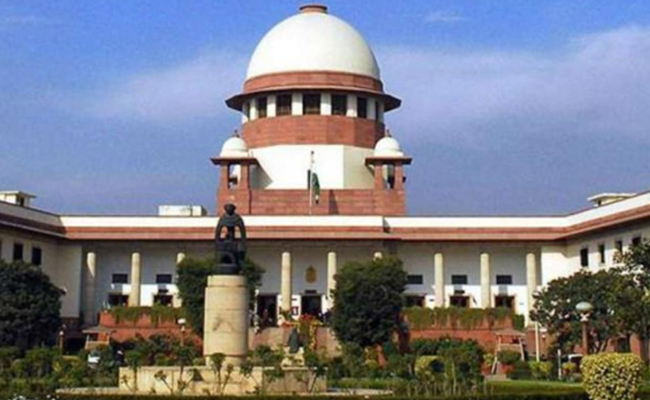
New Delhi (PTI): The government has promulgated an ordinance to increase the strength of the Supreme Court from the present 34 judges to 38, including the Chief Justice of India.
The law ministry notified the ordinance on Saturday, which amended the Supreme Court (Number of Judges) Act, 1956, to increase the sanctioned strength of the top court.
So far, the sanctioned strength of the top court was 34, including the Chief Justice of India (CJI). Now, the number of judges has been increased by four, taking the sanctioned strength to 38.
The top court will now have 37 judges, other than the CJI.
With the apex court having two vacancies at present, and the ordinance coming into force immediately, the Supreme Court Collegium will now have to recommend six names for appointment as judges in the top court.
A bill will be brought in the Monsoon Session of Parliament to convert the ordinance – an executive order – into a law passed by Parliament.
The Union Cabinet had cleared a draft bill on May 5 to increase the number of apex court judges.
The strength of the Supreme Court was last increased from 30 to 33 (excluding the CJI) in 2019.
The Supreme Court (Number of Judges) Act, as originally enacted in 1956, put the maximum number of judges (excluding the CJI) at 10.
This number was increased to 13 by the Supreme Court (Number of Judges), Amendment Act, 1960, and to 17 by another amendment to the law.
The Supreme Court (Number of Judges) Amendment Act, 1986, augmented the strength of judges from 17 to 25, excluding the CJI.
A fresh amendment in 2009 further increased the strength from 25 to 30.
Article 124(3) of the Constitution lists the qualifications required to become a Supreme Court judge.
An Indian citizen who has either served as a high court judge for at least five years, or as an advocate for 10 years, or is a distinguished jurist, can be appointed to the top court.
The strength of the Supreme Court is increased based on the recommendations of the CJI, who writes to the Union law minister. After consulting the finance ministry, the Department of Justice under the law ministry moves the Cabinet with a draft bill.