Panel found lapses, corruption in Covid-19 management in Karnataka: Minister Kharge
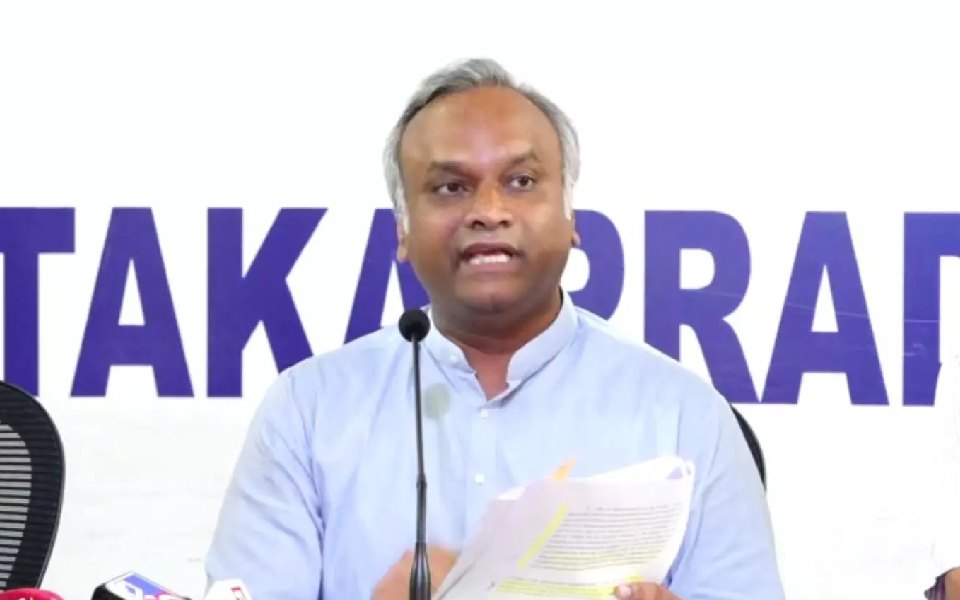
Bengaluru: Karnataka Minister of Information Technology Priyank Kharge said on Monday that, in an informal meeting with Chief Minister Siddaramaiah on Saturday, Justice John Michael Cunha Commission chief told the CM that the procedural lapses, dereliction by officials and corruption in Covid-19 management when the BJP was in power were found.
Kharge said that the Commission head handed the CM a 1,722-page report on the procurement of Covid-19 supplies worth Rs. 7,223 crore, reports Deccan Herald. Stating that he was present during the meeting on Saturday, the minister added that he was unaware of the details given in the report and would get more information only when the CM presented the report before the Cabinet.
He said that the CM had presented a trailer in the Assembly, with a list of 21 scams during the tenure of the previous BJP government, and added that the current Congress government in Karnataka would end all these scams. The minister also said that the state government was yet to raise the issue of the scam at the Karnataka Soaps & Detergents Ltd.
ALSO READ: "Not worried or tense": CM Siddaramaiah dismisses opposition claim, says he committed no wrong
Kharge expressed ire that, in some cases, central agencies were meddling with the government efforts to end scams in Karnataka, accusing the BJP of misusing the CBI, IT, ED and Raj Bhavan, although the state government was not at fault. He also alleged that the BJP was involved in corruption.
Referring to BJP member and former Health Minister of Karnataka Dr. K Sudhakar’s announcement of a legal battle against the Congress, Kharge asked what the BJP’s source of information was, as the members of the Congress were yet to learn about the contents of the report submitted by Justice John Michael Cunha Commission. He also asked why Sudhakar was speaking about a legal fight against the government when it had not named anyone. The minister, however, stressed that the state government had considered an investigation into the irregularities during the pandemic necessary.
Large and Medium Industries MB Patil alleged that the BJP government had indulged in mega loot during the Covid-19 outbreak, instead of showing its humanitarian concerns. Dr. Sudhakar was involved in hoarding huge amounts of money even as the people suffered, Patil opined.
In Tumakuru, Home Minister Dr. G Parameshwara told reporters that the term of the Commission probing the irregularities during the pandemic had been extended by eight months.
Let the Truth be known. If you read VB and like VB, please be a VB Supporter and Help us deliver the Truth to one and all.
11k litres of milk poured into Narmada river after religious event; environmentalists see red
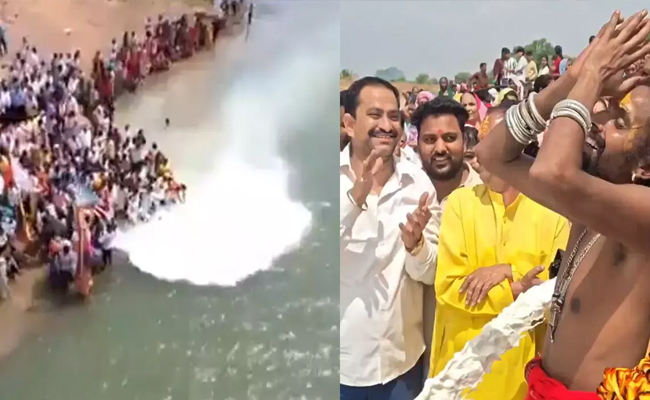
Sehore (PTI): Around 11,000 litres of milk were poured into Narmada river, often called the lifeline of Madhya Pradesh, in Sehore district on the culmination of a 21-day religious event as part of a sanctification ritual, prompting environmentalists to flag its negative impact on the ecosystem.
The event concluded at Satdev village in Bherunda area, located about 90 km from the district headquarters, with a 'mahayagna' on Wednesday.
The milk was offered to the river as part of rituals and prayers for the purity of the waters, the well-being of pilgrims and prosperity, organisers said.
The milk was brought in tankers to the riverbank and later poured into the flowing water amid chanting of mantras in the presence of a crowd of devotees.
However, environmentalists raised concerns over the practice, warning of its potential ecological impact.
"Such large quantities of organic matter can deplete dissolved oxygen in water, adversely affecting the river ecosystem. These impact local communities dependent on the river for drinking water and threaten aquatic life as well as domestic animals," noted environmentalist and wildlife activist Ajay Dube said.
Religious offerings should be symbolic and mindful, he asserted.
Renowned environmentalist Subhash Pandey said 11,000 litres of milk acts as a significant organic pollutant.
"It is highly oxygen-demanding and can lead to oxygen depletion, aquatic mortality, eutrophication (process of plants growing on river surface) and loss of potability. These effects are predictable from dairy-effluent chemistry and have been documented in similar incidents worldwide," Pandey pointed out.
Narmada originates at Amarkantak in the state and traverses 1,312 km westward to Maharashtra and Gujarat, emptying into the Arabian Sea via the Gulf of Cambay.
It is the largest west-flowing river in the peninsula, passing through a rift valley, and acts as a crucial water source for irrigation in MP, Gujarat and Maharashtra.