Parameshwara being targeted in gold smuggling case amid Cong power struggle, alleges HD Kumaraswamy
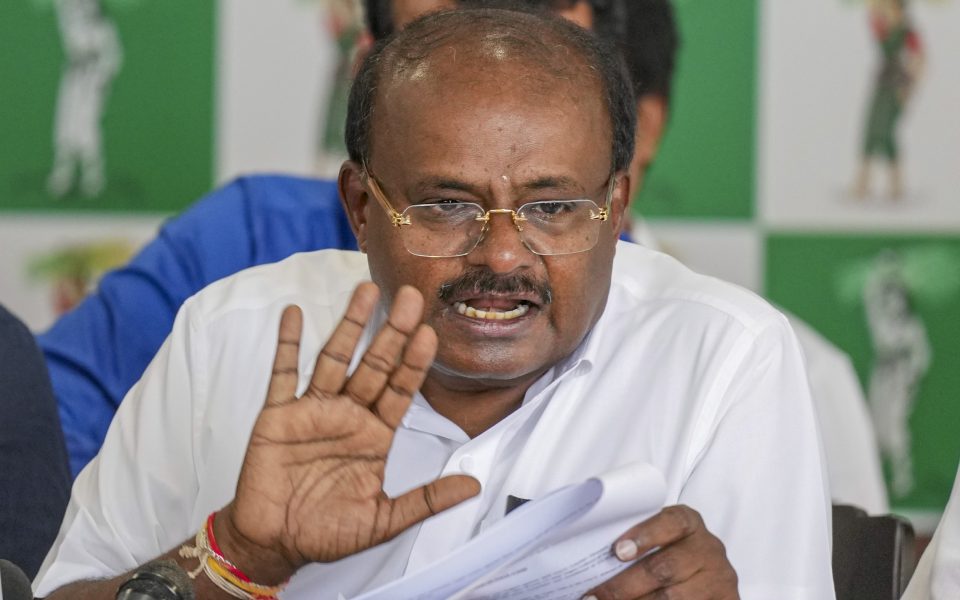
Bengaluru, May 23 (PTI): Union Minister H D Kumaraswamy on Friday alleged that Karnataka Home Minister G Parameshwara is being deliberately implicated in the gold smuggling case involving Kannada actress Ranya Rao, as part of an internal power struggle within the ruling Congress party.
He also claimed that the motive is to sideline Parameshwara and derail his leadership ambitions.
In a statement, Kumaraswamy noted that Parameshwara's recent moves to organise a dalit convention and engage with senior party leaders in New Delhi may have ruffled feathers in the party.
He also referred to statements made by state Minister K N Rajanna in the assembly, hinting at surveillance and manipulation by a powerful political figure.
Kumaraswamy also said Rajanna’s remarks may now be relevant given the current developments.
The Union Minister also wondered how a Congress insider came to know about the alleged smuggling attempt involving an actress and how the information reached the authorities.
He raised doubts about whether the Intelligence Department, which reports directly to Chief Minister Siddaramaiah, was truly unaware of these developments.
According to him, the gold smuggling case was being used to undermine Parameshwara's credibility and block his rise within the party.
A senior Congress leader, eyeing the CM’s post, may be orchestrating the situation behind the scenes.
Kumaraswamy further criticised the Congress party for blaming the central government while ignoring the internal power politics unfolding within their own ranks.
Lashing out at Kumaraswamy over the matter, Deputy Chief Minister D K Shivakumar said, “Kumaraswamy has lost his mental balance.”
Shivakumar was speaking to reporters in Vijayapura.
Rao, the step daughter of DGP rank officer K Ramachandra Rao, was arrested on March 3 at Kempegowda International Airport in Bengaluru after arriving from Dubai. Acting on a tip-off, DRI officials detained her and recovered 14.2 kg of gold bars valued at over Rs 12.56 crore from her.
Let the Truth be known. If you read VB and like VB, please be a VB Supporter and Help us deliver the Truth to one and all.
Ordinance issued to increase number of Supreme Court judges from 34 to 38
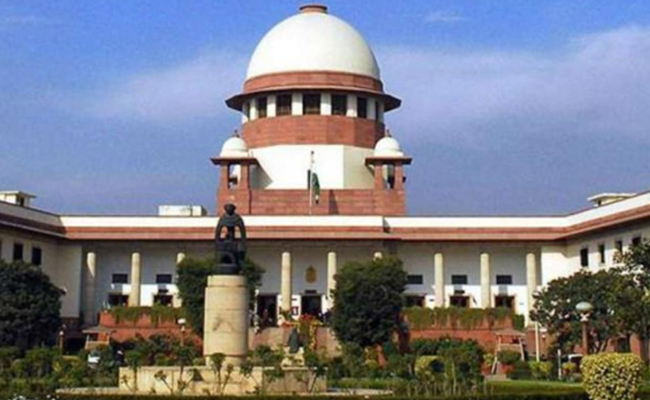
New Delhi (PTI): The government has promulgated an ordinance to increase the strength of the Supreme Court from the present 34 judges to 38, including the Chief Justice of India.
The law ministry notified the ordinance on Saturday, which amended the Supreme Court (Number of Judges) Act, 1956, to increase the sanctioned strength of the top court.
So far, the sanctioned strength of the top court was 34, including the Chief Justice of India (CJI). Now, the number of judges has been increased by four, taking the sanctioned strength to 38.
The top court will now have 37 judges, other than the CJI.
With the apex court having two vacancies at present, and the ordinance coming into force immediately, the Supreme Court Collegium will now have to recommend six names for appointment as judges in the top court.
A bill will be brought in the Monsoon Session of Parliament to convert the ordinance – an executive order – into a law passed by Parliament.
The Union Cabinet had cleared a draft bill on May 5 to increase the number of apex court judges.
The strength of the Supreme Court was last increased from 30 to 33 (excluding the CJI) in 2019.
The Supreme Court (Number of Judges) Act, as originally enacted in 1956, put the maximum number of judges (excluding the CJI) at 10.
This number was increased to 13 by the Supreme Court (Number of Judges), Amendment Act, 1960, and to 17 by another amendment to the law.
The Supreme Court (Number of Judges) Amendment Act, 1986, augmented the strength of judges from 17 to 25, excluding the CJI.
A fresh amendment in 2009 further increased the strength from 25 to 30.
Article 124(3) of the Constitution lists the qualifications required to become a Supreme Court judge.
An Indian citizen who has either served as a high court judge for at least five years, or as an advocate for 10 years, or is a distinguished jurist, can be appointed to the top court.
The strength of the Supreme Court is increased based on the recommendations of the CJI, who writes to the Union law minister. After consulting the finance ministry, the Department of Justice under the law ministry moves the Cabinet with a draft bill.