PES University reacts to questions over prof calling Muslim student 'terrorist' during class
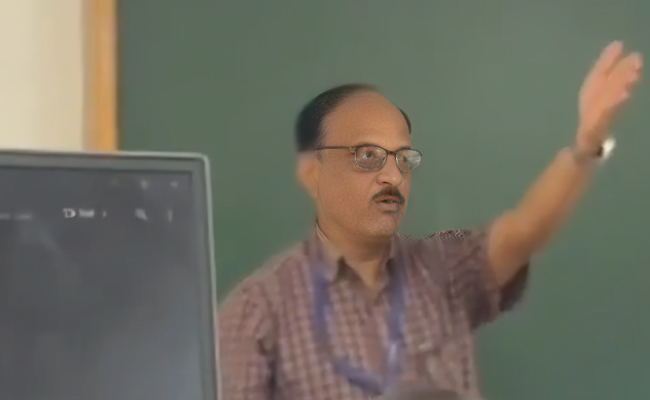
Bengaluru: PES University has responded after questions were raised over a viral video that allegedly shows a professor calling a Muslim student a “terrorist” during a class.
In a reply to a detailed email sent by Vartha Bharati, the university said action has already been taken in the matter.
“Action has been taken. Concerned faculty has suspended pending enquiry. The action taken in this matter has been further confirmed by the student to the concerned stakeholders,” Jawahar Doreswamy, the Chancellor of the University said in the response.
The university, however, did not address several specific queries, including details about the incident, the class in which it took place, among others.
A video from a classroom has been widely circulating on social media, where a professor identified as Dr. Muralidhar Deshpande is allegedly heard calling a Muslim student a “terrorist” multiple times. Claims online suggest that the remark was repeated 13 times during the session.
Earlier, Vartha Bharati had accessed a suspension order issued by the university, which stated, “A case of student complaint has been received. Pending a detailed enquiry into the matter, you are kept under suspension with immediate effect.” The order, signed by the Vice Chancellor, did not mention the nature of the complaint.
Mohammed Haiyan, PR Secretary of Students Islamic Organisation of India (SIO), had told Vartha Bharati that the incident took place at the Electronic City campus of the university. He had condemned the incident and said they are demanding registration of an FIR against the professor.
He also stated that the NSUI has registered an NCR with the local police, but an FIR is yet to be filed in the case.
Let the Truth be known. If you read VB and like VB, please be a VB Supporter and Help us deliver the Truth to one and all.
Gujarat builds 870 MW battery power backup network to stabilise renewable energy grid
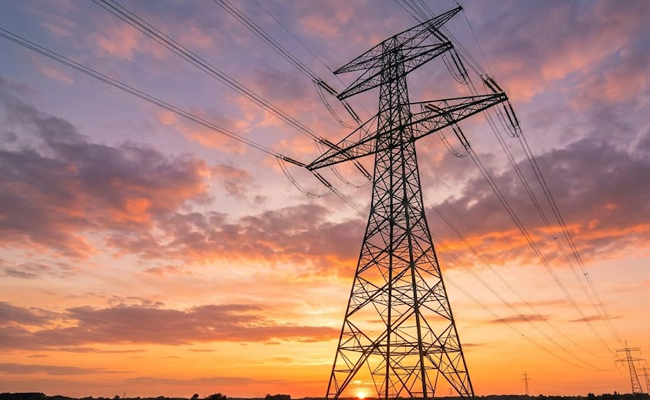
Gandhinagar (PTI): Gujarat has initiated battery storage systems at five locations in the state, with a total capacity of 870 MW, to maintain the stability of the renewable power grid, officials said on Saturday.
Battery Energy Storage Systems (BESS) are essential for storing electricity generated from solar and other renewable sources. They help manage additional load and maintain grid stability.
“Gujarat has initiated battery storage systems at five locations with a total capacity of 870 MW,” an official release stated.
The state has also registered 13 projects across Ahmedabad, Gandhinagar, Banaskantha, Patan and Kutch districts to set up additional battery storage systems, it said.
Modhera in Gujarat, India’s first solar village, has launched the country’s first BESS integrated with a solar power plant, it said.
"Under the leadership of Chief Minister Bhupendra Patel, the state has continued to advance in this direction and has strengthened its position among the leading states driving battery storage systems in India,” the release said.
Recently, a battery storage system was commissioned at Charal in the Sanand taluka of Ahmedabad, it said.
Four systems are operational at Modhera in Mehsana and Lakhpat in Kutch. The state government has also included advanced energy storage systems as a key component in the Gujarat Integrated Renewable Energy Policy, 2025, the release said.
Accordingly, standalone battery storage projects, works linked with new renewable energy installations, and those integrated with existing renewable energy systems are being approved, it said.
Once the Standard Operating Procedure is approved, registrations for battery storage will open for commercial and industrial users, it said, adding that the move will allow them to set up battery storage alongside their solar or wind projects.
The state government is developing battery storage systems across Gujarat, with companies being invited in through a competitive bidding process.
GETCO (Gujarat Energy Transmission Corporation) and power distribution companies strategically identify locations for battery storage systems based on grid capacity and operational requirements, the release said.
Power generation from solar and other renewable sources fluctuates throughout the day. Excess energy generated during peak hours can be stored and supplied later during periods of high demand, especially in the evening when solar output declines. Battery storage systems help reduce stress on the grid and improve grid stability, it added.