PM Narendra Modi "very much worried" about violence at iPhone factory: CM Yediyurappa
Yediyurappa assures support to restart production at iPhone plant
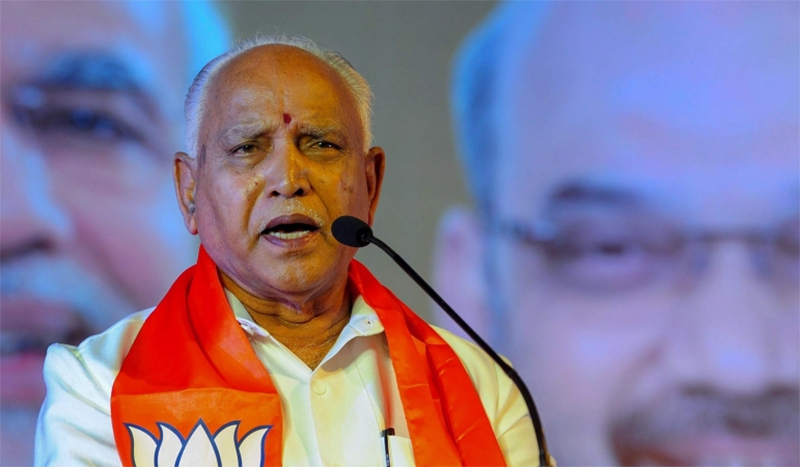
Bengaluru, Dec 17: Prime Minister Narendra Modi is "very much worried" about the recent violence at the Wistron's iPhone manufacturing plant in Karnataka, Chief Minister B S Yediyurappa said on Thursday, as he assured his government's full support to the company for restarting production.
The government has given necessary instructions and such things would not be repeated, he told reporters here.
"We have taken action, It is a very important foreign company and this (incident) should not have happened. The Prime Minister is also very much worried about this development," Yediyurappa said.
"...We will give full support to that company, without any problem let them continue production," he added.
A section of workers at the plant, run by the Taiwanese contract manufacturer for Apple at Narsapura in Kolar district, had gone on a rampage on Saturday over alleged delay in payment of salary and overtime wages.
Over 160 people have been arrested by the police in connection with the violence during which stones were hurled, windows and doors broken and vehicles in the parking lot overturned and set on fire. Video footage of the attack had flooded the social media.
State Labour Minister Shivaram Hebbar on Wednesday had said investigations into the violence were on and a report was likely in a couple of days.
He expressed hope about the factory restarting production soon with the central government also involved in addressing issues.
The union Commerce and Industry Ministry has advised the state government to complete at the earliest the inquiry into the violence and to ensure that investor sentiment was not affected by this one-off incident.
Meanwhile, state Home Minister Basavaraj Bommai in a tweet has said the Police has taken prompt action in connection with the incident and arrested 164 people.
"The Wistron company which said Rs 437 crore loss earlier, now has in writing (said) that loss is Rs 43 crore, therefore, some international media is blowing (it) out of proportion," he said.
Let the Truth be known. If you read VB and like VB, please be a VB Supporter and Help us deliver the Truth to one and all.
Ordinance issued to increase number of Supreme Court judges from 34 to 38
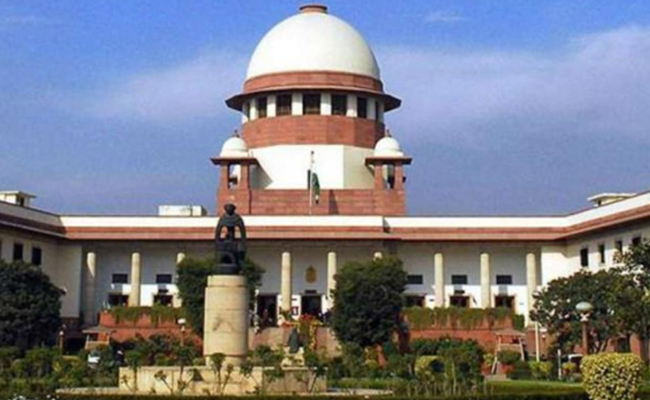
New Delhi (PTI): The government has promulgated an ordinance to increase the strength of the Supreme Court from the present 34 judges to 38, including the Chief Justice of India.
The law ministry notified the ordinance on Saturday, which amended the Supreme Court (Number of Judges) Act, 1956, to increase the sanctioned strength of the top court.
So far, the sanctioned strength of the top court was 34, including the Chief Justice of India (CJI). Now, the number of judges has been increased by four, taking the sanctioned strength to 38.
The top court will now have 37 judges, other than the CJI.
With the apex court having two vacancies at present, and the ordinance coming into force immediately, the Supreme Court Collegium will now have to recommend six names for appointment as judges in the top court.
A bill will be brought in the Monsoon Session of Parliament to convert the ordinance – an executive order – into a law passed by Parliament.
The Union Cabinet had cleared a draft bill on May 5 to increase the number of apex court judges.
The strength of the Supreme Court was last increased from 30 to 33 (excluding the CJI) in 2019.
The Supreme Court (Number of Judges) Act, as originally enacted in 1956, put the maximum number of judges (excluding the CJI) at 10.
This number was increased to 13 by the Supreme Court (Number of Judges), Amendment Act, 1960, and to 17 by another amendment to the law.
The Supreme Court (Number of Judges) Amendment Act, 1986, augmented the strength of judges from 17 to 25, excluding the CJI.
A fresh amendment in 2009 further increased the strength from 25 to 30.
Article 124(3) of the Constitution lists the qualifications required to become a Supreme Court judge.
An Indian citizen who has either served as a high court judge for at least five years, or as an advocate for 10 years, or is a distinguished jurist, can be appointed to the top court.
The strength of the Supreme Court is increased based on the recommendations of the CJI, who writes to the Union law minister. After consulting the finance ministry, the Department of Justice under the law ministry moves the Cabinet with a draft bill.