Poor SSLC results: Notice issued to headmasters of govt, govt-aided schools in Karnataka

Bengaluru: The Department of Public Instruction (DPI) has issued notices to headmasters of government and government-aided schools that recorded a pass percentage below 60% in the 2025 SSLC examinations, seeking explanations for the poor academic performance.
This action follows Chief Minister Siddaramaiah’s directive instructing the department to hold Deputy Directors of Public Instruction (DDPIs) accountable for the low pass rates in their respective districts, as reported by Deccan Herald on Friday.
Government-aided schools in the underperforming districts have also come under scrutiny. The DDPI have been asked to compile lists of teachers handling subjects where the pass percentage fell below 60% and recommend withholding their salary increments. Furthermore, if student performance remains unsatisfactory for three consecutive years, the DDPI is empowered to withhold salary grants for those teachers. Aided schools where the pass percentage in SSLC examinations has been under 50 for the for the past five years risk having their grants withheld.
This year, out of 2,00,214 students from 3,583 government-aided schools who appeared for the SSLC examinations, only 1,18,066 (58.97%) managed to clear the exam, the report added. The notice to government school headmasters cited ‘dereliction of duty’ and accused them of failing to adequately guide both students and teachers.
However, H.K. Manjunath, honorary president of the Karnataka Secondary School Assistant Masters’ Association, criticised the department’s approach. He urged the government to focus on improving the quality of education at the primary level. “Teachers must not be tasked with other responsibilities so they can focus on teaching. If they still fail to ensure good results, the department can initiate action against them. The government must also take steps to fill the 16,000 vacant teaching posts in schools, which is impacting results,” DH quoted him as saying.
Let the Truth be known. If you read VB and like VB, please be a VB Supporter and Help us deliver the Truth to one and all.
Vijayendra hits back at CM Siddaramaiah over demand for PM Modi's resignation
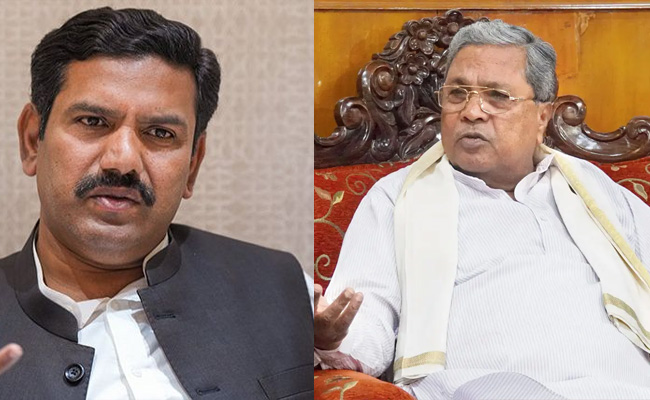
Bengaluru (PTI): Karnataka BJP President B Y Vijayendra on Saturday said Chief Minister Siddaramaiah and his Deputy D K Shivakumar should have resigned two years ago, if they expect Prime Minister Narendra Modi to step down over the recent fuel price hike.
His remarks came a day after Siddaramaiah condemned the petrol and diesel price hike, demanding its immediate rollback, and called for Modi’s resignation, holding him responsible for "failing" the people, mismanaging the economy, and pushing ordinary families into deeper hardship.
Rejecting Siddaramaiah's demands, he asked, "Does the Congress and other opposition parties in the country not know why the petrol and diesel prices are increasing? If they demand the Prime Minister's resignation for the hike in petrol and diesel, then Siddaramaiah and D K Shivakumar should have resigned two years ago."
Speaking to reporters here, he pointed out that the Congress government in the state increased petrol and diesel prices by hiking taxes without citing any reason.
"They have done it four to five times. How many times, then, should Siddaramaiah have resigned? Considering the situation globally and in the country, and the distress situation looming globally, the Prime Minister has advised certain things."
The BJP leader urged the opposition not to oppose for the sake of opposing.
Petrol and diesel prices were each hiked by Rs 3 per litre on Friday, the first rate increase in more than four years, amid mounting losses for fuel retailers due to surging global crude prices in the wake of the West Asia conflict.
The increase comes a couple of weeks after the Assembly elections concluded in Assam, Kerala, Tamil Nadu, West Bengal, and Puducherry.
Vijayendra also dismissed the allegations that the price hike was deliberately delayed until the conclusion of polls in five states and one union territory, and said PM Narendra Modi doesn't make any decision keeping elections in mind.
"Considering the interests of the country, the people, and the poor, he makes appropriate decisions at the right time," he added.