President, governor only titular heads; bound by advice of council of ministers: Karnataka to SC
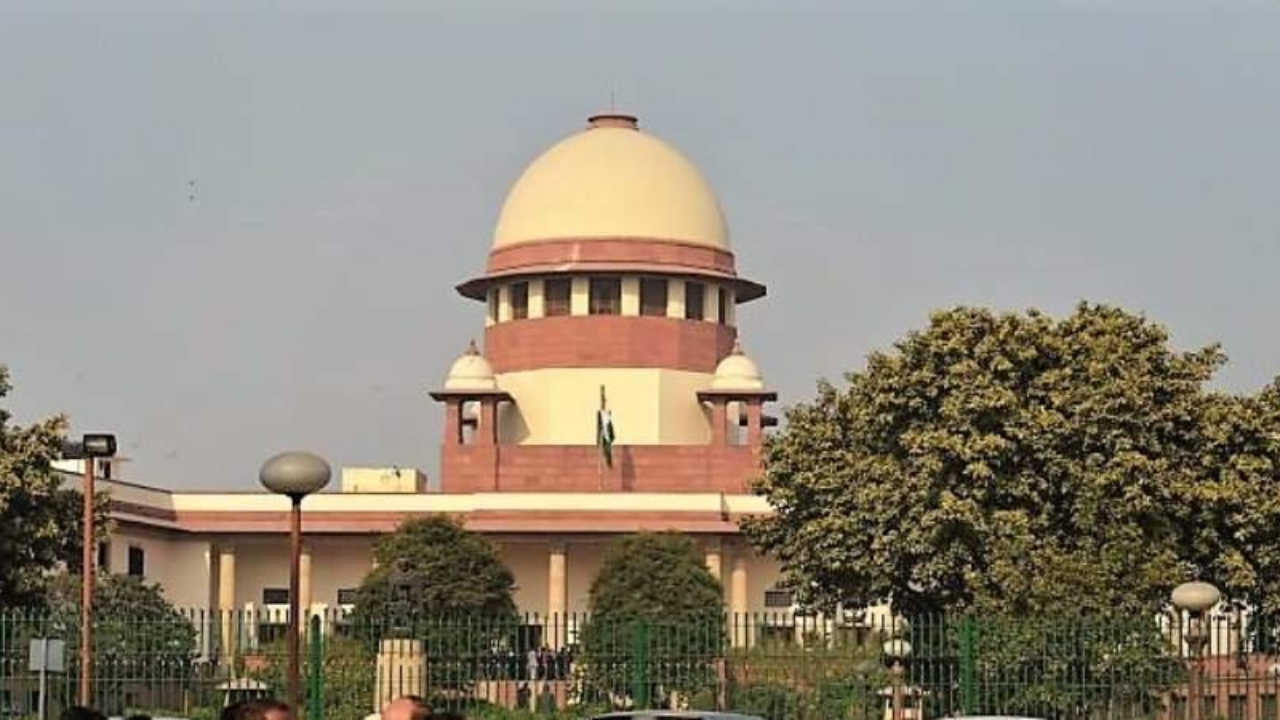
New Delhi (PTI): The Congress-led Karnataka government on Tuesday asserted before the Supreme Court that under the constitutional scheme, the President and governors are only "titular heads" and are bound to act on the aid and advice of the council of ministers, both at the Centre and in the states.
A five-judge Constitution bench headed by Chief Justice BR Gavai was told by senior advocate Gopal Subramanian, appearing for the Karnataka government, that Article 361 of the Constitution grants immunity to the President and the governor from any criminal proceedings, as they do not perform any executive function.
Referring to various verdicts of the apex court, Subramanian told a bench also comprising Justices Surya Kant, Vikram Nath, PS Narasimha and AS Chandurkar that the satisfaction of governor required for acting on bills passed by assembly, is the satisfaction of the council of ministers.
Resuming his argument on the eighth day of hearing on the Presidential reference on whether the court could impose timelines for governors and President to deal with bills passed by state assemblies, Subramanian submitted that the Constitution does not provide any parallel administration in the state alongside the elected government.
Chief Justice of India Gavai asked Subramanian whether under section 197 of CrpC, which relates to prior sanction to prosecute public servants does the government have to act on aid and advice of council of ministers.
The senior lawyer said there are several judgments of this court, where it has been held that the governor acts independent of aid and advice of the council of ministers and exercises its discretion with regard to section 197 of CrPC.
On September 3, the West Bengal government argued before the top court that the will of the people in the form of a bill cannot be subjected to "whims and fancies" of governors and the President as the executive is barred from interfering with the legislative process.
The TMC-ruled state government had submitted that governors cannot question the will of the sovereign and proceed to examine the legislative competence of a bill passed by the assembly, which falls under judiciary's domain.
The court is examining 14 questions referred by President Droupadi Murmu, including whether constitutional authorities can indefinitely withhold assent to bills and whether courts can impose mandatory time frames.
In May, President Murmu exercised powers under Article 143(1) to know from the top court whether judicial orders could impose timelines for the exercise of discretion by the President while dealing with bills passed by state assemblies.
Let the Truth be known. If you read VB and like VB, please be a VB Supporter and Help us deliver the Truth to one and all.
Real Madrid fines Valverde and Tchouaméni half a million euros each for altercation

Barcelona (AP): Real Madrid slapped players Federico Valverde and Aurélien Tchouaméni with half-a-million-euro ($588,000) fines on Friday for their altercation during practice.
The massive fines came a day after the midfielders tussled when the team trained. Valverde said in a post on social media on Thursday that no punches were thrown. But Valverde knocked his head on a table and he suffered a small cut that required a brief hospital visit.
On social media, Valverde initially called it a “meaningless fight” with a teammate and said “everything has been blown out of proportion."
His employers, however, considered it a significant enough breach of team discipline to nail both Valverde and Tchouaméni with fines that bite even the bank account of a top soccer player. The half-a-million euro penalties reflect the reputational damage the club was enduring in a chaotic end to a disappointing season.
In a statement, the 15-time European champion said its disciplinary action was concluded after both players expressed to the club “their complete remorse for what happened and apologized to one another.”
Madrid added they also apologized to their teammates, the coaching staff and club supporters, as well as showing their willingness to accept whatever disciplinary action the club deemed “opportune.”
Tchouaméni was back training with Madrid on Friday, two days before they play at Barcelona in a clasico. Madrid has to win otherwise Barcelona will be crowned La Liga champion.
After being notified of the fine, he posted a public apology to the club and its fans on social media.
“What happened this week in training is unacceptable,” Tchouaméni wrote. "I say this while thinking about the example we are expected to set for young people, whether in football or at school.
“Above all, I am sorry for the image we projected of the club.”
Valverde was not at practice due to the head knock.
Both players are set to play in the World Cup next month, with Tchouaméni playing for France and Valverde for Uruguay.
Chaotic end to a poor season
===================
The run-in between the players, who for seasons have played side by side in Madrid's midfield, came after they argued this week in previous training sessions. But tempers boiled over on Thursday. Spanish media was rife with reports that the players previously disagreed over the club's decision to let coach Xabi Alonso go after just months on the job.
It was not the only altercation involving Madrid players during training this week. Álvaro Carreras confirmed he was in a “minor” incident with a teammate. Spanish media said he and fellow defender Antonio Rüdiger got into a scuffle.
Álvaro Arbeloa, the coach who was promoted from Madrid's reserve team when Alonso was fired in January, will face tough questions on what went wrong inside the changing room when he gives a press conference on Saturday ahead of the clasico at Camp Nou.
Madrid is facing a second consecutive campaign without a major trophy amid rumors in the Spanish media that club president Florentino Pérez is considering bringing back Jose Mourinho to straighten out his underperforming team.