PSI death: Action against Congress MLA, son if CID probe finds them guilty, says G Parameshwara

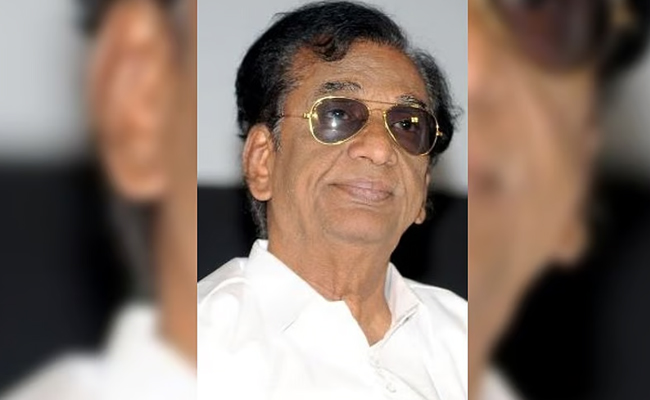
Bengaluru (PTI) Karnataka Home Minister G Parameshwara on Monday said that action will be taken against a Congress MLA and his son who are facing allegations in connection with the death of police sub-inspector Parashuram in Yadgir, if they are found guilty in the Criminal Investigation Department (CID) probe.
He also said the government has decided to give a job to the deceased officer's wife.
"The probe has been handed over to CID; they are investigating. Postmortem report is awaited. Once it comes, the cause of death will be known. I will be visiting the family of the deceased officer day-after-tomorrow, and I will try to console them," Parameshwara said.
Speaking to reporters here, he said, "The government has decided to give a job to his wife. She is educated. I have discussed this with the chief minister. We will give her a job and compensation."
ALSO READ: CCB Inspector found hanging from tree near Bengaluru
Regarding the allegations against MLA Chennareddy Patil Tunnur and and his son Pampangouda, he said, "CID investigation is on. Let's see what comes in the report. In case they are involved, whatever action has to be taken, will be taken."
Parashuram (34) died on Saturday in Yadgir, but the cause of his death has not yet been confirmed, as the autopsy report is still awaited, police sources said.
Shweta, Parashuram's wife, has filed a complaint against Yadgir Congress MLA Chennareddy Patil Tunnur and his son Pampangouda, accusing them of being responsible for his death.
She has alleged that the two caused her husband mental harassment by demanding Rs 30 lakh bribe to stop his transfer from Yadgir town police station and that they also hurled casteist abuse at the officer, police sources said.
Leader of Opposition in the Legislative Assembly R Ashoka, who met the deceased police sub-inspector's family on Sunday, demanded a CBI probe into his death and alleged that the Congress government in the state is trying to protect its legislator.
Let the Truth be known. If you read VB and like VB, please be a VB Supporter and Help us deliver the Truth to one and all.
Ordinance issued to increase number of Supreme Court judges from 34 to 38
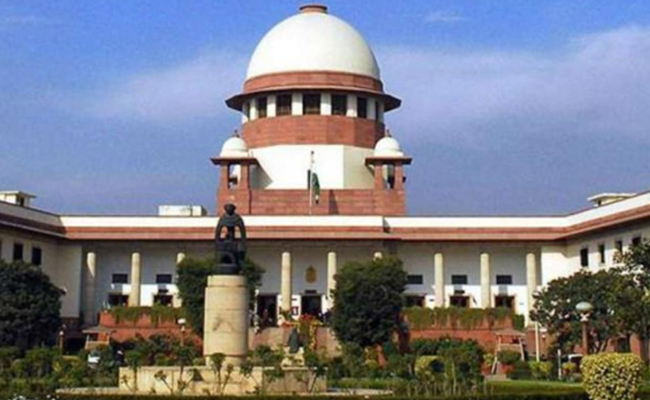
New Delhi (PTI): The government has promulgated an ordinance to increase the strength of the Supreme Court from the present 34 judges to 38, including the Chief Justice of India.
The law ministry notified the ordinance on Saturday, which amended the Supreme Court (Number of Judges) Act, 1956, to increase the sanctioned strength of the top court.
So far, the sanctioned strength of the top court was 34, including the Chief Justice of India (CJI). Now, the number of judges has been increased by four, taking the sanctioned strength to 38.
The top court will now have 37 judges, other than the CJI.
With the apex court having two vacancies at present, and the ordinance coming into force immediately, the Supreme Court Collegium will now have to recommend six names for appointment as judges in the top court.
A bill will be brought in the Monsoon Session of Parliament to convert the ordinance – an executive order – into a law passed by Parliament.
The Union Cabinet had cleared a draft bill on May 5 to increase the number of apex court judges.
The strength of the Supreme Court was last increased from 30 to 33 (excluding the CJI) in 2019.
The Supreme Court (Number of Judges) Act, as originally enacted in 1956, put the maximum number of judges (excluding the CJI) at 10.
This number was increased to 13 by the Supreme Court (Number of Judges), Amendment Act, 1960, and to 17 by another amendment to the law.
The Supreme Court (Number of Judges) Amendment Act, 1986, augmented the strength of judges from 17 to 25, excluding the CJI.
A fresh amendment in 2009 further increased the strength from 25 to 30.
Article 124(3) of the Constitution lists the qualifications required to become a Supreme Court judge.
An Indian citizen who has either served as a high court judge for at least five years, or as an advocate for 10 years, or is a distinguished jurist, can be appointed to the top court.
The strength of the Supreme Court is increased based on the recommendations of the CJI, who writes to the Union law minister. After consulting the finance ministry, the Department of Justice under the law ministry moves the Cabinet with a draft bill.