R. Ashoka alleges misuse of Valmiki Corporation funds by Cong, demands Minister’s resignation
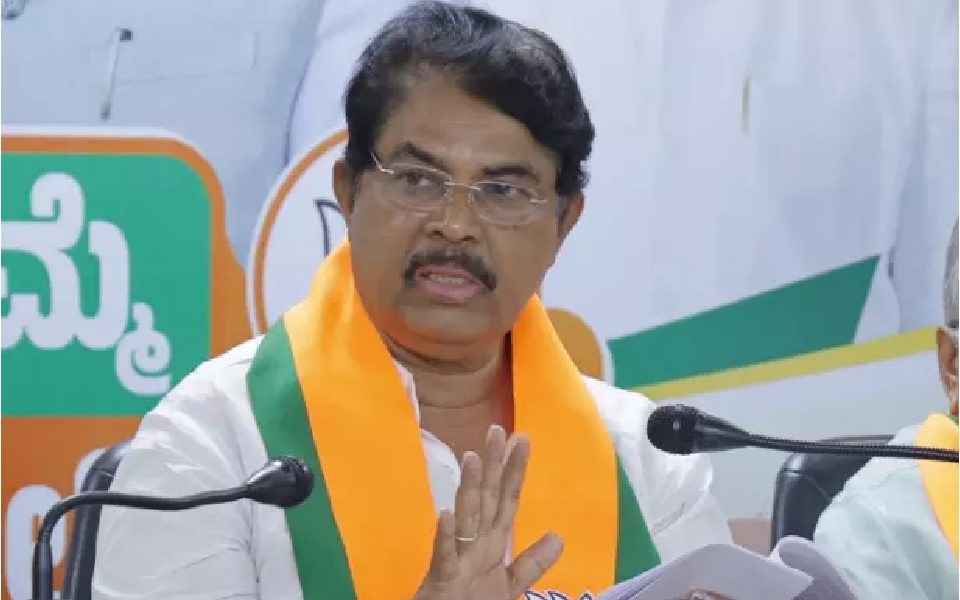
Bengaluru: Leader of Opposition in the Karnataka Legislative Assembly, R. Ashoka, has accused the Congress government of misappropriating funds belonging to the Karnataka Maharshi Valmiki Scheduled Tribes Development Corporation. Ashoka has demanded the resignation of Scheduled Tribes Welfare Minister B. Nagendra by June 6, threatening state-wide protests if the minister does not step down.
Addressing a press conference in Bengaluru on Thursday, Ashoka declared that the BJP would initiate state-wide protests with banners stating “Congress swallowed the money of Dalits” if Minister Nagendra fails to resign. He emphasized that the Congress government, which he accused of looting Dalit funds, would soon be removed from power.
Ashoka's allegations stem from a suicide note left by Chandrashekhar, an officer of the Valmiki Development Corporation, who recently died by suicide. In his note, Chandrashekhar allegedly claimed that Minister Nagendra had verbally instructed him to transfer the corporation's funds. The note also named other officials, including G. Padmanabh and Suja, and provided details about the alleged scam.
ALSO READ: Illegal money transfer case: Sack Minister Nagendra, handover probe to CBI, says K'taka BJP chief
During the press conference, Ashoka also criticized Congress leader Rahul Gandhi's promise of quick monetary deposits into women's accounts. Instead, Ashoka claimed, funds were rapidly transferred to accounts controlled by Congress members, resulting in a loss of Rs 25,000 crore meant for Dalits. He further accused the Congress of encouraging terrorism and highlighted the lack of safety for officials and women in the state.
Ashoka also referenced previous incidents involving BJP leaders, noting that the Congress had demanded severe actions, including murder charges, against BJP leaders such as K.S. Eshwarappa when allegations were made against them. He called for similar strict actions against Minister Nagendra, including the filing of a murder case, as his name was mentioned in Chandrashekhar’s death note.
Let the Truth be known. If you read VB and like VB, please be a VB Supporter and Help us deliver the Truth to one and all.
Two arrested in K'taka for assaulting minors, uploading CSAM content

Bengaluru (PTI): Two men were arrested for allegedly sexually assaulting two minor girls, recording the acts on mobile phones and uploading the videos online as child sexual abuse material, police said on Thursday.
The accused have been identified as Kiran Kumar (29), hailing from Chitradurga district, and Aditya M K (20), hailing from Shivamogga district, they said.
A probe was initiated after information was received from the NCRP portal regarding a suspected instance of creation of Child Sexual Abuse Material (CSAM) for online dissemination, police said.
Accordingly, a case was registered at Kaggalipura Police Station under relevant sections of the IT Act on May 10, they added.
Investigation revealed that two minor girl victims were exploited and videos were created and uploaded to the internet. The child victims have subsequently recorded their statements as per procedure and further necessary legal steps have been taken, Pronab Mohanty Director General of Police, Cyber Command, said in a statement.
Based on the statements of the victims, the accused persons, who allegedly assaulted the minors, recorded the acts on mobile phones and uploaded the videos online, were arrested, he said.
Following the probe, sections 65(2) (rape) and 70 (gangrape) of the Bharatiya Nyaya Sanhita, along with relevant sections of the POCSO Act, have been added to the FIR, police said.
Officials collected relevant information and on May 12, arrested the accused persons and seized three mobile phones belonging to them, in which the videos had allegedly been recorded, he said.
The accused were later produced before the court and taken into police custody for further investigation, he added.
According to him, in CSAM cases, police usually apprehend offenders who have downloaded such content or have kept them in their possession after obtaining them from elsewhere, usually the internet.
"The present case is one of the very few instances where content creators and uploaders have been apprehended," Mohanty added.