Rain damage: Minister KJ George appeals to CM for special relief package for Chikkamagaluru
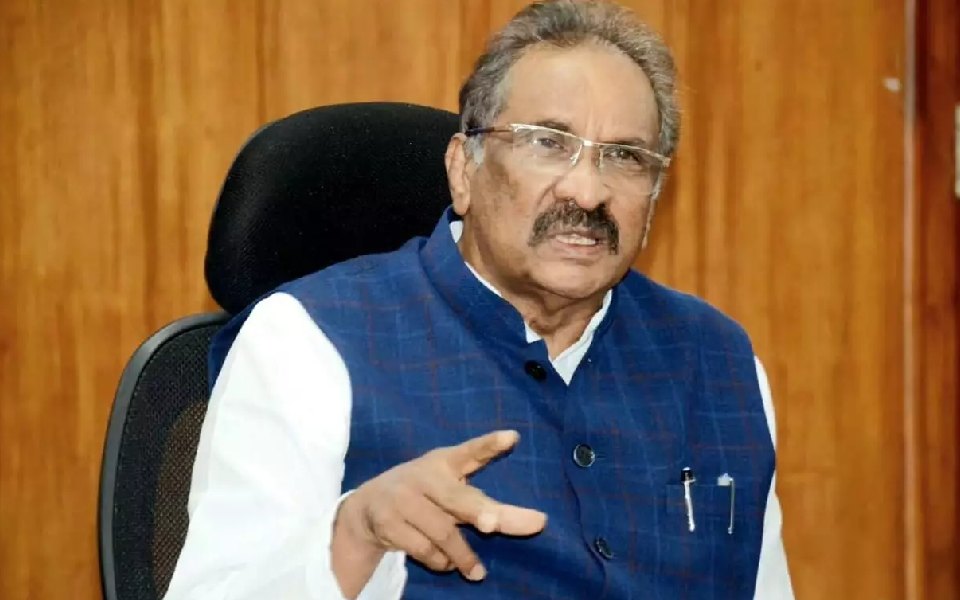
Bengaluru, Aug 3: Karnataka Energy Minister K J George has formally requested Chief Minister Siddaramaiah to provide a special relief package, in addition to the National Disaster Relief Fund (NDRF) grant, to address the extensive damage caused by heavy rains and strong winds in Chikkamagalur district.
During a meeting with the CM and Revenue Minister Krishna Byre Gowda, Minister George, also the district in-charge for Chikkamagalur, emphasised the severe impact of the recent weather events in the district.
He highlighted that the current NDRF grant is insufficient to cover the extensive remedial work needed in the district and urged the state government to consider this a special case and provide additional funding for natural calamity relief.
"During my recent visit to the rain-affected areas in various taluks of Chikkamagalur district, it was evident that many houses have collapsed and roads have been significantly damaged. This has disrupted road connectivity, necessitating temporary alternative routes. There have been landslides in many areas, with the potential for more. Fallen trees, damaged power poles, wires, and transformers are widespread. The Chief Minister understands the gravity of the situation and recognizes the need for additional funding to address these issues," George said in a statement.
ALSO READ: CM Siddaramaiah expresses displeasure over 'unscientific' work leading to landslide in Shiradi ghat
"A temporary compensation of Rs 1.20 lakh has been provided to those whose houses were completely destroyed. Additionally, authorities have been instructed to build new homes under the Rajiv Gandhi housing scheme at a cost of Rs 3.80 lakh. Damaged roads should be temporarily repaired to restore vehicular traffic. Officials have been directed to prepare and submit an action plan for a comprehensive solution," he said.
"We also need a permanent solution for the landslide issue. These major projects can not be undertaken solely with the NDRF grant," the Minister added.
The Minister further stated that officials have been instructed to compile a comprehensive report on the rain damage in the Chikkamagalur district, which will be submitted shortly. Based on this report, further assistance should be provided by the state government. The Chief Minister has responded positively to the request.
"Chikkamagalur district has been heavily damaged due to the rain. I have explained the actual situation to the Chief Minister and the Revenue Minister, appealing for additional financial assistance beyond the NDRF and SDRF (State Disaster Response Fund) grants. Their response has been encouraging," he added.
Let the Truth be known. If you read VB and like VB, please be a VB Supporter and Help us deliver the Truth to one and all.
Ordinance issued to increase number of Supreme Court judges from 34 to 38
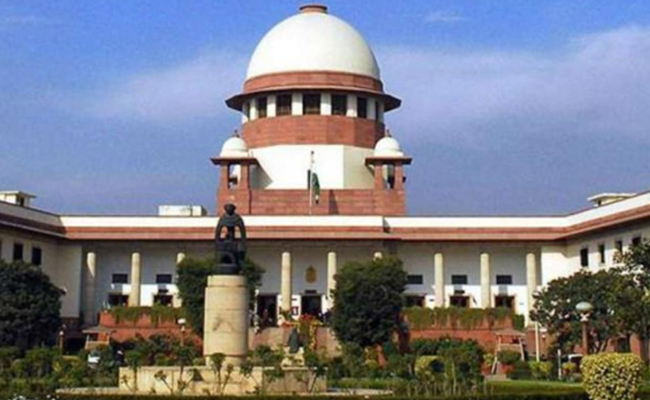
New Delhi (PTI): The government has promulgated an ordinance to increase the strength of the Supreme Court from the present 34 judges to 38, including the Chief Justice of India.
The law ministry notified the ordinance on Saturday, which amended the Supreme Court (Number of Judges) Act, 1956, to increase the sanctioned strength of the top court.
So far, the sanctioned strength of the top court was 34, including the Chief Justice of India (CJI). Now, the number of judges has been increased by four, taking the sanctioned strength to 38.
The top court will now have 37 judges, other than the CJI.
With the apex court having two vacancies at present, and the ordinance coming into force immediately, the Supreme Court Collegium will now have to recommend six names for appointment as judges in the top court.
A bill will be brought in the Monsoon Session of Parliament to convert the ordinance – an executive order – into a law passed by Parliament.
The Union Cabinet had cleared a draft bill on May 5 to increase the number of apex court judges.
The strength of the Supreme Court was last increased from 30 to 33 (excluding the CJI) in 2019.
The Supreme Court (Number of Judges) Act, as originally enacted in 1956, put the maximum number of judges (excluding the CJI) at 10.
This number was increased to 13 by the Supreme Court (Number of Judges), Amendment Act, 1960, and to 17 by another amendment to the law.
The Supreme Court (Number of Judges) Amendment Act, 1986, augmented the strength of judges from 17 to 25, excluding the CJI.
A fresh amendment in 2009 further increased the strength from 25 to 30.
Article 124(3) of the Constitution lists the qualifications required to become a Supreme Court judge.
An Indian citizen who has either served as a high court judge for at least five years, or as an advocate for 10 years, or is a distinguished jurist, can be appointed to the top court.
The strength of the Supreme Court is increased based on the recommendations of the CJI, who writes to the Union law minister. After consulting the finance ministry, the Department of Justice under the law ministry moves the Cabinet with a draft bill.