Rain havoc: Crores spent, zero results, say oppn; Closely monitoring, says D K Shivakumar
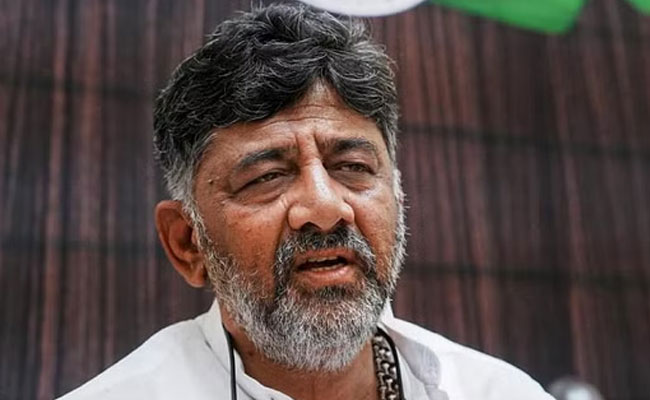
Bengaluru (PTI): The Opposition in Karnataka on Monday blamed the ruling Congress government for letting rains overwhelm the city, claiming that despite crores of rupees being spent on infrastructure, the result was zero.
Deputy Chief Minister D K Shivakumar, also in charge of Bengaluru, said he was in touch with officials concerned and is "closely monitoring the situation".
Former Deputy Chief Minister of Karnataka and MLA of Malleswaram, CN Ashwath Narayan criticised Shivakumar, saying, "Crores spent. Zero results."
Taking to 'X' he said: "Last night's rains didn't expose Bengaluru's infrastructure — they exposed @DKShivakumar's track record of the last two years of doing nothing."
Shivakumar also said in his 'X' post that he is deeply concerned by the havoc caused by relentless rains in Bengaluru.
"I've been in continuous touch with the concerned officers, and I'm closely monitoring the situation. As always, I remain committed to Bengaluru - working round the clock to address challenges and ensure relief. I will be visiting the BBMP War Room and flood-affected areas personally to take stock on the ground."
The Deputy Chief Minister agreed that the issues Bengaluru faces are not new.
"Let us be clear: the issues we face today are not new. They have been ignored for years, across governments and administrations. The only difference now is - we are working to solve them. Not with temporary fixes, but with long-term, sustainable solutions," he said further in his post on 'X'.
Shivakumar further reiterated that he stands with Bengalureans.
"To my fellow Bengalureans - I am one among you. I understand your concerns, I share your frustration, and I assure you of my commitment to resolving them. I stand with you," he wrote.
Earlier, Karnataka BJP General Secretary and MLA of Karkala, Sunil Kumar Karkala had challenged the government on 'X' to release a white paper on how much has actually been spent on Bengaluru's infrastructure in the last two years.
"Visit Silk Board once — you'll see your real contribution," he said.
Speaking at a press conference, BJP spokesperson Ashwath Narayan Gowda said "Despite the weatherman predicting heavy rainfall almost a week ago, there were no efforts made to meet any monsoon-related exigency. The Deputy Chief Minister D K Shivakumar is directly responsible for the rain havoc in the city”.
He alleged that the Deputy Chief Minister kept repeating ‘Brand Bengaluru’ and in the last assembly session, Greater Bengaluru Governance Bill was passed.
“From Brand Bengaluru to Greater Bengaluru, and now from Greater Bengaluru, it has now become ‘Submerged Bengaluru’. This is the achievement of the state government,” Gowda charged.
The BJP leader said no development works took place in the city in the past two years, which finally culminated in rain havoc.
“Maximum taxes in Karnataka are collected from Bengaluru, but the investment required on the basic infrastructure here is not being done,” the party spokesperson said.
Let the Truth be known. If you read VB and like VB, please be a VB Supporter and Help us deliver the Truth to one and all.
Deeply concerned: India on drone strike near UAE's Barakah nuclear plant
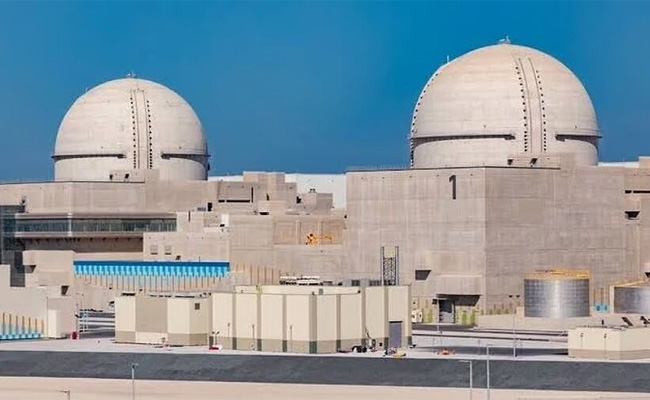
New Delhi (PTI): India on Monday voiced deep concern over a drone attack targeting the Barakah nuclear facility in the United Arab Emirates (UAE) as it marked a dangerous escalation in the West Asia conflict.
New Delhi's reaction came a day after a drone struck a generator near the Gulf nation's sole nuclear power plant, sparking a fire on the complex's perimeter.
No one has claimed responsibility for the attack. The UAE's Ministry of Defence said it is working to determine the source of the drone strike.
The incident triggered fears of a sharp escalation in tensions across West Asia.
"India is deeply concerned at the attack targeting the Barakah nuclear facility in the UAE," the Ministry of External Affairs (MEA) said.
"Such actions are unacceptable and represent a dangerous escalation. We urgently call for restraint and a return to dialogue and diplomacy," it said.