Separate nodal officer in all districts to prevent female foeticides in Karnataka: Minister
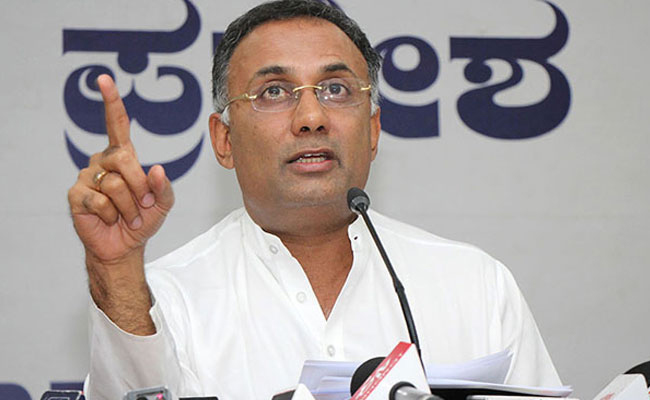
Belagavi (PTI): Accepting that the female foeticide has not stopped in the state, Karnataka Health Minister Dinesh Gundu Rao on Tuesday said that the government is taking strict measures to prevent it.
The minister said the government is appointing separate nodal officers in all districts and tightening measures to prevent foeticide, which he called a "social evil".
He also assured that the government will consider strengthening legislation to control such activities.
The minister was responding to a question by BJP MLC C T Ravi in the Legislative Council.
"Female foeticides have certainly not stopped. If you look at the sex ratio, there is a lot of difference. I accept that this is happening," Rao said.
"Foeticides are not happening under pressure; voluntarily, it is happening, for not wanting a girl child. These things are happening based on the sex determination of the foetus at some hospitals. Sex determination is illegal, but with the advancement in technology, portable ultrasound machines have been developed, which can be easily carried anywhere, and scans and tests can be done. This needs to be controlled. We will bring it to the notice of the central government," he said.
In some districts and in a few hospitals, a higher number of male child births is happening. It is found with the help of intelligence input, the minister said.
"Information is being gathered on the taluk in which the male-female ratio is worsening, what is happening in which hospital, and appropriate action is being taken to crack down on such a network, after proper evaluation."
Decoy operations have been done at seven places in the last two years, to identify those involved in illegal activities linked to female foeticides, and actions have been taken against officials and hospitals involved, he said, adding that more needs to be done on priority.
Responding to a question by Ravi about whether any stringent legislation is being brought, Rao said, the government will consider strengthening the legislation and making it stricter to control this.
"Some amendments have been made to the existing laws in the last two years....advanced technology and the internet is being used to carry out such things, also oral medicines for abortions are available over the counter.
We need to look into bringing legislation to control them. The Food and Drug Administration has issued instructions to pharmacists that the sale of such drugs should be documented."
The minister also said that measures are also being taken for the effective implementation of the Pre-Conception and Pre-Natal Diagnostic Techniques (PC & PNDT) Act, and awareness is being created against the identification of female foetuses and female foeticide.
Let the Truth be known. If you read VB and like VB, please be a VB Supporter and Help us deliver the Truth to one and all.
Block on Mumbai-Pune Expressway on April 23, 24
Barnes Aerospace CIO says, Have travelled world, I feel Mangalore is best place to grow up
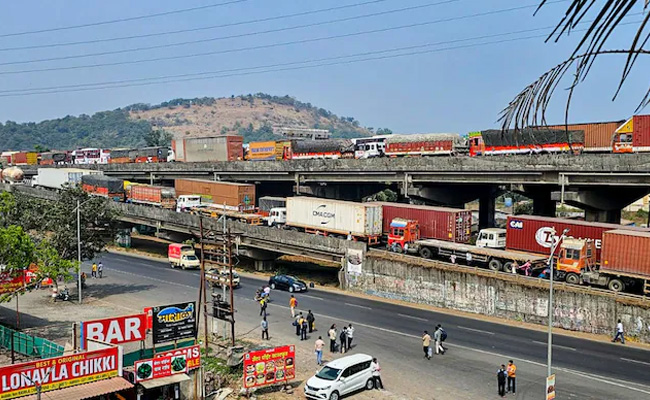
Mumbai (PTI): The traffic on Mumbai-Pune Yashwantrao Chavan Expressway will be temporarily diverted for a few hours on April 23 and 24 on account of bridge maintenance work.
In a release issued on Tuesday, the Maharashtra State Road Development Corporation (MSRDC) said the block is planned from 12 am to 3 pm on April 23 and 24, for removal of shuttering and painting work on a bridge located near Dongargaon-Kusgaon.
Traffic towards Mumbai will remain completely closed in the section on April 23 during the three hours long block. Vehicles will be diverted via the Kiwale-Dehu Road-Talegaon route onto National Highway 48 and rejoin at Kusgaon toll plaza.
Similarly, traffic towards Pune will be shut on April 24 from 12 pm to 3 pm, and vehicles will be diverted from Kusgaon toll plaza via National Highway 48 through the Dehu Road-Kiwale route.
In case of any difficulty, commuters can contact the MSRDC control room on 9822498224 or the highway police helpline at 9833498334, the release said.
Mumbai-Pune Expressway is the first access controlled Expressway of India.