Shia groups hold mourning meet near Bengaluru after Ayatollah Khamenei’s death
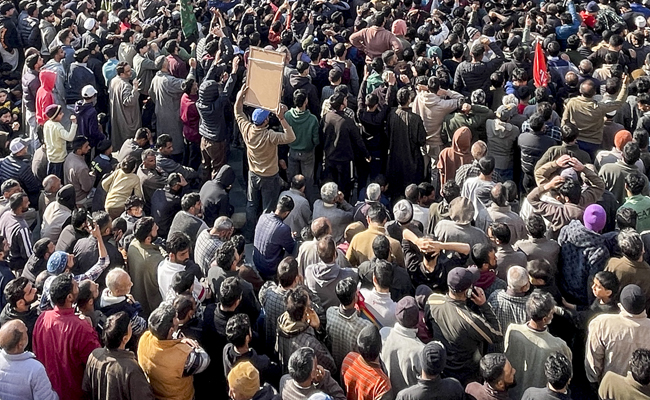
Bengaluru: Leaders and members of the Shia community gathered in Alipur village on the outskirts of Bengaluru on Sunday to mourn the death of Iran’s Supreme Leader Ayatollah Ali Khamenei and announced a three-day period of mourning.
According to community representatives quoted by The Observer Post, prayers were offered in remembrance of Khamenei. Black flags were hoisted in the village as residents assembled to pay their respects. Speakers at the gathering condemned the reported joint strikes by the United States and Israel that led to his death, describing the development as concerning for Shia Muslims.
The confirmation of Khamenei’s death reportedly came during the intervening night of February 28 and March 1, after US President Donald Trump and Israeli Prime Minister Benjamin Netanyahu publicly confirmed the killing. The United States and Israel said they had carried out pre-emptive strikes on multiple locations in Iran, including Tehran. Israel named its military action Operation Lion’s Roar, while the United States termed its campaign Operation Epic Fury.
Following the development, the Embassy of the Islamic Republic of Iran in New Delhi lowered its flag to half-mast and issued a statement calling upon governments around the world to condemn the attack. The statement added that Iran would continue on its chosen path and warned of consequences for those responsible.
Mourning meetings and protests were also reported from parts of Jammu and Kashmir and Lucknow. The Jammu and Kashmir Shia Association expressed grief over Khamenei’s death and offered prayers for the people of Iran.
Speaking to reporters, Shia community leader Syed Samar Kazmi criticised the strike and alleged that Khamenei had been targeted for raising international issues, including Palestine. Maulana Khalid Rasheed Farangi Mahli, Chairman of the Islamic Centre of India, also condemned the attack and appealed for restraint, calling for international efforts to prevent further escalation.
Let the Truth be known. If you read VB and like VB, please be a VB Supporter and Help us deliver the Truth to one and all.
Ordinance issued to increase number of Supreme Court judges from 34 to 38
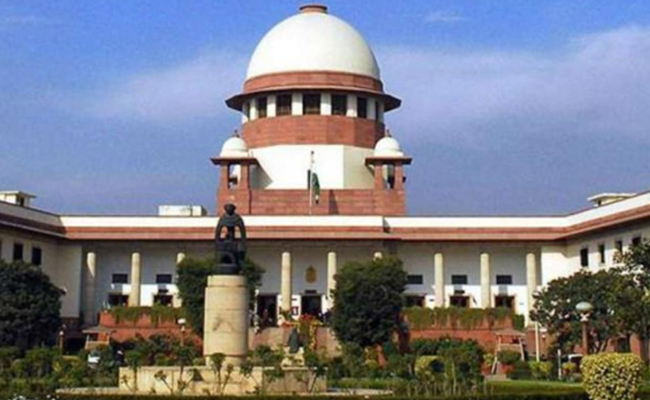
New Delhi (PTI): The government has promulgated an ordinance to increase the strength of the Supreme Court from the present 34 judges to 38, including the Chief Justice of India.
The law ministry notified the ordinance on Saturday, which amended the Supreme Court (Number of Judges) Act, 1956, to increase the sanctioned strength of the top court.
So far, the sanctioned strength of the top court was 34, including the Chief Justice of India (CJI). Now, the number of judges has been increased by four, taking the sanctioned strength to 38.
The top court will now have 37 judges, other than the CJI.
With the apex court having two vacancies at present, and the ordinance coming into force immediately, the Supreme Court Collegium will now have to recommend six names for appointment as judges in the top court.
A bill will be brought in the Monsoon Session of Parliament to convert the ordinance – an executive order – into a law passed by Parliament.
The Union Cabinet had cleared a draft bill on May 5 to increase the number of apex court judges.
The strength of the Supreme Court was last increased from 30 to 33 (excluding the CJI) in 2019.
The Supreme Court (Number of Judges) Act, as originally enacted in 1956, put the maximum number of judges (excluding the CJI) at 10.
This number was increased to 13 by the Supreme Court (Number of Judges), Amendment Act, 1960, and to 17 by another amendment to the law.
The Supreme Court (Number of Judges) Amendment Act, 1986, augmented the strength of judges from 17 to 25, excluding the CJI.
A fresh amendment in 2009 further increased the strength from 25 to 30.
Article 124(3) of the Constitution lists the qualifications required to become a Supreme Court judge.
An Indian citizen who has either served as a high court judge for at least five years, or as an advocate for 10 years, or is a distinguished jurist, can be appointed to the top court.
The strength of the Supreme Court is increased based on the recommendations of the CJI, who writes to the Union law minister. After consulting the finance ministry, the Department of Justice under the law ministry moves the Cabinet with a draft bill.