Siddaramaiah accuses Karnataka govt of being hand-in-glove with pvt schools
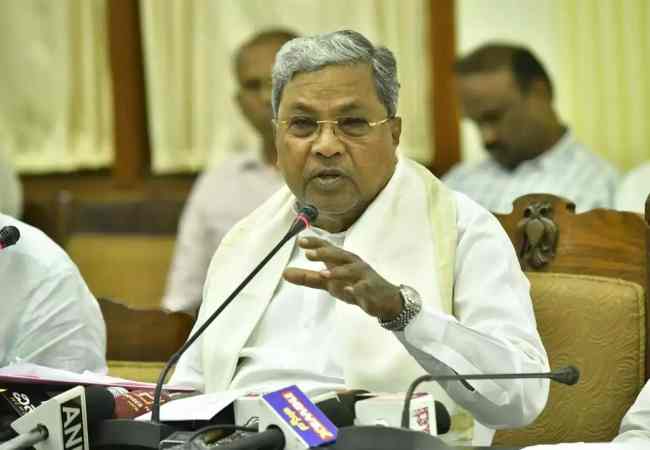
Bengaluru: Former Chief Minister Siddaramaiah on Sunday accused the BJP government in Karnataka of being 'hand-in-glove' with private educational institutions which were allegedly overcharging students.
In a series of tweets, the Congress leader slammed Chief Minister B S Yediyurappa and Primary and Secondary Education Minister S Suresh Kumar for allegedly not having control over private education institutions.
He alleged that schools were forcing parents to pay full school fees and threatening to stop online classes if they did not comply with it and said the government was silent on the issue.
"Schools are charging even extra curricular fees on top of teaching fees. This is an additional burden on parents.
The @BJP4Karnataka is hand in gloves with the institutions," Siddaramaiah, who is Leader of Opposition in the state Assembly tweeted.
He sought the intervention of the Chief Minister and the Primary and Secondary Education Minister to resolve the issue at the earliest.
Meanwhile, a group of parents staged a demonstration here, holding placards and banners and raised slogans against private educational institutions for overcharging.
The mother of a student at the protest venue, said this month she was not able to pay fees because her husband, the sole earning member, had lost his job as a fallout of COVID-19 lockdown and alleged the management did not allow her son to appear for the half-yearly exams.
Confused decisions of @CMofKarnataka & Education department has left students, their parents and private education institutions in no man's land.@CMofKarnataka & @nimmasuresh should interfere and resolve the issue at the earliest.
— Siddaramaiah (@siddaramaiah) December 20, 2020
1/5#SOS_Education
.@CMofKarnataka & education minister @nimmasuresh are directly responsible for the conflict between parents & private education institutions.
— Siddaramaiah (@siddaramaiah) December 20, 2020
The govt is trying to hide its gross mismanagement by creating rift between parents & institutions.
2/5#SOS_Education
There is no govt's control over private education institutions. Schools are forcing parents to pay complete school fee and threatening to stop online classes if it is not paid.
— Siddaramaiah (@siddaramaiah) December 20, 2020
But the govt is silent on the issue.@CMofKarnataka@nimmasuresh
3/5#SOS_Education
Schools are charging even extra curricular fees on top of teaching fees. This is an additional burden on parents.@BJP4Karnataka is hand in gloves with the institutions.
— Siddaramaiah (@siddaramaiah) December 20, 2020
4/5#SOS_Education
Series of meeting by govt about reopening schools had created confusion and panic among parents.
— Siddaramaiah (@siddaramaiah) December 20, 2020
Education minister @nimmasuresh should conduct meeting with both parents and management in a transparent way & resolve the issue at the earliest.
5/5#SOS_Education
Let the Truth be known. If you read VB and like VB, please be a VB Supporter and Help us deliver the Truth to one and all.
Ordinance issued to increase number of Supreme Court judges from 34 to 38
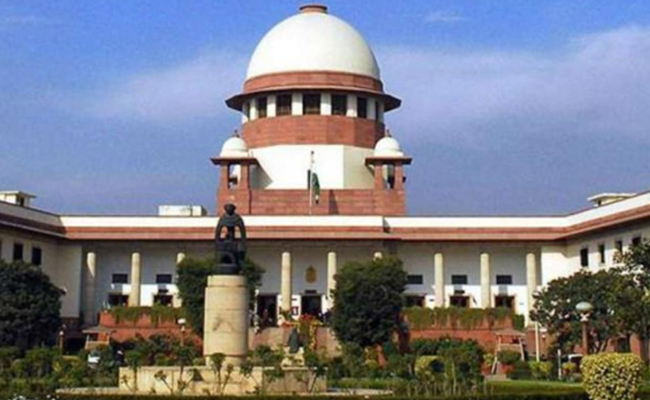
New Delhi (PTI): The government has promulgated an ordinance to increase the strength of the Supreme Court from the present 34 judges to 38, including the Chief Justice of India.
The law ministry notified the ordinance on Saturday, which amended the Supreme Court (Number of Judges) Act, 1956, to increase the sanctioned strength of the top court.
So far, the sanctioned strength of the top court was 34, including the Chief Justice of India (CJI). Now, the number of judges has been increased by four, taking the sanctioned strength to 38.
The top court will now have 37 judges, other than the CJI.
With the apex court having two vacancies at present, and the ordinance coming into force immediately, the Supreme Court Collegium will now have to recommend six names for appointment as judges in the top court.
A bill will be brought in the Monsoon Session of Parliament to convert the ordinance – an executive order – into a law passed by Parliament.
The Union Cabinet had cleared a draft bill on May 5 to increase the number of apex court judges.
The strength of the Supreme Court was last increased from 30 to 33 (excluding the CJI) in 2019.
The Supreme Court (Number of Judges) Act, as originally enacted in 1956, put the maximum number of judges (excluding the CJI) at 10.
This number was increased to 13 by the Supreme Court (Number of Judges), Amendment Act, 1960, and to 17 by another amendment to the law.
The Supreme Court (Number of Judges) Amendment Act, 1986, augmented the strength of judges from 17 to 25, excluding the CJI.
A fresh amendment in 2009 further increased the strength from 25 to 30.
Article 124(3) of the Constitution lists the qualifications required to become a Supreme Court judge.
An Indian citizen who has either served as a high court judge for at least five years, or as an advocate for 10 years, or is a distinguished jurist, can be appointed to the top court.
The strength of the Supreme Court is increased based on the recommendations of the CJI, who writes to the Union law minister. After consulting the finance ministry, the Department of Justice under the law ministry moves the Cabinet with a draft bill.