Siddaramaiah backs Rahul Gandhi’s claims of nationwide 'voter fraud', demands PM Modi’s resignation
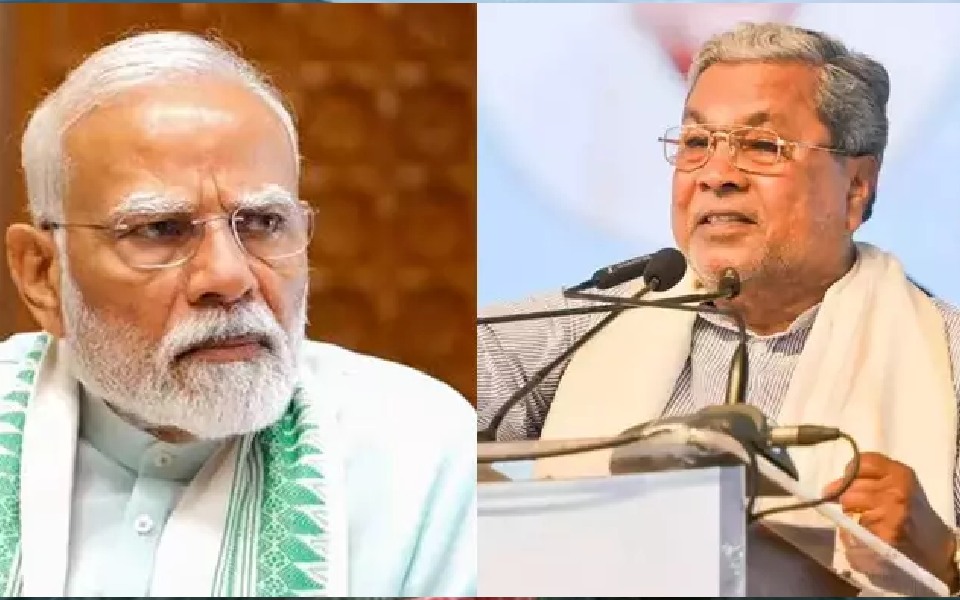
Bengaluru, Aug 7 (PTI): Karnataka Chief Minister Siddaramaiah on Thursday said that Congress leader Rahul Gandhi had exposed, with evidence, widespread voter fraud during the recent Lok Sabha elections and demanded Prime Minister Narendra Modi’s resignation.
In a post on 'X', Siddaramaiah said the Leader of the Opposition in the Lok Sabha, Rahul Gandhi, has exposed with hard evidence how widespread vote theft took place across India in the recent Lok Sabha elections.
Despite massive public anger, Modi returned to power only through electoral fraud. The documents released by Rahul Gandhi today stand as clear proof, he added.
“Narendra Modi became Prime Minister by misusing the Election Commission, stealing votes, and abusing power. He has no moral right to stay in office. He must resign and dissolve the government immediately,” Siddaramaiah demanded.
He vowed that the Congress would raise its voice across the country and expose the BJP’s crimes to every citizen.
Giving an example from Karnataka, Siddaramaiah said a six-month investigation was conducted into voter records in Mahadevapura Assembly segment, which falls under the Bengaluru Central Lok Sabha constituency.
“Under the guidance of Shri Rahul Gandhi, a detailed six-month investigation was conducted into the voter records of Mahadevapura Assembly segment, which falls under the Bengaluru Central Lok Sabha constituency. The probe uncovered precise evidence of systematic vote theft,” he said.
“In the 2024 Lok Sabha Election, the BJP misused the Election Commission and illegally secured 1,00,250 votes in Mahadevapura — a constituency with just around 3.25 lakh voters — to win the seat,” Siddaramaiah said. He said five methods of electoral malpractice were identified in just this one segment.
“A total of 11,965 fake voters are estimated to have cast votes in this constituency. Some individuals voted in multiple polling booths, while others voted not only here but also in other parts of the state and even outside Karnataka. This points to a systematic and deliberate misuse of the electoral process,” Siddaramaiah charged.
He added that 40,009 voters were found with fake addresses.
The Chief Minister said, “Thousands of them are registered under non-existent addresses, including many with ‘House Number 0’, random gibberish entered in place of father’s or husband’s names, and addresses that simply do not exist.”
According to him, 10,452 voters were registered under a handful of addresses.
“In one instance, 80 voter ID cards were issued using the address of a single-bedroom house. In another case, 68 voter IDs listed the address of a private club. Upon verification, it was confirmed that none of the listed voters actually reside there.”
Siddaramaiah said 4,132 voter ID cards in the constituency had missing or unclear photographs, yet those individuals were allowed to vote.
He also pointed out that “33,692 voters aged between 60 and 90 years were found to have been registered as first-time voters through Form 6. The BJP often claims that new voters support Narendra Modi, but the reality is startling — even individuals aged 89 and 98 have allegedly voted for the first time.”
Siddaramaiah said that had the Election Commission acted impartially and provided the electronic data and CCTV footage that Rahul Gandhi requested, this scam could have been exposed within days of the election.
“Instead, the Commission deliberately altered its own rules to suppress information and cover up the truth. This is not a scam limited to Mahadevapura alone — it is now clear that the BJP has used similar vote theft tactics across the country to cling to power,” he said.
Let the Truth be known. If you read VB and like VB, please be a VB Supporter and Help us deliver the Truth to one and all.
Congress using hijab issue to pacify minority anger, alleges Karnataka LoP R Ashoka
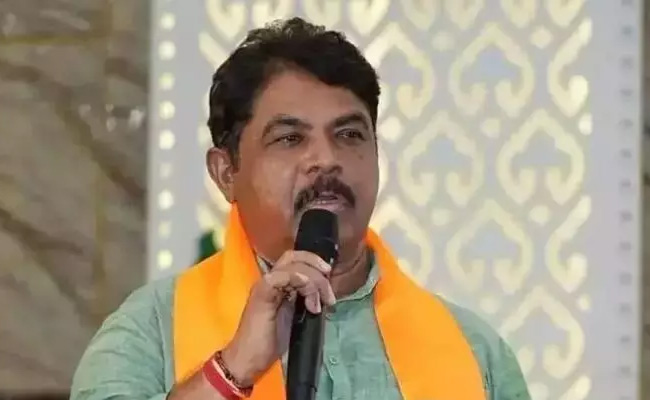
Bengaluru: Leader of Opposition in the Assembly R. Ashoka has accused the Congress government of using the hijab issue to placate what he described as discontent among minority voters after the Davanagere by-election.
In a post on X on Wednesday, Ashoka alleged that the state government, instead of addressing issues such as price rise, corruption, farmers’ distress and law and order, was attempting to retain its minority vote base by reviving the hijab issue.
Referring to the 2022 dress code introduced by the BJP government, which prohibited hijab in schools and colleges, Ashoka said the Karnataka High Court had upheld the policy and emphasised the importance of discipline in educational institutions.
He questioned the Congress government’s move to revisit the issue and asked whether setting aside the court-backed policy to benefit one community could be described as secularism.
Ashoka further alleged that while the government was willing to permit hijab, it continued to prohibit saffron shawls.
He accused the government of dividing students on religious lines rather than treating schools and colleges as spaces of equality.
Drawing a comparison with Mamata Banerjee’s government in West Bengal, Ashoka claimed that excessive appeasement politics had harmed the state and warned that the Congress in Karnataka could face a similar political response.
He said voters in Karnataka would teach the Congress a lesson for what he termed “vote-bank politics” and for compromising constitutional and judicial principles.