Siddaramaiah challenges Sitharaman’s claim on disbursal of recommended grants
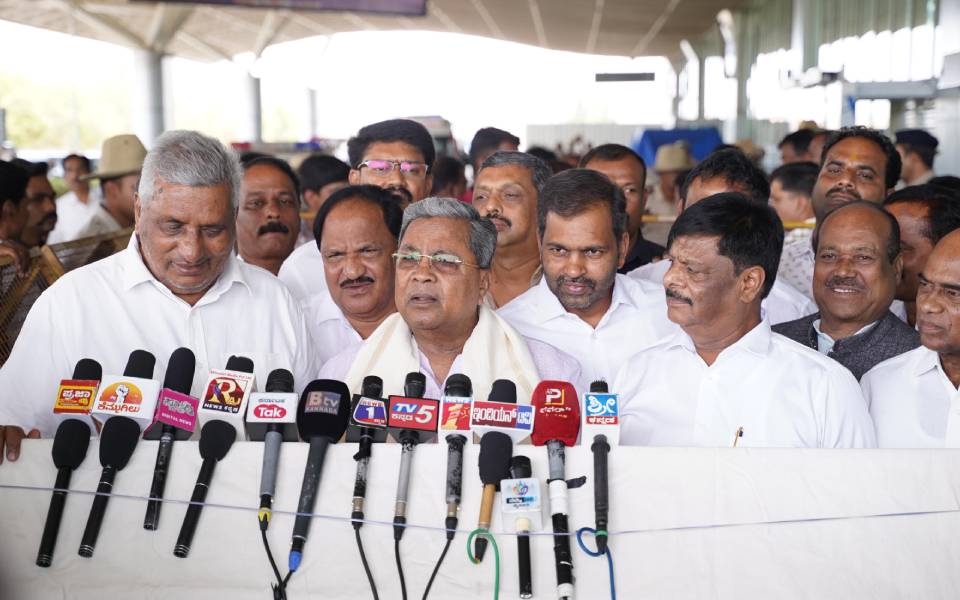
In a robust response to the Finance Minister Nirmala Sitharaman’s denial of recommended grants for Karnataka, Chief Minister Siddaramaiah reiterated the state's demand for its rightful share as recommended by the 15th Finance Commission (15 FC).
Expressing deep concern over the Finance Ministry's refusal to acknowledge the recommended allocations, Siddaramaiah emphasized the significance of adhering to federal principles enshrined in the Constitution.
Addressing the issue through his social media platform, Siddaramaiah highlighted the interim report of the 15 FC for the fiscal year 2020-21, which sanctioned significant sums for Karnataka, Telangana, and Mizoram. He emphasized that these grants were not bestowed out of favoritism but to ensure equitable distribution among states, safeguarding against a decrease in their share of devolution compared to the previous year.
Siddaramaiah further shed light on the final report of the 15 FC, which recommended substantial funds for Karnataka, including allocations for water body revival and infrastructure projects like the Peripheral Ring Road for Bengaluru. However, he lamented the Ministry of Finance's rejection of these recommendations, thereby depriving Karnataka of its rightful share.
ALSO READ: FM Nirmala Sitharaman rubbishes Karnataka govt's claim of injustice in release of central grants
Stating that the state budget for essential expenditures for the five guarantees of the state government Siddaramaiah asserted that Karnataka's demand for its share was not a plea but a rightful assertion of its constitutional entitlement. He underscored the need for the central government to comprehend the essence of equitable distribution among states and fulfill its obligations accordingly.
“We are not asking for funds to our 5 Guarantees. We have adequate provision for those in our budget, thank you,” he said.
Contrary to Siddaramaiah's claims, Finance Minister Nirmala Sitharaman had earlier refuted allegations of withholding recommended grants for Karnataka. Dismissing the notion of any such recommendation by the 15 FC in its final report, Sitharaman maintained that Karnataka's claims of non-release of special grants were baseless. This rebuttal followed Karnataka's filing of a writ petition in the Supreme Court, seeking the immediate release of grants under the National Disaster Response Fund to address the state's severe drought conditions.
Sitharaman asserted that every due penny to Karnataka had been disbursed transparently. She provided statistical evidence, highlighting significant increases in tax devolution and grants-in-aid to Karnataka during the tenure of the current government. Sitharaman also referenced additional financial support extended to states post-COVID-19, including interest-free loans for infrastructure development, which Karnataka had reportedly received.
The Finance Minister had urged the state government to review the factual records and desist from misleading the public regarding fund allocation.
One expects the country’s Finance Minister to speak the truth. Unfortunately, she has been consistently denying the written word.
— Siddaramaiah (@siddaramaiah) March 24, 2024
The interim report of the 15 FC for 2020-21 sanctioned Rs 6764 crores for three states, viz Karnataka (Rs 5495 crores), Telangana (Rs 723 crores) &… pic.twitter.com/8kFhl70oo2
Let the Truth be known. If you read VB and like VB, please be a VB Supporter and Help us deliver the Truth to one and all.
Real Madrid fines Valverde and Tchouaméni half a million euros each for altercation
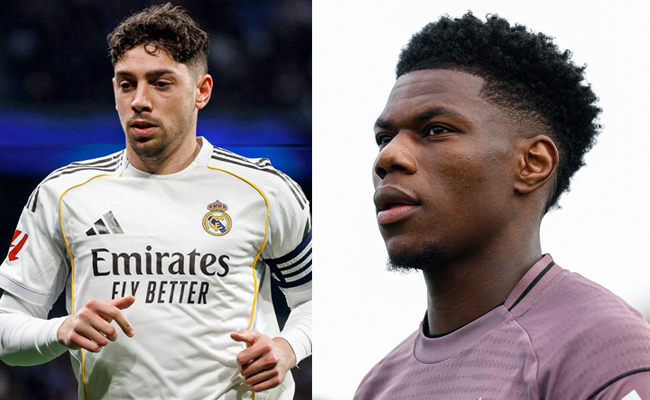
Barcelona (AP): Real Madrid slapped players Federico Valverde and Aurélien Tchouaméni with half-a-million-euro ($588,000) fines on Friday for their altercation during practice.
The massive fines came a day after the midfielders tussled when the team trained. Valverde said in a post on social media on Thursday that no punches were thrown. But Valverde knocked his head on a table and he suffered a small cut that required a brief hospital visit.
On social media, Valverde initially called it a “meaningless fight” with a teammate and said “everything has been blown out of proportion."
His employers, however, considered it a significant enough breach of team discipline to nail both Valverde and Tchouaméni with fines that bite even the bank account of a top soccer player. The half-a-million euro penalties reflect the reputational damage the club was enduring in a chaotic end to a disappointing season.
In a statement, the 15-time European champion said its disciplinary action was concluded after both players expressed to the club “their complete remorse for what happened and apologized to one another.”
Madrid added they also apologized to their teammates, the coaching staff and club supporters, as well as showing their willingness to accept whatever disciplinary action the club deemed “opportune.”
Tchouaméni was back training with Madrid on Friday, two days before they play at Barcelona in a clasico. Madrid has to win otherwise Barcelona will be crowned La Liga champion.
After being notified of the fine, he posted a public apology to the club and its fans on social media.
“What happened this week in training is unacceptable,” Tchouaméni wrote. "I say this while thinking about the example we are expected to set for young people, whether in football or at school.
“Above all, I am sorry for the image we projected of the club.”
Valverde was not at practice due to the head knock.
Both players are set to play in the World Cup next month, with Tchouaméni playing for France and Valverde for Uruguay.
Chaotic end to a poor season
===================
The run-in between the players, who for seasons have played side by side in Madrid's midfield, came after they argued this week in previous training sessions. But tempers boiled over on Thursday. Spanish media was rife with reports that the players previously disagreed over the club's decision to let coach Xabi Alonso go after just months on the job.
It was not the only altercation involving Madrid players during training this week. Álvaro Carreras confirmed he was in a “minor” incident with a teammate. Spanish media said he and fellow defender Antonio Rüdiger got into a scuffle.
Álvaro Arbeloa, the coach who was promoted from Madrid's reserve team when Alonso was fired in January, will face tough questions on what went wrong inside the changing room when he gives a press conference on Saturday ahead of the clasico at Camp Nou.
Madrid is facing a second consecutive campaign without a major trophy amid rumors in the Spanish media that club president Florentino Pérez is considering bringing back Jose Mourinho to straighten out his underperforming team.