Siddaramaiah demands Yediyurappa's immediate resignation as Karnataka CM
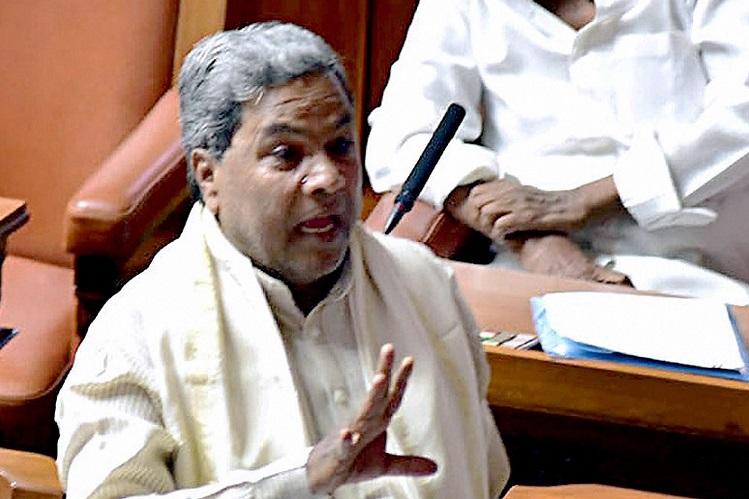
Bengaluru, Dec 24: The Leader of Opposition in the Karnataka Assembly Siddaramaiah on Thursday demanded that Chief Minister B S Yediyurappa resign immediately after a High Court order dismissing his petition seeking rejection of an old corruption case against him.
Urging the BJP leadership including Prime minister Narendra Modi to intervene and ask Yediyurappa to step down, the senior Congress leader said the saffron party high command that has been planning to replace the Chief Minister has now got a strong weapon against him.
"I demand the resignation of Mr Yediyurappa, because his petition for quashing the FIR against him was dismissed by the High Court of Karnataka.Therefore he has no right to continue as Chief Minister for a second," Siddaramaiah said.
Speaking to reporters here, he said BJP leadership has to immediately intervene and ask Yediyurappa to resign.
The Karnataka High Court on Tuesday had rejected Yediyurappa's plea seeking quashing of an FIR against him pertaining to illegal denotification of land in 2006-07 when he was the Deputy Chief Minister in the BJP-JD(S) coalition government headed by H D Kumaraswamy.
Noting that the judge in his order has in detail explained the reason why investigation has to continue and FIR cannot be quashed, Siddaramaiah wanted to know how Yediyurappa could continue as CM.
"As he is the Chief Minister and has powers, there are chances of influencing the investigation.There cannot be a fair and impartial investigation, so Yediyurappa should not be in power and should resign immediately.
Let him come back once acquitted, we don't have any objections," he said.
If Yediyurappa respects the law and believes in democracy he should resign immediately, the CLP leader said.
"If he is adamant and does not resign, then the BJP and Prime Minister must intervene.
Those who had claimed 'Na Khaunga, Na Khane Dunga' (PM Narendra Modi's slogan promising to end corruption) must act," he said.
He said if Yediyurappa does not resign,the congress will take to the streets and protest."...but I feel he may resign on his own," the congress leader said.
"We will decide in party forum and decide what to be done to put pressure on him to resign..," he said.
Stating that the High Court has said the FIR cannot be dismissed and the investigation has to take place under the watch of the Lokayukta court, Siddaramaiah claimed it is because the HC has no trust in the Lokayukta police.
"There is a serious allegation against Yediyurappa.
Yediyurappa can be issued a warrant and may even be arrested as it is a non-bailable offence under prevention of corruption act," he said in response to a question.
Let the Truth be known. If you read VB and like VB, please be a VB Supporter and Help us deliver the Truth to one and all.
Ordinance issued to increase number of Supreme Court judges from 34 to 38
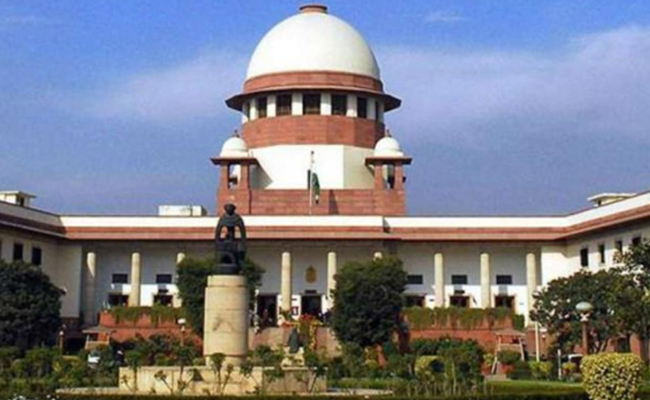
New Delhi (PTI): The government has promulgated an ordinance to increase the strength of the Supreme Court from the present 34 judges to 38, including the Chief Justice of India.
The law ministry notified the ordinance on Saturday, which amended the Supreme Court (Number of Judges) Act, 1956, to increase the sanctioned strength of the top court.
So far, the sanctioned strength of the top court was 34, including the Chief Justice of India (CJI). Now, the number of judges has been increased by four, taking the sanctioned strength to 38.
The top court will now have 37 judges, other than the CJI.
With the apex court having two vacancies at present, and the ordinance coming into force immediately, the Supreme Court Collegium will now have to recommend six names for appointment as judges in the top court.
A bill will be brought in the Monsoon Session of Parliament to convert the ordinance – an executive order – into a law passed by Parliament.
The Union Cabinet had cleared a draft bill on May 5 to increase the number of apex court judges.
The strength of the Supreme Court was last increased from 30 to 33 (excluding the CJI) in 2019.
The Supreme Court (Number of Judges) Act, as originally enacted in 1956, put the maximum number of judges (excluding the CJI) at 10.
This number was increased to 13 by the Supreme Court (Number of Judges), Amendment Act, 1960, and to 17 by another amendment to the law.
The Supreme Court (Number of Judges) Amendment Act, 1986, augmented the strength of judges from 17 to 25, excluding the CJI.
A fresh amendment in 2009 further increased the strength from 25 to 30.
Article 124(3) of the Constitution lists the qualifications required to become a Supreme Court judge.
An Indian citizen who has either served as a high court judge for at least five years, or as an advocate for 10 years, or is a distinguished jurist, can be appointed to the top court.
The strength of the Supreme Court is increased based on the recommendations of the CJI, who writes to the Union law minister. After consulting the finance ministry, the Department of Justice under the law ministry moves the Cabinet with a draft bill.