Siddaramaiah expresses regret over remarks on beef and Kodavas
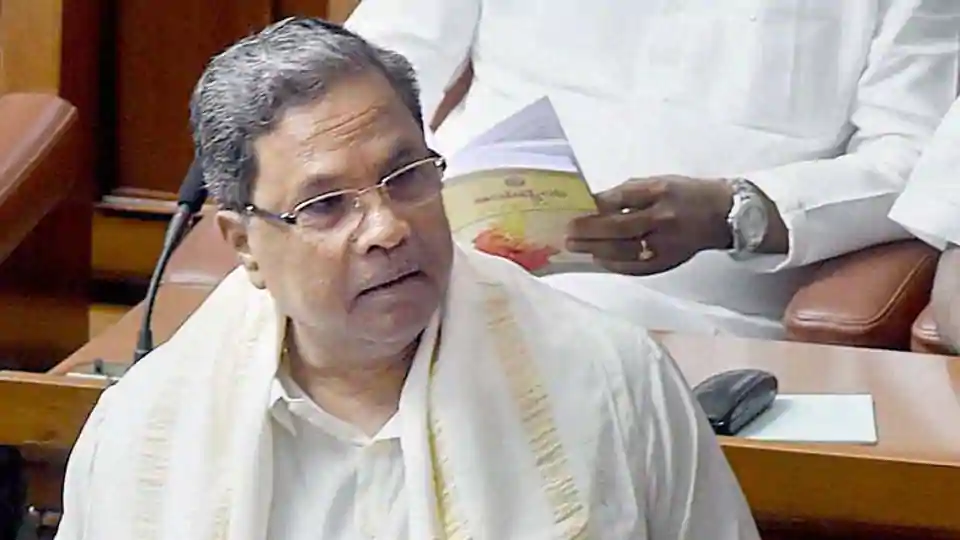
Bengaluru, Dec 21: Congress leader and former Chief Minister Siddaramaiah on Monday expressed regret for his purported remarks that Kodavas eat beef, for which he is facing flak, saying he has a lot of respect for Kodava people and their culture.
Several Kodava organisations held protests in front of the Kodagu district Deputy Commissioner's office today in protest against Siddaramaiah's remarks.
"I had not said like that. I had said food habits vary from people to people and they eat what they like.I have already tweeted and clarified that I did not say like that.
I have a lot of respect for Kodava people and their culture, and if my statements have in any way hurt them, I express my regret," Siddaramaiah told reporters here.
Alleging BJP's role behind protests against him, the Leader of Opposition in the state assembly said "BJP people don't have any other work, they look for emotive issues."
According to reports, some of the protesters accused Siddaramaiah of having hurt the feelings of the Kodava community and demanded that he apologise openly.
Some have even threatened to file a complaint against him for hurting the sentiments of the community.
Earlier on Saturday, Siddaramaiah through a series of tweets,tried to clarify his stand on the issue.
"My statement about beef and Kodava culture has been misinterpreted by the media.I regret if that has hurt the sentiments of Kodavas. I am aware of Kodava culture and I greatly respect it."
"We have various food traditions and habits. Be it goat or sheep or chicken or pork or beef. I meant that it is wrong to link religion and food habits. I never intended to say that Kodavas eat beef.
I have great respect for their culture," he added.
Let the Truth be known. If you read VB and like VB, please be a VB Supporter and Help us deliver the Truth to one and all.
Ordinance issued to increase number of Supreme Court judges from 34 to 38
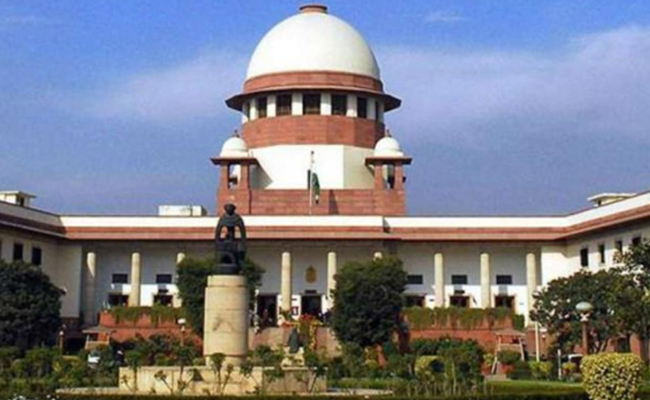
New Delhi (PTI): The government has promulgated an ordinance to increase the strength of the Supreme Court from the present 34 judges to 38, including the Chief Justice of India.
The law ministry notified the ordinance on Saturday, which amended the Supreme Court (Number of Judges) Act, 1956, to increase the sanctioned strength of the top court.
So far, the sanctioned strength of the top court was 34, including the Chief Justice of India (CJI). Now, the number of judges has been increased by four, taking the sanctioned strength to 38.
The top court will now have 37 judges, other than the CJI.
With the apex court having two vacancies at present, and the ordinance coming into force immediately, the Supreme Court Collegium will now have to recommend six names for appointment as judges in the top court.
A bill will be brought in the Monsoon Session of Parliament to convert the ordinance – an executive order – into a law passed by Parliament.
The Union Cabinet had cleared a draft bill on May 5 to increase the number of apex court judges.
The strength of the Supreme Court was last increased from 30 to 33 (excluding the CJI) in 2019.
The Supreme Court (Number of Judges) Act, as originally enacted in 1956, put the maximum number of judges (excluding the CJI) at 10.
This number was increased to 13 by the Supreme Court (Number of Judges), Amendment Act, 1960, and to 17 by another amendment to the law.
The Supreme Court (Number of Judges) Amendment Act, 1986, augmented the strength of judges from 17 to 25, excluding the CJI.
A fresh amendment in 2009 further increased the strength from 25 to 30.
Article 124(3) of the Constitution lists the qualifications required to become a Supreme Court judge.
An Indian citizen who has either served as a high court judge for at least five years, or as an advocate for 10 years, or is a distinguished jurist, can be appointed to the top court.
The strength of the Supreme Court is increased based on the recommendations of the CJI, who writes to the Union law minister. After consulting the finance ministry, the Department of Justice under the law ministry moves the Cabinet with a draft bill.