Simultaneous polls: Not possible in a democracy like India, says Deputy CM DK Shivakumar
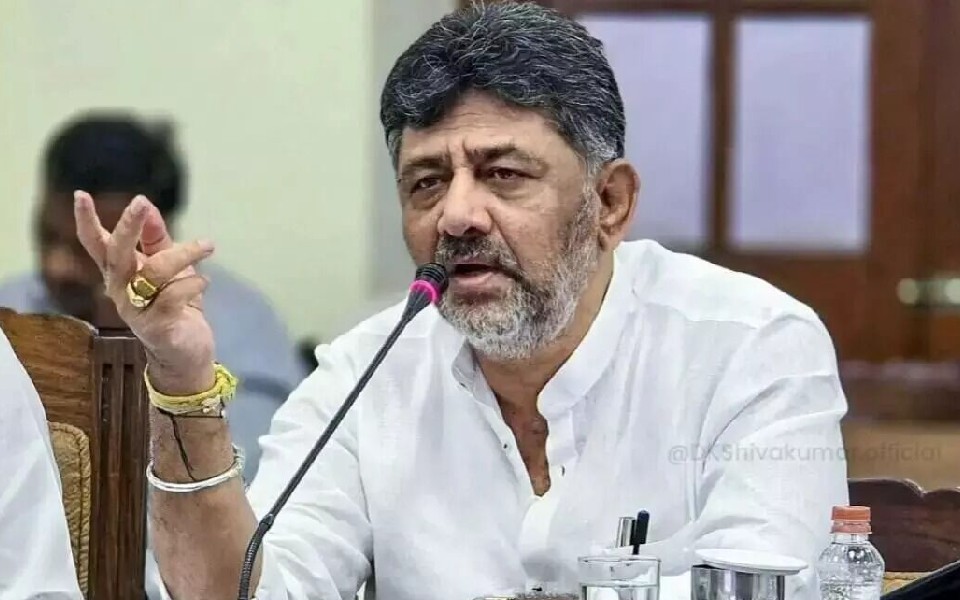
Bengaluru, Sep 18: Karnataka Deputy Chief Minister D K Shivakumar on Wednesday said simultaneous elections are not possible in a democracy like India.
The state Congress President stressed on the need for "bringing in consensus and unanimity in opinion among all parties" in this regard.
Moving ahead with its "one nation, one election" plan, the government on Wednesday accepted a high-level panel's recommendations for holding simultaneous polls for the Lok Sabha, state assemblies and local bodies in a phased manner after a countrywide consensus-building exercise.
"The 'one nation, one election' that they are planning to do, aimed at saving the government's money, is not possible in a democratic country like ours. Who thought about 'Operational Lotus'? (toppling non-BJP governments by luring opposition MLAs), it is BJP. They are the ones who caused several elections. How can it (multiple elections) be stopped?" Shivakumar said.
Speaking to reporters here, he alleged that the BJP is trying to destabilise several opposition-ruled State governments.
ALSO READ: 'One Nation, One Election' against federal structure, practically impossible: CM Siddaramaiah
"As regional parties are growing, they don't want them to grow, so they are making these efforts. All parties should give an equal opportunity in this country," Shivakumar added.
In its report submitted to the government in March, just before the general election was announced, the panel headed by former president Ram Nath Kovind had recommended implementing "one nation, one election" in two phases -- simultaneous polls for the Lok Sabha and state assemblies in the first phase and elections for local bodies like panchayats and municipal bodies within 100 days of the general election in the second phase.
It also recommended a common electoral roll, which would need coordination between the Election Commission of India and state election commissions.
Noting that 'one nation, one election' was in place earlier, Shivakumar said: "In our state we have held elections (both Lok Sabha and assembly) together in the past, but was it possible later? Cabinets (of state) decided to go for polls either three or six months early sometimes, in some states Assemblies were dissolved, all these things are there. There should be clarity."
Without a two-thirds majority, the central government's decision to go ahead is not right, he said. "There is no such option in democracy....Bring consensus among all parties and let there be a unanimous opinion, without unanimous opinion, such decisions are a waste."
Let the Truth be known. If you read VB and like VB, please be a VB Supporter and Help us deliver the Truth to one and all.
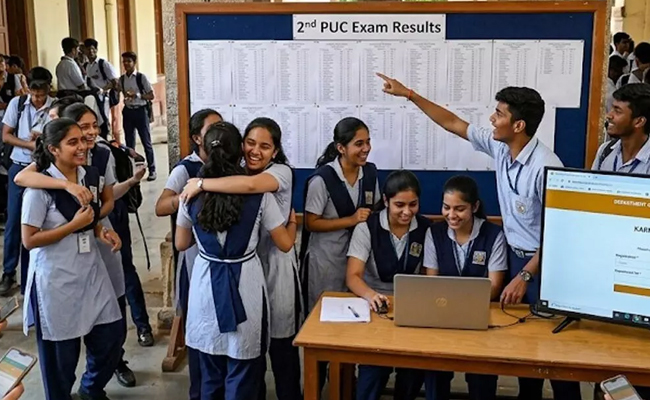
Second PUC results: Life convict clears exam with distinction, DGP lauds effort
_vb_63.jpeg)
Bengaluru: A life convict lodged in Ballari Central Prison has successfully cleared the second PUC examination.
Ashok Kumar S, who appeared for the examination under prison escort, secured 481 marks out of 600, registering 80.1 percent.
Director General of Police (Prisons and Correctional Services), Alok Kumar (IPS), shared the development on his official ‘X’ handle, commending the inmate’s achievement.
In his post, he stated that it was heartening to see a life convict score over 80 percent in the examination, adding that the inmate had appeared from Ballari Central Prison under escort.
It’s heartening to see that one of our life convict prisoners Ashok has obtained 80.1% marks in PUC exam. He appeared under Prison escort from Ballari Central Prison for his exams.
— alok kumar (@alokkumar6994) April 9, 2026
Glad to see that Walls of the prison has not subdued his hopes for a better future. pic.twitter.com/Nzlcy076SR
He further noted that the achievement reflected that the “walls of the prison have not subdued his hopes for a better future.”
Alok Kumar in his post also shared the result sheet of Ashok.
The Karnataka School Examination and Assessment Board (KSEAB) declared the second PUC results for 2026 on April 9.
A total of 6,32,200 students appeared for the examination across all streams, of whom 5,46,698 passed, recording an overall pass percentage of 86.48 per cent.