Smart power meter tender scam allegation: HC stays special court order seeking lokayukta report
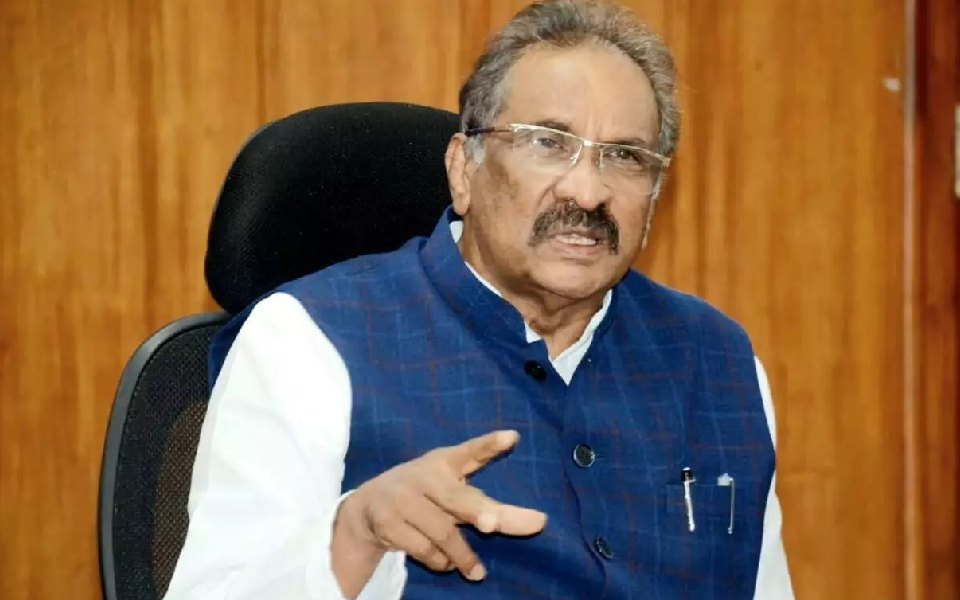
Bengaluru: The Karnataka High Court on Wednesday granted an interim stay on a Special Court’s directive asking the Lokayukta Police to submit a report in connection with a private complaint filed against Energy Minister K.J. George and others, alleging irregularities in the tender process for smart electricity meters in the state.
The complaint, filed by BJP leaders including MLAs Dr. C.N. Ashwath Narayan, S.R. Vishwanath, and Dheeraj Muniraju, accused the state government of unlawfully awarding a ₹16,000 crore smart meter installation contract. They claimed the tender process violated transparency norms under the Karnataka Transparency in Public Procurement (KTPP) Act and the Karnataka Electricity Regulatory Commission (KERC) rules.
Justice M.I. Arun, heading a single-judge bench, passed the interim order while hearing a criminal petition filed by Minister K.J. George seeking to quash the private complaint. The High Court also issued notices to the Lokayukta, BJP leaders C.N. Ashwath Narayan, S.R. Vishwanath, and Dheeraj Muniraju, asking them to file objections. The next hearing has been scheduled for August 20.
Arguments in Court:
Senior advocate C.V. Nagesh, representing K.J. George, argued that public servants, including the minister, are protected under Section 17A of the Prevention of Corruption (PC) Act, which bars any inquiry or investigation without prior sanction from the competent authority. He contended that the Special Court’s order seeking a report from the Lokayukta Police Superintendent was without jurisdiction and bypassed mandatory procedures.
On the other hand, senior advocate Lakshmi Iyengar, appearing for the BJP complainants, argued that the order only instructed the Lokayukta Police to file a preliminary report, which is permissible at this stage and part of the initial procedure. Hence, she argued, the High Court should not stay the directive.
Background of the Case:
The controversy stems from a tender floated on September 26, 2024, to procure and install smart electricity meters. The BJP leaders alleged that the tender was illegally awarded to Davangere-based Rajashree Electricals, a shell company, without inviting separate tenders for different electricity supply companies across the state. Instead, the entire tender process was routed through BESCOM (Bangalore Electricity Supply Company), raising suspicions of favoritism and corruption.
The private complaint named Energy Minister K.J. George, Additional Chief Secretary Gaurav Gupta, former BESCOM MD Mahantesh Bilagi, and Technical Director H.J. Ramesh as accused. The Special Court for People’s Representatives had on July 23 directed the Lokayukta Police Superintendent to submit a report, prompting Minister George to challenge the order in the High Court.
The High Court’s interim stay has now put a temporary pause on the Lokayukta’s probe, at least until the next hearing on August 20.
Let the Truth be known. If you read VB and like VB, please be a VB Supporter and Help us deliver the Truth to one and all.
Congress using hijab issue to pacify minority anger, alleges Karnataka LoP R Ashoka
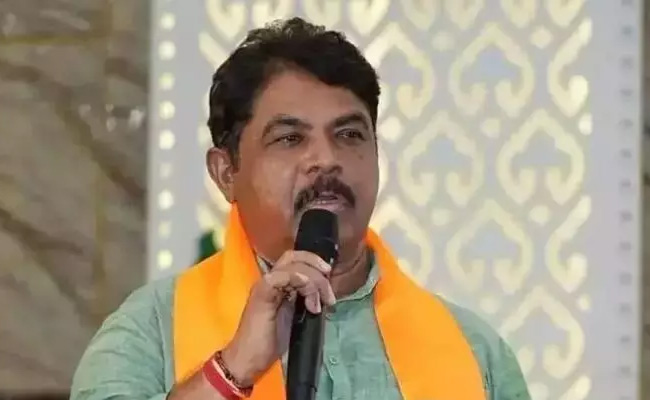
Bengaluru: Leader of Opposition in the Assembly R. Ashoka has accused the Congress government of using the hijab issue to placate what he described as discontent among minority voters after the Davanagere by-election.
In a post on X on Wednesday, Ashoka alleged that the state government, instead of addressing issues such as price rise, corruption, farmers’ distress and law and order, was attempting to retain its minority vote base by reviving the hijab issue.
Referring to the 2022 dress code introduced by the BJP government, which prohibited hijab in schools and colleges, Ashoka said the Karnataka High Court had upheld the policy and emphasised the importance of discipline in educational institutions.
He questioned the Congress government’s move to revisit the issue and asked whether setting aside the court-backed policy to benefit one community could be described as secularism.
Ashoka further alleged that while the government was willing to permit hijab, it continued to prohibit saffron shawls.
He accused the government of dividing students on religious lines rather than treating schools and colleges as spaces of equality.
Drawing a comparison with Mamata Banerjee’s government in West Bengal, Ashoka claimed that excessive appeasement politics had harmed the state and warned that the Congress in Karnataka could face a similar political response.
He said voters in Karnataka would teach the Congress a lesson for what he termed “vote-bank politics” and for compromising constitutional and judicial principles.