Smoking, drinking alcohol, consuming ''gutka'' to be banned on Chamundi hills in Mysuru
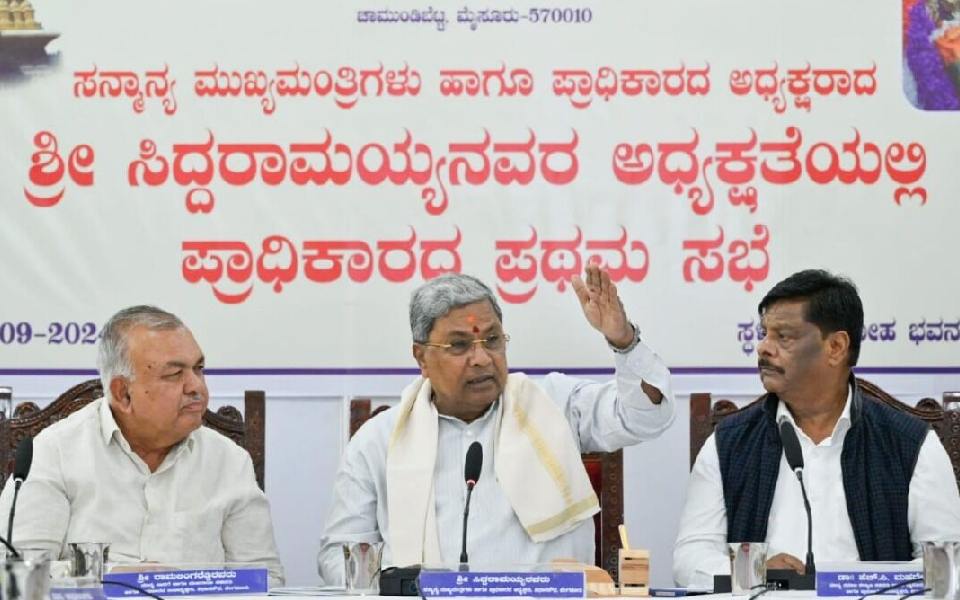
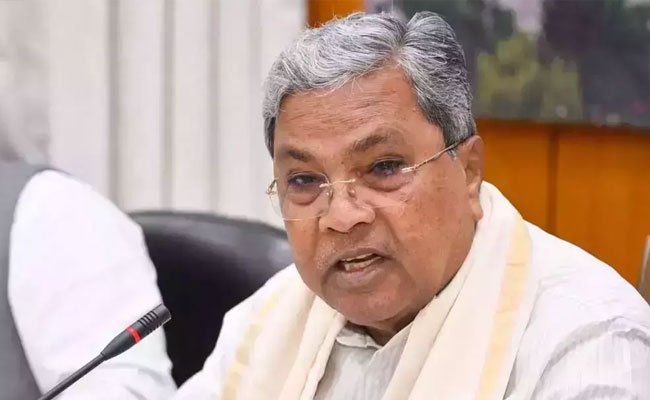
Mysuru, Sep 3: Karnataka Chief Minister Siddaramaiah on Tuesday said smoking, drinking alcohol or consuming 'gutka' and 'paan' will be completely prohibited on Chamundi hills here, which will also be made plastic-free.
He also asked officials to prepare a master plan for development of Chamundi hills over the next five years.
"Smoking, drinking alcohol or consuming gutka and paan on Chamundi hills have been completely prohibited. We had decided to make Chamundi hill plastic free," Siddaramaiah said after chairing the first meeting of the Chamundeshwari Kshetra Development Authority here.
Speaking to reporters, he said additional funds of Rs 11 crore will be released from the Authority to implement the union government's Pilgrimage Rejuvenation and Spiritual Augmentation Drive (PRASAD) scheme here, and five temples will be renovated.
ALSO READ: Arvind Bellad apologizes for remarks against CM Siddaramaiah
"Inside the temple (on the Chamundi hills) photography will be prohibited and mobile phones should be switched off... making Chamundi hills more attractive and providing all facilities and amenities is the aim," he said.
He added, however, that there will be no dress code, and all people, irrespective of caste, religion and sex, are welcome to the temple.
Goddess Chamundeshwari is considered as the reigning deity of Mysuru and its erstwhile royals; she is also regarded as “Naada Devate” (state deity). Chamundeshwari temple is about 13 kms from Mysuru, atop of the "Chamundi hill".
A temple that is over 1,000 years old was a small shrine initially and assumed importance over the centuries before becoming a prominent place of worship as seen now.
It assumed significance after the Mysuru Maharajas, the Wadiyars, came to power in 1399 CE, and were great devotees and worshippers of Chamundeswari, who became their home deity and rose to religious prominence.
Noting that the Chamundeshwari Kshetra Development Authority has been constituted keeping in mind thousands of devotees who visit the temple and the world famous Dasara festivities, Siddaramaiah said some developmental work have been completed while others are still pending completion and they have to be completed immediately.
"There are 24 temples other than the Chamundi hills and the temple here, that come under the purview, their development should also happen along with the main temple and the hill. Public should be provided with all facilities and amenities, that's our motive," he said.
Siddaramaiah said in coordination with the police department, the temple authorities will install CCTV cameras at various spots where it is necessary.
"Under the CSR fund it will be done...enough lights will also be installed at Chamundi hills...To ensure no criminal activities take place, a task force will be set up," he added.
Noting that it has been decided to provide medical facilities to temple employees and educational support for their children, the Chief Minister said instructions have been given to ensure quality of food provided at 'Dasoha Bhavan.'
Let the Truth be known. If you read VB and like VB, please be a VB Supporter and Help us deliver the Truth to one and all.
Cong performed better in Kerala, anti-incumbency trends influenced WB, TN: CM Siddaramaiah
Bengaluru (PTI): Karnataka Chief Minister Siddaramaiah on Monday said the Congress had largely met or exceeded expectations in several States, even as results in some regions reflected shifting voter sentiments.
Speaking to reporters in Bengaluru, he said the party accepted the mandate in Assam while performing better than anticipated in Kerala.
He also pointed to possible anti-incumbency trends influencing outcomes in West Bengal and Tamil Nadu.
“In Assam, we got the expected result, and we accept the people’s mandate. In Kerala, we have won more seats than expected. We anticipated around 76 to 80, but we have gone up to around 95,” Siddaramaiah said.
In West Bengal and Tamil Nadu, there may have been an anti-incumbency trend, and that could have influenced the results, he added.
Siddaramaiah also extended his congratulations to a new political entrant in Tamil Nadu, noting the emergence of a different electoral dynamic in the State.
“I congratulate the new entrant who has achieved success there,” he added.
Deputy Chief Minister D K Shivakumar said electoral outcomes in some States had diverged from the party’s internal assessments, reflecting evolving voter expectations.
“We expected a certain trend, but the results have been different. Political reading was wrong in some places,” he said.
“People were looking for change in some States, and that has been reflected in the results,” Shivakumar, who is also the Congress Karnataka unit president, said.
Referring to Kerala, he said the Congress-led alliance had benefited from public sentiment.
“There was already an expectation based on local body elections, and people had shown confidence in us. That has translated into a strong result,” the Deputy Chief Minister said.
On Tamil Nadu, he acknowledged that the scale of political shift had come as a surprise.
“We expected to secure around 30 to 40 per cent of the vote share, but such a major shift was not anticipated. It shows that voter expectations were different,” he said.
Shivakumar added that electoral outcomes underscored the need for better political assessment in future.
“We have to understand these changes carefully. Political reading cannot go wrong like this,” he said.