Special NIA court accepts guilty plea of key accused in Mangaluru cooker blast case
Bengaluru: Mohammed Shariq, the main accused in the 2022 Mangaluru cooker bomb blast case, filed a guilty plea that was approved by a special court for terrorism crimes in Bengaluru. A new hearing date has been scheduled by the court to formally record his plea.
The Indian Express reported that the explosion happened on November 19, 2022, inside an autorickshaw in Mangaluru. On April 20, 2024, Shariq, a 27-year-old Shivamogga resident, first entered a not guilty plea to charges relating to terrorism. Later, in December 2025, he filed a motion under Section 229 of the Cr.P.C. to enter a guilty plea, which the court granted on March 26.
In its order, the special court said the application filed by accused No.1 Mohammed Shariq under Section 229 of the Cr.P.C. was allowed and that it was necessary to record his plea again after reading out the charges framed earlier on April 20, 2024.
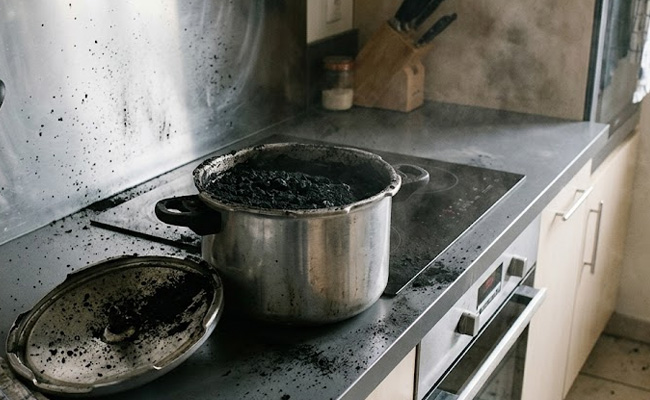
Shariq sustained severe burn injuries when the improvised explosive device he was allegedly carrying detonated on his lap due to an alleged error in setting the timer. He was arrested by the National Investigation Agency after being discharged from a hospital in Mangaluru.
Investigators have described Shariq as an alleged member of an Islamic State-linked module based in Shivamogga, suspected to be involved in multiple terror-related incidents in Karnataka since 2020. He was already wanted in a terror case registered in Shivamogga in September 2022 in connection with alleged testing of improvised explosive devices.
According to the investigation, members of the Shivamogga module are also accused in the March 1, 2024 blast at the Rameshwaram Cafe in Bengaluru. The device used in that case was said to be similar in nature to the one allegedly carried by Shariq in Mangaluru. Mussavir Hussain, described as a founding member of the module, and Abdul Matheen Taha have been arrested in connection with that case.
The module is suspected to have received over Rs 3 lakh in cryptocurrency from handlers between 2020 and 2022. Investigators have alleged that Shariq trained others in assembling IEDs. He had also allegedly transferred cryptocurrency funds to Syed Yasin to the account of a co-accused in the Mangaluru case for procuring materials to test a device in Shivamogga during August-September 2022.
Shariq who is a Bachelor of Commerce graduate, had earlier been arrested in 2020 for painting anti-national graffiti in Mangaluru. He had also spent eight months in jail in 2021 in a related case. He has not sought to plead guilty in the 2022 Shivamogga IED testing case.
Let the Truth be known. If you read VB and like VB, please be a VB Supporter and Help us deliver the Truth to one and all.
Gujarat builds 870 MW battery power backup network to stabilise renewable energy grid
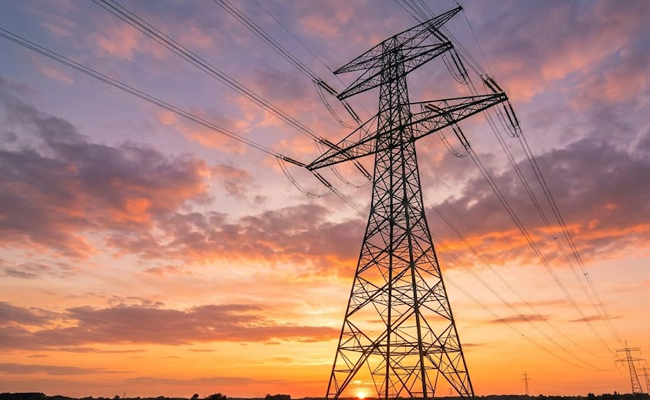
Gandhinagar (PTI): Gujarat has initiated battery storage systems at five locations in the state, with a total capacity of 870 MW, to maintain the stability of the renewable power grid, officials said on Saturday.
Battery Energy Storage Systems (BESS) are essential for storing electricity generated from solar and other renewable sources. They help manage additional load and maintain grid stability.
“Gujarat has initiated battery storage systems at five locations with a total capacity of 870 MW,” an official release stated.
The state has also registered 13 projects across Ahmedabad, Gandhinagar, Banaskantha, Patan and Kutch districts to set up additional battery storage systems, it said.
Modhera in Gujarat, India’s first solar village, has launched the country’s first BESS integrated with a solar power plant, it said.
"Under the leadership of Chief Minister Bhupendra Patel, the state has continued to advance in this direction and has strengthened its position among the leading states driving battery storage systems in India,” the release said.
Recently, a battery storage system was commissioned at Charal in the Sanand taluka of Ahmedabad, it said.
Four systems are operational at Modhera in Mehsana and Lakhpat in Kutch. The state government has also included advanced energy storage systems as a key component in the Gujarat Integrated Renewable Energy Policy, 2025, the release said.
Accordingly, standalone battery storage projects, works linked with new renewable energy installations, and those integrated with existing renewable energy systems are being approved, it said.
Once the Standard Operating Procedure is approved, registrations for battery storage will open for commercial and industrial users, it said, adding that the move will allow them to set up battery storage alongside their solar or wind projects.
The state government is developing battery storage systems across Gujarat, with companies being invited in through a competitive bidding process.
GETCO (Gujarat Energy Transmission Corporation) and power distribution companies strategically identify locations for battery storage systems based on grid capacity and operational requirements, the release said.
Power generation from solar and other renewable sources fluctuates throughout the day. Excess energy generated during peak hours can be stored and supplied later during periods of high demand, especially in the evening when solar output declines. Battery storage systems help reduce stress on the grid and improve grid stability, it added.