'Suspicious' Bangladesh woman's Indian husband absconding; dependent visa cannot be extended says HC
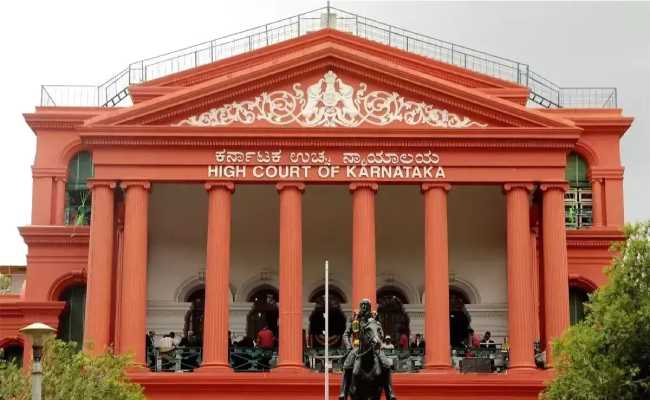
Bengaluru (PTI): The High Court of Karnataka has dismissed a petition filed by a Bangladeshi woman seeking extension of her stay in India.
The woman's Indian husband is absconding and without his consent for the dependent visa (X-1 visa) it cannot be extended. The HC also noted that her activities in India were suspicious as she was in constant touch with an organisation called SSG in Bangladesh which had connections with that country's military.
Between 2003 and 2005, the woman had worked in the Thailand Embassy office in Dhaka. The petition before the HC was filed by one Raktima Khanum, 46, which was heard by Justice M Nagaprasanna. The woman claimed to have fallen in love with one Janardhana Reddy, a resident of Bengaluru and an Indian citizen.
The two got married in December 2017 and the woman claimed that Reddy had converted to Islam. The couple lived in Chennai but soon their love floundered and the woman went back to Bangladesh as the tourist visa she was staying on had expired, she said.
When she applied for a visa again, it was converted to an entry visa -- a dependent visa -- which was valid till February 2020. She sought extension of the visa, and it was granted for six months as she was married to an Indian. The visa was again extended later till June 21, 2023.
When another extension was sought, the authorities demanded that she produce an undertaking/consent form the sponsor/parents/spouse as she was on a dependent visa.
She approached the high court in this regard. Her advocate contended that her husband is absconding and therefore she cannot submit a consent document.
The HC, however, said it cannot direct the authorities to extend the visa considering the facts of the case.
Dismissing the petition, the HC in its January 5 judgment said, "The power of the Government of India to expel nationals of other countries who overstay in the nation without any document is absolute and unfettered. Any indulgence shown to the petitioner, on any kind of sympathy, would be putting fetters on the discretion of the government, the FRRO and the Bureau of Immigration, more so in cases where there is even a semblance of threat to national security of any kind."
Let the Truth be known. If you read VB and like VB, please be a VB Supporter and Help us deliver the Truth to one and all.
Over 17,000 people went missing in Delhi in 2024: NCRB

New Delhi (PTI): A total of 23,058 people, comprising 9,482 men and 13,576 women, were reported missing in Delhi in 2024, according to the latest National Crime Records Bureau (NCRB).
Of the total, 5,491 were children below the age of 18 — 1,571 boys, 3,920 girls.
The city recorded 17,567 fresh adult missing persons cases in 2024, comprising 7,911 men and 9,656 women.
According to the NCRB data, released on Wednesday, 14,637 men, 18,238 women and six transgender persons were still missing from previous years.
At the latest count, in 2024, Delhi had a total of 55,939 missing persons cases — 24,119 men, 31,814 women and six transgender persons.
In 2024, police traced or collected 28,392 missing persons, including 12,182 men, 16,208 women and two transgender persons.
Only half of the men and half of the women who went missing could be traced.
A total of 27,547 missing persons – 11,937 men, 15,606 women, four transgender persons — were yet to be untraced by the end of the year, the data showed.
The data also revealed that 5,352 children from previous years remained untraced at the beginning of 2024.
The number of still missing boys was 1,621, and the number of missing girls was 3,729. Two transgender children were yet to be found.
After adding the pending cases from previous years, the total number of missing children cases handled in 2024 rose to 10,843.
The police traced or recovered 6,762 missing children — 2,030 boys, 4,732 girls.
The recovery rate stood at 63.6 per cent for boys and 61.9 per cent for girls, while no transgender child was traced.
By the end of 2024, a total of 4,081 children remained untraced, 1,162 of them boys, 2,917 girls, and two transgender children.