There is need to change style of coalition functioning, Congress tells JDS
Bengaluru, June 27: Wary about its image having taken a hit after the Lok Sabha poll rout, the Congress in Karnataka told chief minister H D Kumaraswamy about the need to change style of functioning of the ruling coalition, top party sources said Thursday.
The Congress, the senior coalition partner with JDS, has held discussions with Kumaraswamy about protecting the image of the government and changes that need to be brought about in its style of functioning in the backdrop of negative perception, they said.
"Our Ministers will have to work more actively, by going to people for this," party sources said.
The Congress leadership has also asked its leaders not to make any public statements on sensitive issues like giving "religious minority" status to the Lingayat faith, among others, an issue that had cost the party dearly in the 2018 assembly polls.
"It was made clear during a recent meeting that the issue was before the central government now, let community take up the issue, but party should not be involved," sources said, adding that on sensitive matters related to government or coalition, leaders should not make remarks openly.
In its worst ever performance in Karnataka, the Congress had managed to win only one out of the 21 seats it had contested while the JD(S) won one out of seven seats it contested.
The BJP swept the polls bagging 25 out of 28 seats.
Congress and JD(S) which faced the Lok Sabha polls in alliance according to coalition arrangement had decided to contest 21 and seven seats respectively.
Though a section within the party wants Congress to be "more assertive" in the coalition government, many feel that regular discussions with JD(S) was the only option and there was no other way.
There have been voices within Congress blaming the alliance with JD(S) for its debacle in the polls.
Several senior Congress leaders including Veerappa Moily and K H Muniyappa have blamed the alliance and opposition within the Congress for their defeat in Lok Sabha polls.
Sources said, there is also some kind of acceptance within the party that internal opposition led to the defeat of a few Congress candidates in the polls.
Conceding that the cadre base of the party has kind of gone into a "depression" and lost enthusiasm due to the results, and because of alliance in certain parts like old Mysuru region, they said, party leadership has to work towards motivating by reaching out and working amidst them.
On repeated speculation about the longevity of the coalition government and mid-term polls, sources said, one cannot predict what would happen when, but party is cautious that it should not be responsible for any such eventuality.
"Government will stay and continue, as there is noother alternative that is visible for now, and no one wants elections with the fear of loss," they said, adding that disgruntlement or dissidence within the party would not have any impact on the government.
According to top party sources, KPCC that is being reconstituted would be "thin", with about 70-75 office bearers, for which hectic lobby is under way.
The previous PCC that was dissolved had close to 300 office bearers.
In a major move after the rout in the Lok Sabha polls, the AICC on June 19 had announced its decision to dissolve the KPCC, while retaining its President and working President.
Loyalty and commitment would be the major criteria while constituting the new team and there would be naturally more younger representation, though some people would be from the old team, who have been effectively working, sources said.
The plan is to appoint office bearers, strictly adhering to merit, without buckling under pressure, sources said, adding, the party leadership even expects some amount of "pushback".
AICC General Secretary in-charge of Karnataka K C Venugopal Wednesday had said that the PCC would be reconstituted in three weeks time.
Let the Truth be known. If you read VB and like VB, please be a VB Supporter and Help us deliver the Truth to one and all.
Justice Nagarathna calls for creation of judicial reforms commission to reduce pendency in courts
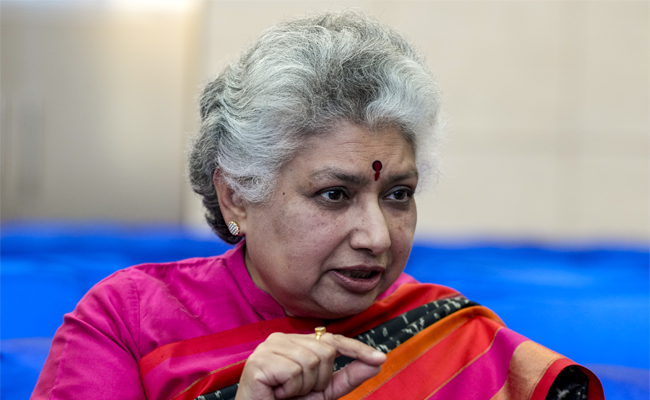
Bengaluru (PTI): Justice B V Nagarathna of the Supreme Court on Saturday called for the creation of a judicial reforms commission to reduce mounting pendency in the courts, saying systemic incentives across stakeholders were contributing to delays in justice delivery.
She was speaking at the Supreme Court Bar Association's (SCBA) first National Conference on the theme "Reimagining judicial governance: strengthening institutions for democratic justice" here.
Nagarathna, who was part of the panel session addressing "From Pendency to Prompt Justice: Rethinking Justice Delivery in Indian Courts," said, this reforms commission must have membership not only from the judiciary of the Supreme Court, the High Court, as well as the District judiciary, but also have members from the Bar, Attorney General, Solicitor General, and also certain members representing the Bar at the institutional level, such as the Bar President, and from the government side to enable an inter-institutional dialogue on reducing pendency.
She reflected that, from the point of view of various stakeholders, a litigant gains from the status quo, to proceed to prolong proceedings.
ALSO READ: A political legacy, but no win yet: Padmaja Venugopal''s new fight in Thrissur
"A lawyer or an advocate loves adjournments and postponement because he/she benefits from per appearance and extended timelines. A government department reduces bureaucratic risk by appealing rather than accepting defeat.
"A judge, and particularly a trial judge, is always acting with caution because he/she is confronted with appellate reversal, and therefore he/she prefers procedural caution rather than having an aggressive docket control. Each of these decisions is individually rational, but how does it help the system? It is only leading to systemic delay," she added.
In order to break this equilibrium, Justice Nagarathna said that what is required is institutional interventions through a judicial commission to reduce pendency, rather than merely exhorting better conduct from judges, adherence to procedural timelines, asking advocates not to seek adjournments, urging the government to reduce litigation, or expecting courts to function round the clock and judges not to take leave.
On pendency, the judge questioned the inclusion of defective filings in court statistics, suggesting that such cases should not be counted until they are procedurally ready for hearing.
She also underlined the role of the government as the "largest generator of litigation", noting that officials tend to file appeals to avoid scrutiny, even in cases where disputes could be settled earlier. This, she said, results in cases travelling through multiple judicial levels unnecessarily.
"The government publicly expresses concern about judicial backlog, while simultaneously feeding that backlog through relentless litigation," she observed.
Justice Nagarathna further claimed judicial capacity is constrained by inadequate public investment, including delays in appointment of judges, lack of infrastructure and insufficient use of technology.
Among the measures suggested, she called for improved case management, curbs on unnecessary adjournments, adoption of technology, prioritisation of cases, promotion of alternative dispute resolution mechanisms, and creation of specialised benches.
She also urged advocates to adhere to professional and ethical standards, litigants to avoid frivolous appeals, and the government to adopt a practical litigation policy and ensure timely funding and appointments in the judiciary.