Toll up on Bengaluru airport road from April 1; cars to pay Rs 120 for single journey: Report
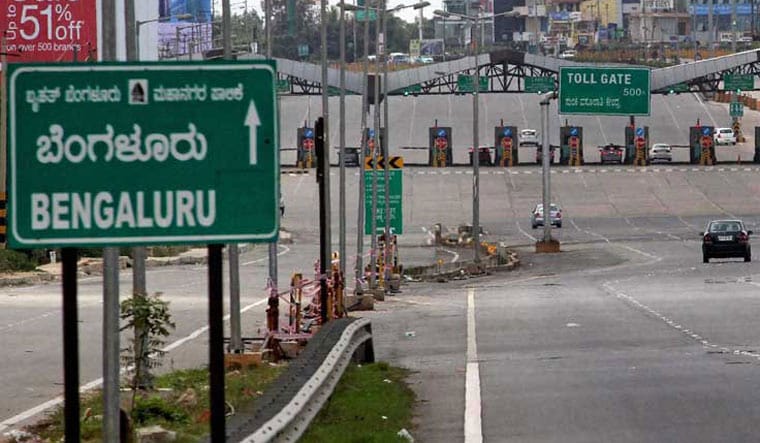
Bengaluru: In a move that will add to the travel expenses of commuters, the National Highways Authority of India (NHAI) will raise toll fees at several key toll plazas from April 1, 2025. The increased charges will apply to the Sadahalli (KIA Road, NH 7), Hulikunte, and Nalluru Devanahalli (STRR, NH 648) toll plazas.
This annual toll hike is linked to the Wholesale Price Index (WPI) and will affect all types of travellers, including those using personal vehicles, cabs, and public transport (Vayu Vajra bus services), as reported by Deccan Herald on Thursday.
For light motor vehicles such as cars, jeeps, and vans passing through Sadahalli, the new toll charges will be Rs 120 for a single journey, and Rs 180 for a return journey within the same day. A monthly pass for 50 single journeys will cost Rs 3,970. The existing rates are Rs 115, Rs 170, and Rs 3,835, respectively.
For light commercial vehicles and mini buses, the new rates will be Rs 185 for a single journey, Rs 275 for a return journey, and Rs 6,100 for a monthly pass. The existing charges are Rs 175, Rs 265, and Rs 5,890.
Meanwhile, trucks and buses will have to pay Rs 370 for a single journey, Rs 550 for a return journey within a day, and Rs 12,265 for a monthly pass, added DH. The existing rates are Rs 355, Rs 535 and Rs 11,845.
Cars and other light motor vehicles using the 42-km Dobbspet-Doddaballapur stretch of the STRR will pay Rs 110 for a single journey, Rs 165 for a return journey, and Rs 3,615 for monthly pass at the Hulikunte toll plaza. The existing rates are Rs 105, Rs 155, and Rs 3,490.
Let the Truth be known. If you read VB and like VB, please be a VB Supporter and Help us deliver the Truth to one and all.
Man arrested in Hyderabad for impersonating police officer using AI videos

Hyderabad (PTI): A 27-year-old man was arrested in Hyderabad for allegedly impersonating a police official and uploading fabricated videos on social media platforms to gain followers, police said on Wednesday.
The accused, who worked as a delivery executive with a food delivery aggregator, created and circulated misleading videos using AI-based software.
He falsely depicted himself as a police official and showcased weapons, potentially causing panic and misleading the public, a release from Hyderabad Police said.
Police said it came to their notice that fake videos were being circulated on social media, showing individuals posing as police personnel and displaying weapons.
Upon preliminary inquiry, it was found that the videos were fabricated using AI software and did not represent any real police activity.
The accused unlawfully impersonated a police official and created deceptive digital content, which is a punishable offence under relevant provisions of law.
Such acts can erode public trust and create unnecessary alarm, the release said.
Acting on credible information, police teams apprehended the accused and seized a mobile phone used in the offence.
A case under relevant sections of the BNS and the IT Act, 2000, was registered at Kalapathar Police Station.
Further investigation is underway to determine whether any other persons were involved in the creation and dissemination of such content, police added.