Trial Court rejects fresh gag order plea in Dharmasthala Mass Burial Case; Media free to report
Says no injunction in force against any of 338 defendants
Bengaluru: In a major development in the ongoing defamation suit filed by the Dharmasthala temple administration, the X Additional City Civil and Sessions Court in Bengaluru has categorically rejected the plaintiff’s fresh attempt to extend the gag order against 338 defendants, including several media organisations, journalists, and social media platforms.
With this ruling, the court has made it clear that no injunction is currently in force against any of the defendants, effectively allowing unrestricted media coverage of the mass burial allegations that have been at the centre of widespread public attention in Karnataka.
Court Rejects Section 151 Application
During the hearing held on August 5, the plaintiff Harshendra Kumar D, who had previously secured an ex-parte temporary injunction in June, filed an interlocutory application under Section 151 of the Civil Procedure Code (CPC). He sought to continue the earlier restraint orders against all defendants except one – Kudla Rampage, a digital media outlet that had successfully challenged the injunction in the High Court on August 1.
However, the trial court, presided over by Judge Anitha M, rejected the application in full. The order passed on August 6 states:
"I.A. dated 05.08.2025 filed by the plaintiff Under section 151 of C.P.C., is rejected."
This effectively brings down the blanket gag order that had, until now, prohibited 338 individuals and entities from publishing or circulating any content related to the mass burial allegations.
Kudla Rampage's Arguments Prevail
During the hearing, Advocate Sakshi Satish, appearing for Kudla Rampage, presented three key constitutional arguments that formed the backbone of the defence:
Holistic Reading of High Court Order:
It was argued that the High Court’s order of August 1 should be read in its entirety. The High Court had clearly directed the trial court to consider fresh applications under Order XXXIX Rules 1 & 2 and not under Rule 4, which pertains to vacating existing orders. This was taken to mean that the original ex-parte injunction no longer existed.
Violation of Article 227 and Order XXXIX Rule 3 CPC:
The High Court’s findings were grounded in Article 227 of the Constitution, focusing on whether due procedure was followed. It held that Order XXXIX Rule 3 had been violated—specifically, that no valid reason had been recorded to justify dispensing with notice to such a large number of defendants. This procedural failure invalidated the entire ex-parte injunction.
Uniform Application of Constitutional Protections:
The defence argued that constitutional principles, especially the right to free speech, must apply equally to all parties. Once an injunction is found to be flawed due to violation of due process, it cannot be upheld selectively against only some defendants.
These arguments were supported by legal teams representing tech companies and platforms including Google, YouTube, Meta (Facebook and Instagram), X (formerly Twitter), and Reddit. The court accepted these submissions and declined to entertain the fresh Section 151 application.
Gag Order Now Fully Invalid
The outcome is clear:
No injunction is currently in effect against any of the 338 defendants.
The 8,842 web links that had previously been taken down or withheld under the original gag order can now remain accessible.
No restriction exists on future reporting, including by journalists and platforms that were unnamed or unknown at the time of the original suit.
The controversial "John Doe" injunction against unidentified future publishers is now defunct.
Context of the Case
The case stems from explosive allegations made by a whistleblower who claims he was forced to bury hundreds of bodies between 1995 and 2014, including women and children who allegedly bore signs of sexual assault. These claims, made public earlier this year, sparked widespread concern, particularly among families of missing persons.
Among them is Sujatha Bhat, mother of Ananya Bhat, who went missing 22 years ago. She and others have been demanding a thorough investigation into the mass burial claims, which they believe could bring long-awaited closure.
The original ex-parte gag order, obtained by the plaintiff on June 12, had been issued without hearing any of the defendants, including major media outlets and platforms. It had attempted to impose wide-ranging restrictions, including mandatory takedowns of published material and advance censorship of any future content related to the case.
A Win for Free Speech, Say Legal Observers
The ruling marks a significant affirmation of press freedom and the constitutional right to free speech, particularly when public interest issues are involved. The court’s refusal to grant relief under Section 151 CPC reaffirms that inherent powers of the court cannot be used to bypass procedural safeguards, especially in cases with serious implications for democratic transparency.
The trial court made it clear that the plaintiff must now follow due process if they wish to pursue their defamation claims—this includes proper service of notice to all defendants, hearings with both sides present, and arguments that stand the test of constitutional scrutiny.
What Happens Next
The trial court has directed the defendants who have appeared to file their written statements and objections. The next hearing in the case is scheduled for August 11, 2025.
With this development, media organisations—from major platforms to independent journalists—can now continue to report on the Dharmasthala mass burial case without fear of judicial censorship.
As proceedings move forward, the burden now rests with the plaintiff to prove defamation through a full-fledged trial, following all necessary legal procedures and constitutional standards.
This article is based entirely on official legal submissions and court proceedings, including arguments presented in open court and the trial court’s latest ruling dated August 6, 2025.
Let the Truth be known. If you read VB and like VB, please be a VB Supporter and Help us deliver the Truth to one and all.
Congress using hijab issue to pacify minority anger, alleges Karnataka LoP R Ashoka
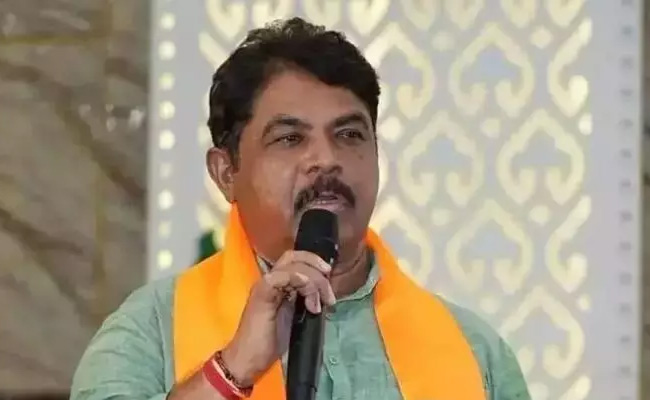
Bengaluru: Leader of Opposition in the Assembly R. Ashoka has accused the Congress government of using the hijab issue to placate what he described as discontent among minority voters after the Davanagere by-election.
In a post on X on Wednesday, Ashoka alleged that the state government, instead of addressing issues such as price rise, corruption, farmers’ distress and law and order, was attempting to retain its minority vote base by reviving the hijab issue.
Referring to the 2022 dress code introduced by the BJP government, which prohibited hijab in schools and colleges, Ashoka said the Karnataka High Court had upheld the policy and emphasised the importance of discipline in educational institutions.
He questioned the Congress government’s move to revisit the issue and asked whether setting aside the court-backed policy to benefit one community could be described as secularism.
Ashoka further alleged that while the government was willing to permit hijab, it continued to prohibit saffron shawls.
He accused the government of dividing students on religious lines rather than treating schools and colleges as spaces of equality.
Drawing a comparison with Mamata Banerjee’s government in West Bengal, Ashoka claimed that excessive appeasement politics had harmed the state and warned that the Congress in Karnataka could face a similar political response.
He said voters in Karnataka would teach the Congress a lesson for what he termed “vote-bank politics” and for compromising constitutional and judicial principles.