Two firms have been assigned to repair damaged gate of Pampa Sagar dam: DCM DK Shivakumar
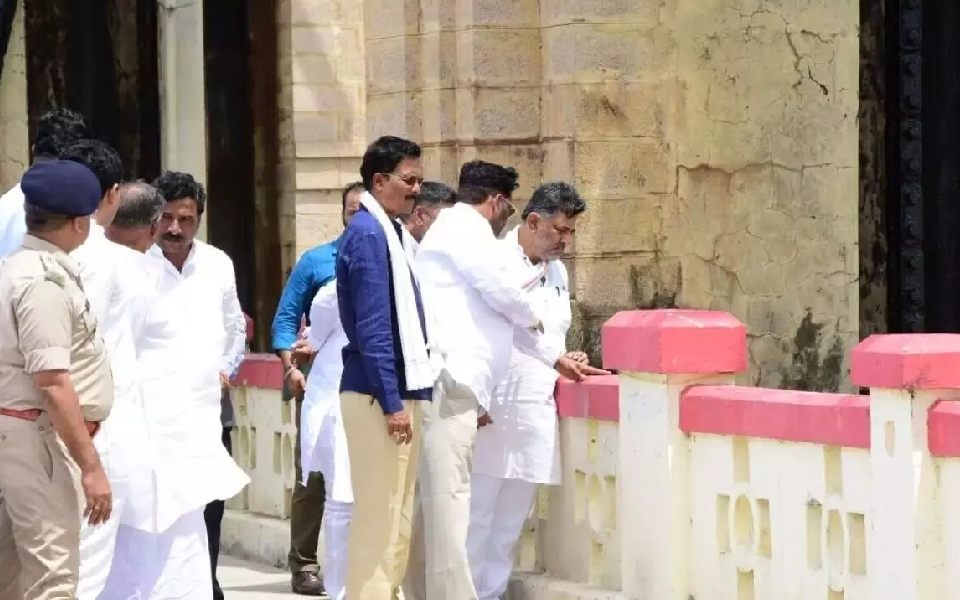
Koppal (Karnataka), Aug 11: Karnataka Deputy Chief Minister D K Shivakumar on Sunday said two contractor firms have been approached to repair the damaged gate of Pampa Sagar Dam on Tungabhadra river.
The DCM, who visited the spot following the incident, said there was a possibility of damage to the dam after its 19th gate was swept away.
"We have informed two experienced contractors about it and provided them designs. Their team too visited this place in the night. They are also trying to restore the gate of the dam," Shivakumar, who holds the Water Resources portfolio, told reporters here.
According to him, at about 12.50 am on Sunday, the crest gate of the dam was swept away.
ALSO READ: CM Siddaramaiah reviews Tungabhadra dam gate damage, plans on-site inspection
As there was a possibility of damage to the structure of the dam, all the gates were opened from where 38,000 cusecs of water is being released to neighboring Andhra Pradesh and Telangana, the DCM said, adding that the inflow is 28,000 cusecs.
Neighboring Andhra Pradesh and Telangana were also informed about the release of water, the DCM said. He also said out of 38,000 cusecs of water being released, 35,000 is flowing from the 19th gate itself.
Shivakumar said the over 70-year-old dam irrigates 12 lakh acres of land. There is a separate authority for this dam, which is governed by three states -- Karnataka, Andhra Pradesh and Telangana.
He said 63 TMC to 65 TMC water can be stored at present to see that the broken gate of the dam is repaired.
Out of the 90 TMC water to be released to the neighboring state, 25 TMC has already been released after gate broke.
He said the Karnataka, Andhra Pradesh and Telangana governments are working together after the gate gave way. Instructions have been given to people in two km radius to stay alert and not to venture close to the river.
"There is an emergency situation, we will not allow anyone to visit here. There is a technical aspect and this dam is a national property. We will work to protect this dam," the DCM said.
He also said he and Chief Minister Siddaramaiah had earlier planned to offer 'Bagina' to the river but now it has been postponed.
To a question, the DCM said the government will not blame any official for this as everybody has been doing good work.
"Sometimes these accidents happen. Our first work is to solve this problem," Shivakumar said.
Let the Truth be known. If you read VB and like VB, please be a VB Supporter and Help us deliver the Truth to one and all.
Ordinance issued to increase number of Supreme Court judges from 34 to 38
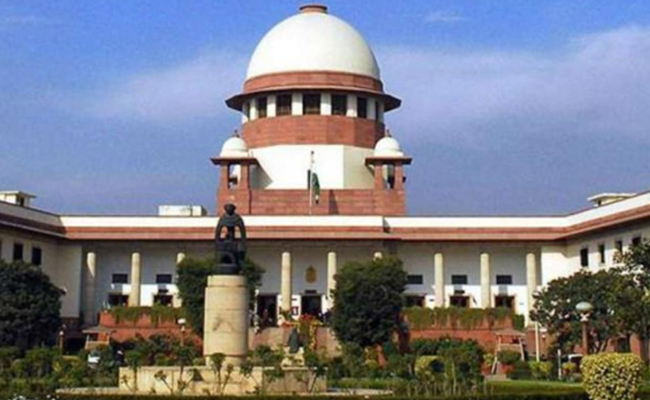
New Delhi (PTI): The government has promulgated an ordinance to increase the strength of the Supreme Court from the present 34 judges to 38, including the Chief Justice of India.
The law ministry notified the ordinance on Saturday, which amended the Supreme Court (Number of Judges) Act, 1956, to increase the sanctioned strength of the top court.
So far, the sanctioned strength of the top court was 34, including the Chief Justice of India (CJI). Now, the number of judges has been increased by four, taking the sanctioned strength to 38.
The top court will now have 37 judges, other than the CJI.
With the apex court having two vacancies at present, and the ordinance coming into force immediately, the Supreme Court Collegium will now have to recommend six names for appointment as judges in the top court.
A bill will be brought in the Monsoon Session of Parliament to convert the ordinance – an executive order – into a law passed by Parliament.
The Union Cabinet had cleared a draft bill on May 5 to increase the number of apex court judges.
The strength of the Supreme Court was last increased from 30 to 33 (excluding the CJI) in 2019.
The Supreme Court (Number of Judges) Act, as originally enacted in 1956, put the maximum number of judges (excluding the CJI) at 10.
This number was increased to 13 by the Supreme Court (Number of Judges), Amendment Act, 1960, and to 17 by another amendment to the law.
The Supreme Court (Number of Judges) Amendment Act, 1986, augmented the strength of judges from 17 to 25, excluding the CJI.
A fresh amendment in 2009 further increased the strength from 25 to 30.
Article 124(3) of the Constitution lists the qualifications required to become a Supreme Court judge.
An Indian citizen who has either served as a high court judge for at least five years, or as an advocate for 10 years, or is a distinguished jurist, can be appointed to the top court.
The strength of the Supreme Court is increased based on the recommendations of the CJI, who writes to the Union law minister. After consulting the finance ministry, the Department of Justice under the law ministry moves the Cabinet with a draft bill.