UAE-based Indian expats caught in ₹3,300 crore real estate crisis in Bengaluru
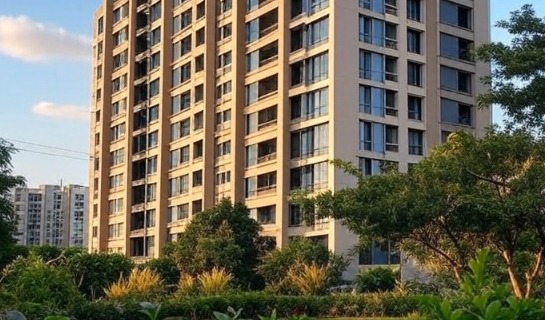
Bengaluru/Dubai: Hundreds of Indian expatriates based in the UAE have found themselves in mounting financial and legal distress after investing in a major residential township in Bengaluru that remains largely incomplete more than a decade after its launch.
In 2018, JE, a Dubai-based mother of two, invested ₹6 million (Dh251, 000) in a flat at Ozone Urbana, an integrated township project near Bengaluru’s international airport. Today, she is still repaying a loan that has crossed ₹13 million (Dh544,000), despite the flat not being delivered according to a report published by Khaleej Times. “There’s no house. Nothing has moved at the site in years, but I still have to pay the bank for something that doesn’t even exist,” she told Khaleej Times.
JE is one of several Indian expatriates in the UAE who claim they were misled into investing in the Ozone Urbana project by Bengaluru-based Ozone Group. Promoted in 2012 as a landmark 185-acre development comprising over 1,800 residential units, the project was initially slated for completion by 2018. However, buyers say construction has either stalled or progressed marginally in most areas.
The project is currently under investigation by India’s Enforcement Directorate (ED), which on August 1 conducted raids across 10 locations associated with Ozone Urbana Infra Developers Pvt Ltd and its senior executives, including managing director Satyamoorthi Vasudevan. The agency has invoked provisions under India’s Prevention of Money Laundering Act (PMLA) following allegations of fund diversion, cheating, and double-selling of residential units.
Buyers allege that funds collected for construction were siphoned off to unrelated group entities and individuals. According to the Ozone Urbana Buyer Welfare Association, which represents affected homeowners, at least 65 flats were reportedly sold to more than one buyer. The association estimates the total fraud at ₹33 billion (Dh1.38 billion), with ₹15 billion (Dh628 million) raised via loans issued in buyers’ names and ₹18 billion (Dh754 million) collected directly.
Errol John Noronha, president of the welfare association and a former Dubai resident, said the group has recorded hundreds of cases of financial loss, stalled EMIs and mounting legal issues. “People have lost their savings, taken loans they can’t repay, and are now stuck with nothing to show for it,” he told the publication, during a visit to Dubai. “The builder failed us. But where were the banks and regulators?”
Vasudevan, in a written response, denied the allegations. He claimed that 80% of the project is complete and insisted that all funds have been allocated to construction. He said the company is cooperating fully with investigators and attributed delays to regulatory bottlenecks and banking procedures. Regarding the double-selling of flats, he said the confusion stems from a previously offered buyback scheme that has been “misinterpreted.”
Despite these statements, many investors report prolonged inaction. Sharjah-based private pilot Sunil Sequeira said he purchased a ₹10 million (Dh420, 000) apartment in 2018 under a subvention scheme, where the developer was to cover EMIs until handover. “They came to my house in Dubai with floor plans and glossy brochures. After initial payments, the developer stopped paying, and I was issued an arrest warrant for defaulting on a loan for a house that doesn’t exist.”
Investor Moiz Abdulhussain from Mumbai said he was promised double returns under a buyback scheme. Despite paying ₹750,000 (Dh31,500) upfront and taking a ₹5.7 million (Dh239,000) loan, the construction has not progressed. “The bank has already released ₹3.6 million (Dh151,000) to the builder. The site is still just mud,” he said. Although he secured a RERA ruling mandating repayment, enforcement remains pending.
“The banks didn’t wait for construction milestones. They just released the money and now we are liable,” Noronha said. Some buyers allege they were never issued construction deeds at all.
According to the welfare association, nearly 200 families are currently living in partially built towers lacking occupancy certificates and basic services such as electricity and water. Meanwhile, the official website of the developer still promotes the project as a “holistic journey of life.”
Earlier this year, the Karnataka Real Estate Regulatory Authority (KRERA) named the Ozone Group and its affiliates as the state's largest defaulters, with over 200 complaints and unpaid dues exceeding ₹1.78 billion (Dh74.8 million). Several NRI buyers claim they remained unaware of the extent of delays and defaults due to restricted access to the KRERA website from outside India
The Ozone Group's troubles are not limited to Bengaluru as similar buyer complaints have been reported in the company’s Chennai, Mumbai and Goa projects, raising wider concerns about regulatory oversight and buyer protections in India’s real estate sector.
Back in Dubai, JE continues to repay her mounting home loan with no clarity on delivery. “I followed every rule. I believed in the system,” she said. “Now, I don’t know if my children will inherit a home or just the debt that came with it.”
Let the Truth be known. If you read VB and like VB, please be a VB Supporter and Help us deliver the Truth to one and all.
Congress using hijab issue to pacify minority anger, alleges Karnataka LoP R Ashoka
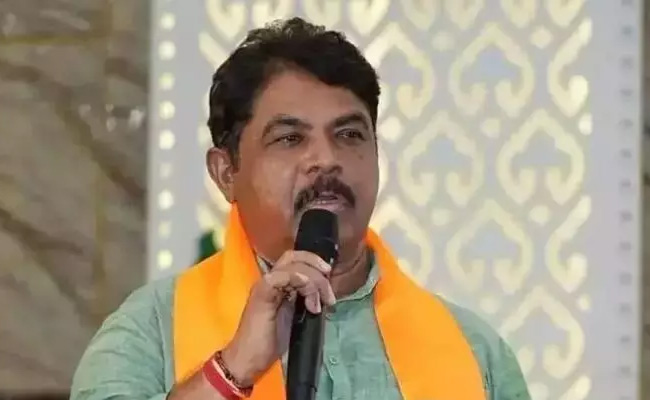
Bengaluru: Leader of Opposition in the Assembly R. Ashoka has accused the Congress government of using the hijab issue to placate what he described as discontent among minority voters after the Davanagere by-election.
In a post on X on Wednesday, Ashoka alleged that the state government, instead of addressing issues such as price rise, corruption, farmers’ distress and law and order, was attempting to retain its minority vote base by reviving the hijab issue.
Referring to the 2022 dress code introduced by the BJP government, which prohibited hijab in schools and colleges, Ashoka said the Karnataka High Court had upheld the policy and emphasised the importance of discipline in educational institutions.
He questioned the Congress government’s move to revisit the issue and asked whether setting aside the court-backed policy to benefit one community could be described as secularism.
Ashoka further alleged that while the government was willing to permit hijab, it continued to prohibit saffron shawls.
He accused the government of dividing students on religious lines rather than treating schools and colleges as spaces of equality.
Drawing a comparison with Mamata Banerjee’s government in West Bengal, Ashoka claimed that excessive appeasement politics had harmed the state and warned that the Congress in Karnataka could face a similar political response.
He said voters in Karnataka would teach the Congress a lesson for what he termed “vote-bank politics” and for compromising constitutional and judicial principles.