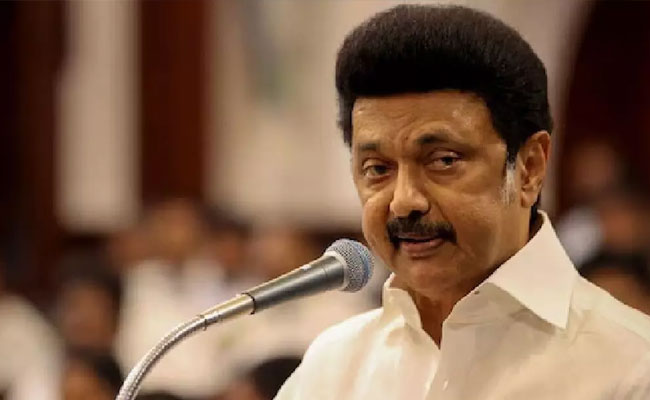
Union Minister Shobha Karandlaje says people from TN plant bombs in Karnataka, Stalin fumes
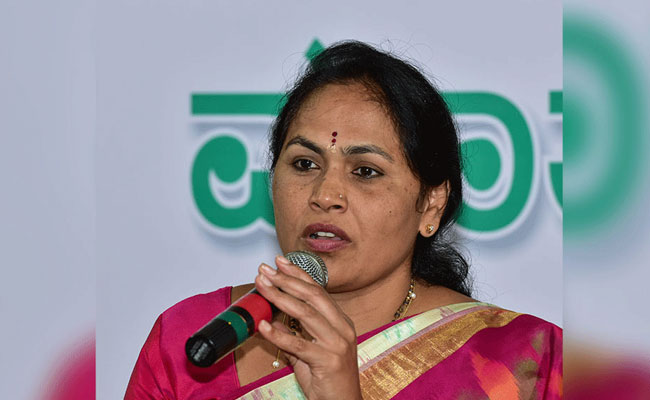
Bengaluru: Union Minister Shobha Karandlaje on Tuesday slammed the Congress government in Karnataka over the deteriorating law and order situation and claimed that people from Tamil Nadu plant bombs in the state, remarks which drew criticism from neighbouring state’s Chief Minister M K Stalin.
During an agitation by the BJP against the attack on a trader for playing ‘Hanuman Chalisa’ during the ‘Azaan’ (Islamic call for prayer) here on Sunday, Karandlaje accused the Congress government of indulging in ‘vote bank politics’ and hurting the interests of Hindus.
”Law and order in Karnataka has deteriorated. People who come from Tamil Nadu plant bombs here, people from Delhi chant ‘Pakistan Zindabad’ slogans and people who come from Kerala were involved in acid attacks,” the BJP Bengaluru North candidate told reporters here.
”The person who should have been in jail attacks a man for playing Hanuman Chalisa. Where is law and order in the state? Where are you Home Minister G Parameshwara? Why are you silent Chief Minister Siddaramaiah?” she asked.
Hindus are paying the price for the Congress’ ‘vote bank politics’, she alleged.
”Injustice is being meted out to Hindus under the Congress rule. Hindus are being hoodwinked. We should understand this,” the BJP leader said.
Tamil Nadu Chief Minister Stalin condemned Shobha Karandlaje’s remarks. ”Strongly condemn Union BJP Minister @ShobhaBJP’s reckless statement. One must either be an NIA official or closely linked to the #RameshwaramCafeBlast to make such claims. Clearly, she lacks the authority for such assertions. Tamilians and Kannadigas alike will reject this divisive rhetoric of BJP,” the TN CM said on the micro-blogging site ‘X’.
He urged the Election Commission of India to initiate appropriate legal action against Shobha for causing threat to peace, harmony and national unity.
He also appealed to the EC to take note of the ‘hate speech’ and initiate stringent action immediately.
According to the sources close to Karandlaje, she was referring to the blast that took place near the BJP office at Malleshwaram in the city 11 years ago in which some people from Tamil Nadu were arrested.
In the February 27 incident where three people were arrested for chanting ‘Pakistan Zindabad’, one of the accused is from Delhi.
In another incident on March 4 in Mangaluru, a man from Kerala hurled acid on three girls studying at a government pre-university college.
Strongly condemn Union BJP Minister @ShobhaBJP's reckless statement. One must either be an NIA official or closely linked to the #RameshwaramCafeBlast to make such claims. Clearly, she lacks the authority for such assertions. Tamilians and Kannadigas alike will reject this… https://t.co/wIgk4oK3dh
— M.K.Stalin (@mkstalin) March 19, 2024
Let the Truth be known. If you read VB and like VB, please be a VB Supporter and Help us deliver the Truth to one and all.
Petrol, diesel price rise in near future not ruled out, say govt sources
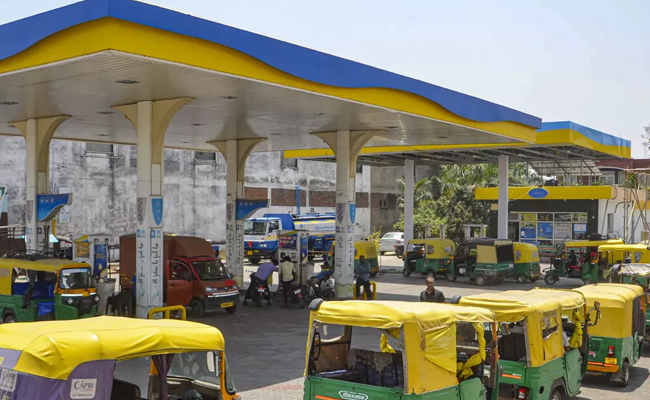
New Delhi (PTI): An increase in petrol and diesel prices in the near future is not ruled out, government sources said on Friday, as losses mount from a four-year-old freeze in retail rates despite the sharp rise in global crude oil prices, PTI reported. International crude oil prices this week climbed to a four-year high of USD 126 per barrel before cooling down slightly, but remained above USD 110 a barrel as ship transits through the Strait of Hormuz remained restricted and US and Iranian leaders traded barbs amid stalled peace talks.
Government sources said the possibility of a petrol and diesel price hike in the near future is not ruled out.
Earlier in the day, Indian Oil Corporation (IOC), making a statement on behalf of the industry, said petrol and diesel price as also domestic LPG rates are not being increased despite a surge in international energy cost. State-owned oil firms hiked prices of commercial LPG, industrial diesel, 5-kg LPG and jet fuel sold to international airlines in keeping with the cost.
Analysts had earlier flagged the possibility of price increases of Rs 25-28 per litre after the end of polling for assembly elections in West Bengal on April 29.
International oil prices spiked after the US and Israel attacked Iran on February 28, and Tehran's sweeping retaliation that effectively shut the Strait of Hormuz -- one of the world's most critical energy arteries, linking the Persian Gulf to global markets and handling roughly a fifth of global oil trade along with significant volumes of liquefied natural gas.
Last week, Sujata Sharma, Joint Secretary, Ministry of Petroleum and Natural Gas, told a news briefing that state-owned fuel retailers were incurring losses of about Rs 20 per litre on petrol and roughly Rs 100 per litre on diesel as pump prices remained frozen for nearly four years despite a surge in global oil prices. Yet there is no plan to increase prices, she had said.
Crude, which was USD 70 per barrel last year, averaged over USD 114 this month. Retail petrol and diesel prices have remained frozen since early April 2022 -- a period during which oil prices rose in some months and fell in other times. When prices fell, state-owned oil firms made handsome profits, which they used to set off losses when rates rose.
Petrol is currently priced at Rs 94.77 a litre in Delhi, and diesel comes for Rs 87.67.