Uphold justice without compromise: CM Siddaramaiah tells newly inducted police SIs
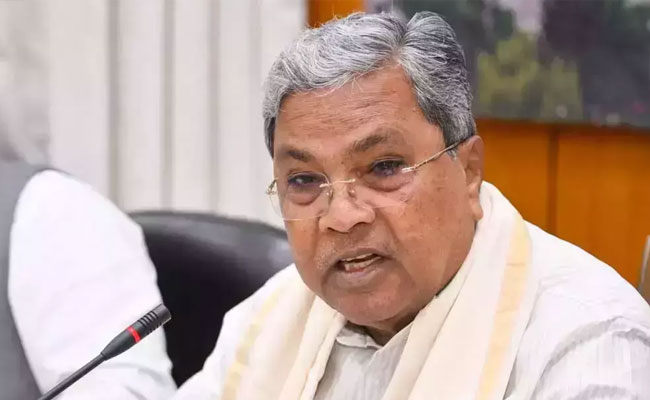
Mysuru (Karnataka) (PTI): Karnataka Chief Minister Siddaramaiah on Sunday called upon newly inducted police sub-inspectors to uphold justice without compromise and work towards building a drug-free and equitable society.
He said this while addressing the passing-out parade of the 46th batch of Civil Police Sub-Inspector trainees at the parade ground in Mysuru.
The chief minister set targets on maintaining law and order, tackling emerging crimes, and protecting vulnerable sections with integrity and courage.
Siddaramaiah underlined the responsibility that comes with the uniform and adding that discipline, restraint, courage, integrity and humanity must define policing.
Stressing the primacy of justice, he said, "Under no circumstances should the police compromise with anyone in the discharge of justice," and reminded the cadets that they are seen as representatives of the government and must act with accountability and fairness.
Highlighting key priorities, the chief minister urged officers to work towards eliminating narcotics, which he said was the government's goal of building a drug-free society.
He cautioned that drug abuse was severely impacting youth and students and emphasised humane policing.
The police officers must also uphold humanity and remain compassionate towards innocent citizens but firm and uncompromising against criminals, alongside tackling emerging threats like cybercrime.
Invoking Mahatma Gandhi's vision on safety and freedom, he said the independence of a country is meaningful only when women can move freely and fearlessly, even at midnight.
Reiterating the government's support, Siddaramaiah said 327 sub-inspectors were joining service and noted that thousands of vacancies had been filled in recent years, with more recruitment planned.
He also announced a reward of Rs 2 lakh for Karnataka Police Academy officers and staff, commending the impressive parade and urging officers to serve with honesty, courage and dedication.
Home Minister G Parameshwara, Ministers H C Mahadevappa and K Venkatesh, and Director General of Police Alok Mohan were present on the occasion.
Let the Truth be known. If you read VB and like VB, please be a VB Supporter and Help us deliver the Truth to one and all.
Gujarat builds 870 MW battery power backup network to stabilise renewable energy grid
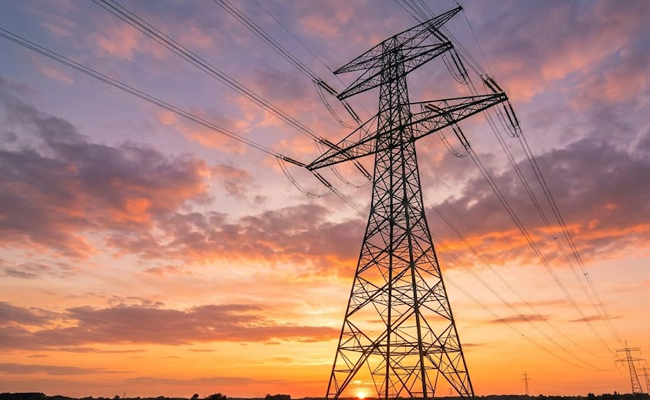
Gandhinagar (PTI): Gujarat has initiated battery storage systems at five locations in the state, with a total capacity of 870 MW, to maintain the stability of the renewable power grid, officials said on Saturday.
Battery Energy Storage Systems (BESS) are essential for storing electricity generated from solar and other renewable sources. They help manage additional load and maintain grid stability.
“Gujarat has initiated battery storage systems at five locations with a total capacity of 870 MW,” an official release stated.
The state has also registered 13 projects across Ahmedabad, Gandhinagar, Banaskantha, Patan and Kutch districts to set up additional battery storage systems, it said.
Modhera in Gujarat, India’s first solar village, has launched the country’s first BESS integrated with a solar power plant, it said.
"Under the leadership of Chief Minister Bhupendra Patel, the state has continued to advance in this direction and has strengthened its position among the leading states driving battery storage systems in India,” the release said.
Recently, a battery storage system was commissioned at Charal in the Sanand taluka of Ahmedabad, it said.
Four systems are operational at Modhera in Mehsana and Lakhpat in Kutch. The state government has also included advanced energy storage systems as a key component in the Gujarat Integrated Renewable Energy Policy, 2025, the release said.
Accordingly, standalone battery storage projects, works linked with new renewable energy installations, and those integrated with existing renewable energy systems are being approved, it said.
Once the Standard Operating Procedure is approved, registrations for battery storage will open for commercial and industrial users, it said, adding that the move will allow them to set up battery storage alongside their solar or wind projects.
The state government is developing battery storage systems across Gujarat, with companies being invited in through a competitive bidding process.
GETCO (Gujarat Energy Transmission Corporation) and power distribution companies strategically identify locations for battery storage systems based on grid capacity and operational requirements, the release said.
Power generation from solar and other renewable sources fluctuates throughout the day. Excess energy generated during peak hours can be stored and supplied later during periods of high demand, especially in the evening when solar output declines. Battery storage systems help reduce stress on the grid and improve grid stability, it added.