Uttar Pradesh and Bihar worst in COVID reporting, Karnataka best, Stanford study finds
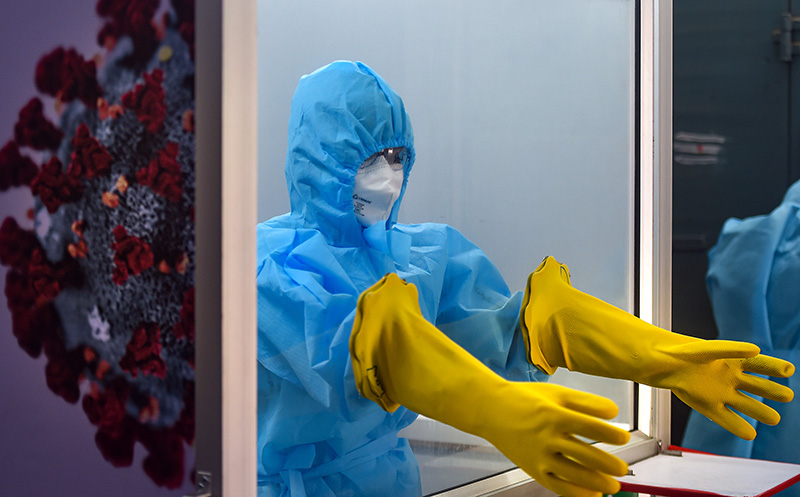
New Delhi: There is a disparity in Covid-19 reporting by states and union territories in India, found a new study conducted by researchers from Stanford University.
While the best Covid-19 reporting has been by Karnataka, the worst has been by Bihar and Uttar Pradesh, according to a COVID-19 data reporting index created by the researchers.
The study is not yet peer-reviewed and has been published as a preprint in medRxiv on 21 July.
Researchers ranked the states according to their availability, accessibility, granularity, and privacy. This framework was used to calculate a Covid-19 Data Reporting Score (CDRS) for 29 states during a two-week period — from 19 May to 1 June. CDRS ranged from 0 (lowest) to 1 (highest).
Researchers found that the CDRS varied from 0.61 (good) in Karnataka to 0.0 (poor) in Bihar and Uttar Pradesh.
Overall, the quality of Covid-19 reporting in India was only 0.26, which showed poor reporting across the country.
States that reported less than 10 total confirmed cases as of 18 May were excluded from the study.
Each state reported the first case at least a month before they were studied, which means they had at least a month’s time to do an assessment to build a high-quality data reporting system.
According to the health ministry data, as of 18 May, the total number of confirmed cases in India was about 96,000. Top ten states with the highest confirmed cases contributed to 91 percent of that total confirmed cases in the country.
Among those top 10 states, Tamil Nadu is the only state with a high CDRS at 0.51, the study found.
“This suggests that states with the highest number of cases also tend to have poor Covid-19 data reporting, which could further exacerbate the pandemic challenges,” wrote the researchers.
10 states did not report data divided by age, gender
The Indian Council of Medical Research’s (ICMR) referral form for Covid-19 requires health workers to record data on age, gender, district, and comorbidities. Yet the study found 10 states that did not report any data divided by age, gender, comorbidities or districts.
District-level data keep the people informed about the gravity of the situation in their neighbourhood and can help them identify how much risk they are at and take precautions accordingly. Also, granular details like age, gender and comorbidities can help the scientific community study the impact of these factors on disease progression.
The study found only 10 states provided a visual representation of the trend in Covid-19. Assam and Gujarat gave only the total number of cases, while Kerala gave total cases and the Covid trends too.
A graphical representation of the information makes it more interpretable and accessible to the general people.
In addition, the researchers found that Punjab and Chandigarh compromised the privacy of individuals, who were under quarantine, by releasing their personal information on official websites.
Best and worst states for Covid-19 reporting
The best reporting was by Karnataka (0.61), followed by Kerala (0.52), Odisha (0.51), Puducherry (0.51), and Tamil Nadu (0.51).
Uttar Pradesh (0.0), Bihar (0.0), Meghalaya (0.13), Himachal Pradesh (0.13), and Andaman and Nicobar Islands (0.17) scored the lowest in Covid reporting.
The top 5 states in CDRS provided a dashboard that showed the trend of Covid-19 data graphically and also provided district-wise stratification of the total confirmed, recovered, and deaths. However, none of them stratified the data according to age, gender, comorbidities — all factors that impact the death rate.
Among the states with the lowest CDRS score, Bihar and Uttar Pradesh, did not publish any Covid data on their government or health department websites.
Bihar released data only on Twitter, which is not an accessible or reliable method of disseminating information.
Himachal Pradesh, Meghalaya, and Andaman & Nicobar Islands reported only the total count, but did not report the daily count, trend graphics and granular data.
Researchers also found a correlation between the states’ performance on sustainable development goals (SDG) for health and well-being that includes maternal mortality and availability of health workers, and the Covid-19 health reporting data. Those doing better in SDGs tended to do better in Covid-19 reporting too, the study found.
Disparity reveals lack of unified system for reporting
The disparity in CDRS across states highlights three things — a lack of a unified framework for Covid-19 data that makes it difficult to coordinate an effective nationwide response, a lack of coordination among states and inequality in access to public health information based on the state where the person resides.
CDRS helps in identifying the differences in the quality of Covid-19 data reporting across India and reveals that “there is tremendous scope for all states to improve”, according to the researchers.
The score helps the states recognise their strengths and weaknesses in each category. “States that score high in a category can serve as role models to the other states,” they wrote.
Let the Truth be known. If you read VB and like VB, please be a VB Supporter and Help us deliver the Truth to one and all.
Real Madrid fines Valverde and Tchouaméni half a million euros each for altercation
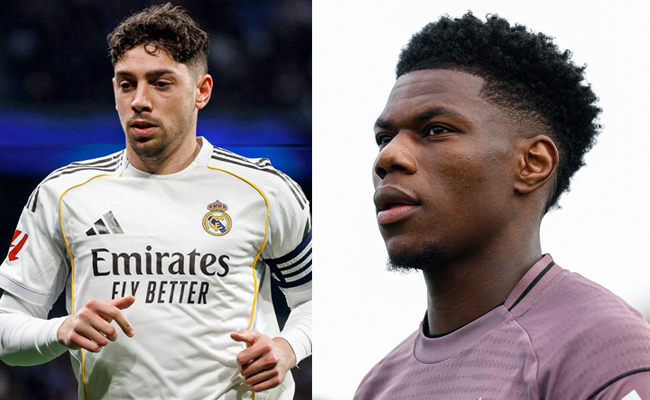
Barcelona (AP): Real Madrid slapped players Federico Valverde and Aurélien Tchouaméni with half-a-million-euro ($588,000) fines on Friday for their altercation during practice.
The massive fines came a day after the midfielders tussled when the team trained. Valverde said in a post on social media on Thursday that no punches were thrown. But Valverde knocked his head on a table and he suffered a small cut that required a brief hospital visit.
On social media, Valverde initially called it a “meaningless fight” with a teammate and said “everything has been blown out of proportion."
His employers, however, considered it a significant enough breach of team discipline to nail both Valverde and Tchouaméni with fines that bite even the bank account of a top soccer player. The half-a-million euro penalties reflect the reputational damage the club was enduring in a chaotic end to a disappointing season.
In a statement, the 15-time European champion said its disciplinary action was concluded after both players expressed to the club “their complete remorse for what happened and apologized to one another.”
Madrid added they also apologized to their teammates, the coaching staff and club supporters, as well as showing their willingness to accept whatever disciplinary action the club deemed “opportune.”
Tchouaméni was back training with Madrid on Friday, two days before they play at Barcelona in a clasico. Madrid has to win otherwise Barcelona will be crowned La Liga champion.
After being notified of the fine, he posted a public apology to the club and its fans on social media.
“What happened this week in training is unacceptable,” Tchouaméni wrote. "I say this while thinking about the example we are expected to set for young people, whether in football or at school.
“Above all, I am sorry for the image we projected of the club.”
Valverde was not at practice due to the head knock.
Both players are set to play in the World Cup next month, with Tchouaméni playing for France and Valverde for Uruguay.
Chaotic end to a poor season
===================
The run-in between the players, who for seasons have played side by side in Madrid's midfield, came after they argued this week in previous training sessions. But tempers boiled over on Thursday. Spanish media was rife with reports that the players previously disagreed over the club's decision to let coach Xabi Alonso go after just months on the job.
It was not the only altercation involving Madrid players during training this week. Álvaro Carreras confirmed he was in a “minor” incident with a teammate. Spanish media said he and fellow defender Antonio Rüdiger got into a scuffle.
Álvaro Arbeloa, the coach who was promoted from Madrid's reserve team when Alonso was fired in January, will face tough questions on what went wrong inside the changing room when he gives a press conference on Saturday ahead of the clasico at Camp Nou.
Madrid is facing a second consecutive campaign without a major trophy amid rumors in the Spanish media that club president Florentino Pérez is considering bringing back Jose Mourinho to straighten out his underperforming team.